ESG Under Pressure: What U.S. Policy Rollbacks and Europe’s Energy Shifts Mean for Corporate Sustainability
The past week delivered a stark reminder that sustainability and ESG commitments do not exist in a political vacuum. From Washington to Berlin, regulatory decisions are reshaping the landscape for corporate responsibility, green investment, and long-term environmental planning — with consequences that extend well beyond national borders.
U.S. Policy Rollbacks Raise the Stakes for ESG Risk Assessment
The Trump administration’s decision to finalize a regulatory change removing language designed to prevent damage to wildlife habitats in federal agency actions marks one of the most significant shifts in U.S. environmental policy in recent years. Reported by Reuters, the change effectively weakens the Endangered Species Act’s reach over land-use decisions, opening the door for infrastructure and extraction projects in previously protected areas.
For ESG investors and sustainability professionals, this is not an abstract policy debate. Biodiversity risk is increasingly recognized as a material financial risk, embedded in frameworks such as the Taskforce on Nature-related Financial Disclosures (TNFD) and the EU’s Corporate Sustainability Reporting Directive (CSRD). Companies operating in or sourcing from U.S. ecosystems will need to reassess their nature-related exposure — and their disclosures.
Simultaneously, the U.S. Environmental Protection Agency proposed easing emissions rules for heavy trucks and engines adopted under the Biden administration in 2023. For logistics companies and fleet operators with European operations or investors, this creates a growing transatlantic divergence: while the EU tightens CO₂ standards for heavy-duty vehicles, the U.S. appears to be stepping back. Businesses that built compliance roadmaps around U.S. federal rules may face uncertainty, while those aligned with European standards may find themselves better positioned for sustainable finance instruments.
Europe: Mixed Signals Between Ambition and Pragmatism
Europe’s own picture is more nuanced than a simple story of green leadership. Germany’s parliament passed a controversial amendment scrapping the requirement for new buildings to derive at least 65% of their energy from renewable sources — a reversal of a climate mandate that had been central to the country’s building decarbonisation strategy. The move reflects the ongoing tension between energy security concerns, rising construction costs, and long-term climate commitments that many European governments are navigating in 2025.
For the green building sector and sustainable finance, this is a cautionary signal. Green bonds and sustainability-linked loans tied to building efficiency standards may need to account for a more volatile regulatory environment, even within the EU. The circular economy transition in construction — one of the continent’s most carbon-intensive sectors — depends heavily on stable policy signals.
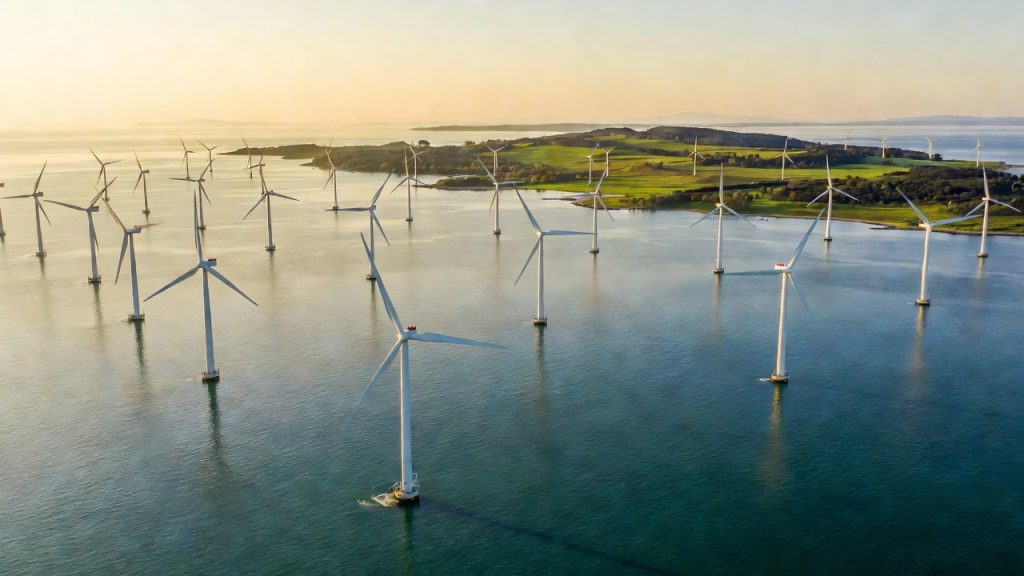
Yet Europe also delivered genuinely encouraging news. Poland’s first offshore wind farm, the Baltic Power project, generated its first electricity this week, marking a milestone in Central European renewable energy expansion. With a planned capacity of 1.2 GW, Baltic Power is a joint venture between PKN Orlen and Northland Power, and represents the kind of large-scale, cross-border clean energy investment that underpins the EU’s energy sovereignty ambitions. For ESG-focused investors, Poland’s offshore wind pipeline is emerging as a credible growth story within sustainable infrastructure.
Climate-Driven Risks Are Already Disrupting Business Operations
Beyond policy, the physical reality of climate change is asserting itself with growing force. The World Meteorological Organization reported that 2025 has seen record-breaking sand and dust storms disrupting transport and damaging public health across regions including China and the U.S.-Mexico border. These events are no longer outliers — they are part of an accelerating pattern of climate-driven extreme weather that carries direct operational and supply chain risks for businesses.
For corporate responsibility teams and ESG analysts, events like these reinforce the urgency of robust climate scenario analysis and physical risk disclosure. Frameworks such as the TCFD and the EU taxonomy increasingly require companies to demonstrate how they are managing exposure to exactly these kinds of systemic environmental disruptions.
Implications for Businesses and Investors
- Biodiversity and habitat risk must now be treated as a live ESG variable in U.S.-exposed portfolios, not a future consideration.
- Regulatory divergence between the U.S. and EU on emissions and environmental standards is widening — companies operating across both markets need dual-track compliance strategies.
- Renewable energy investment in Europe, particularly offshore wind, remains a structurally strong ESG opportunity despite policy turbulence in other sectors.
- Physical climate risks, from dust storms to extreme heat, are now board-level business continuity issues, not just sustainability report footnotes.
Key takeaway: The sustainability transition is not a straight line. This week’s developments — rollbacks in Washington, reversals in Berlin, milestones in the Baltic Sea — illustrate that ESG strategy must be dynamic, geographically aware, and resilient to political volatility. For green businesses and sustainable finance actors, the ability to read and adapt to this shifting terrain is itself a competitive advantage.