Europe’s 2040 Vision for Agri-Food: Why Agroecology Is Moving to the Center of Policy
The European Commission is redrawing the roadmap for the continent’s farms, forests, and food supply chains. Through its AgRI 2040 conference and a new strategic approach to agricultural research and innovation, Brussels is signaling that the next generation of Horizon Europe funding — and future EU competitiveness instruments — will be built around one central idea: sustainable agriculture and resilient food systems are not optional extras, but the foundation of Europe’s economic and environmental security.
This is not an isolated European exercise. The Food and Agriculture Organization (FAO) is running parallel initiatives, including an interregional policy dialogue on greening agrifood systems and a global conference on One Health, while food-systems actors across Africa are advancing their own climate-resilient agriculture strategies. Together, these developments point to a genuinely global convergence around a shared question: how do we feed a growing population without exhausting the soil, water, and biodiversity that food production depends on?
Agroecology as the New Policy Default
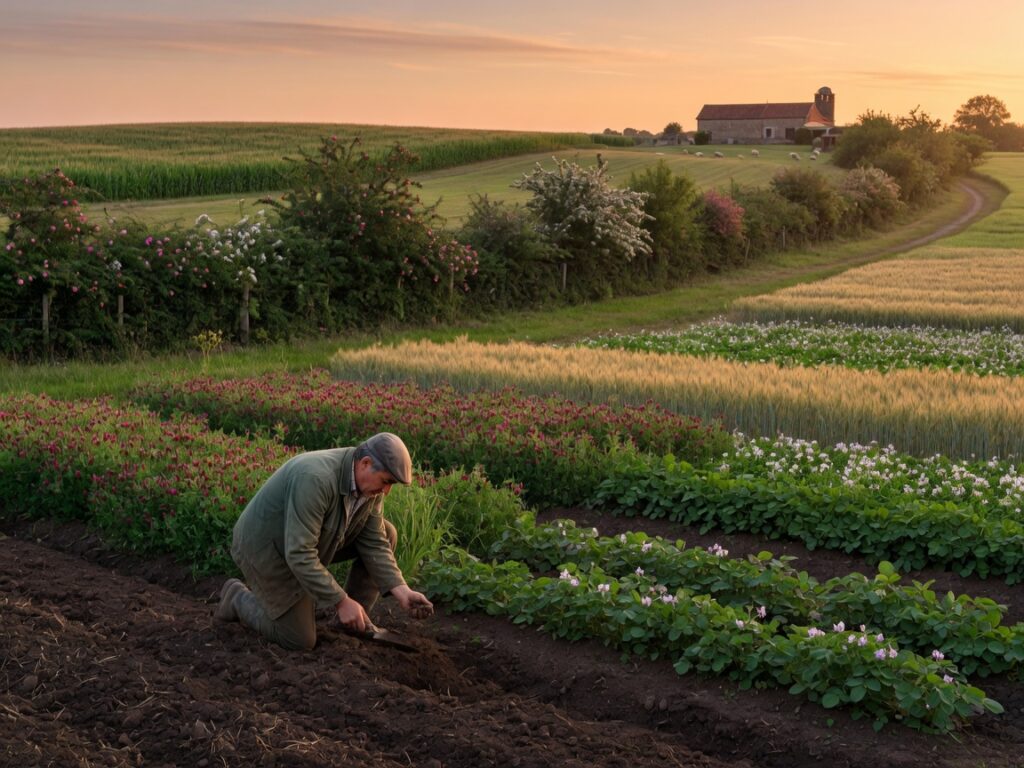
At the heart of the EU’s emerging framework is agroecology — an approach that blends ecological science with traditional farming knowledge to build systems that regenerate rather than deplete natural resources. The Commission is explicitly framing agroecology as a core transition pathway, with priorities centered on soil health, biodiversity conservation, and stronger ecosystem services.
Crucially, this isn’t framed as a niche or purely environmental agenda. It’s positioned as an economic resilience strategy, particularly for smallholder farmers and rural communities who are most exposed to volatile input costs, extreme weather, and market shocks. By prioritizing diversified cropping systems, reduced chemical dependency, and healthier soils, agroecology is being presented as a way to lower long-term risk for farmers while meeting the EU’s broader climate and biodiversity commitments under the Green Deal and Farm to Fork strategy.
This mirrors momentum outside Europe. African food-systems actors are increasingly championing farmer-managed seed systems, ecosystem restoration, and territorial markets as practical, locally rooted responses to climate pressure — evidence that agroecological principles are being adapted, not just exported, across very different agricultural contexts.
Health, Nutrition, and Supply Chains: The New Triangle
A second major theme emerging from this policy wave is the explicit linking of agricultural production to human and environmental health. FAO’s One Health conference reflects a growing recognition that farming practices, nutrition outcomes, antimicrobial resistance, and ecosystem stability are deeply interconnected — not separate policy silos.
For businesses, this translates into rising pressure on supply chain sustainability. Industry groups such as the SAI Platform continue to host webinars and working sessions on regenerative agriculture frameworks, reflecting active efforts by food and beverage companies to embed sustainability metrics into sourcing, reporting, and farm-level implementation. Retailers and manufacturers are increasingly expected to demonstrate traceable, measurable progress on soil carbon, water use, and biodiversity impact across their sourcing regions — not just at the point of final sale.
This shift also intersects with changing consumer demand. The rise of plant-based diets and products across European markets is reshaping procurement strategies, pushing companies to diversify protein sourcing while simultaneously investing in regenerative practices for traditional livestock and crop supply chains. Rather than treating plant-based growth and regenerative farming as competing trends, many companies are now integrating both into broader resilience strategies.
What This Means for Farmers, Businesses, and Policymakers
The practical implications of this policy direction are significant:
- Farmers can expect increased funding opportunities tied to agroecological practices, but also new compliance and reporting expectations linked to EU competitiveness instruments.
- Businesses across food and agriculture value chains will likely face growing pressure to align sourcing strategies with regenerative and traceability standards, particularly as SAI Platform and similar industry bodies formalize frameworks.
- Policymakers face the challenge of ensuring that ambitious 2040 research priorities translate into accessible funding for smallholders, not just large agribusiness players with the capacity to navigate complex grant systems.
There’s also a geopolitical dimension. As the EU strengthens its resilience-focused agri-food research strategy, it is implicitly positioning European agriculture as a global standard-bearer for sustainable food systems — a strategy that could influence trade relationships, especially with regions like Africa where agroecological approaches are already gaining ground through farmer-led initiatives.
Key Takeaway
Europe’s 2040 agri-food agenda marks a decisive shift from treating sustainability as a compliance issue to treating it as a core competitiveness strategy. Agroecology, supply chain accountability, and the health-nutrition-environment nexus are no longer parallel conversations — they are converging into a single policy framework. For farmers, companies, and citizens alike, the message is clear: resilient food systems will increasingly define not just environmental outcomes, but economic opportunity across the sector.