AgRI 2040 and Food 2040: The EU’s New Blueprint for Sustainable Agriculture and Food Systems
The European Commission has adopted a new research-and-innovation strategy that, for the first time, treats farms, forests, and food systems as one interconnected policy space. Named AgRI 2040 and paired with a citizen-facing companion initiative, Food 2040, the framework aims to make European agriculture more competitive, resilient, and sustainable while directly addressing how Europeans eat, source, and produce food. It arrives at a moment when supply chain sustainability, climate adaptation, and public health are converging into a single policy conversation—one that Brussels can no longer afford to treat separately.
A Unified Vision for Farms, Forests, and Food
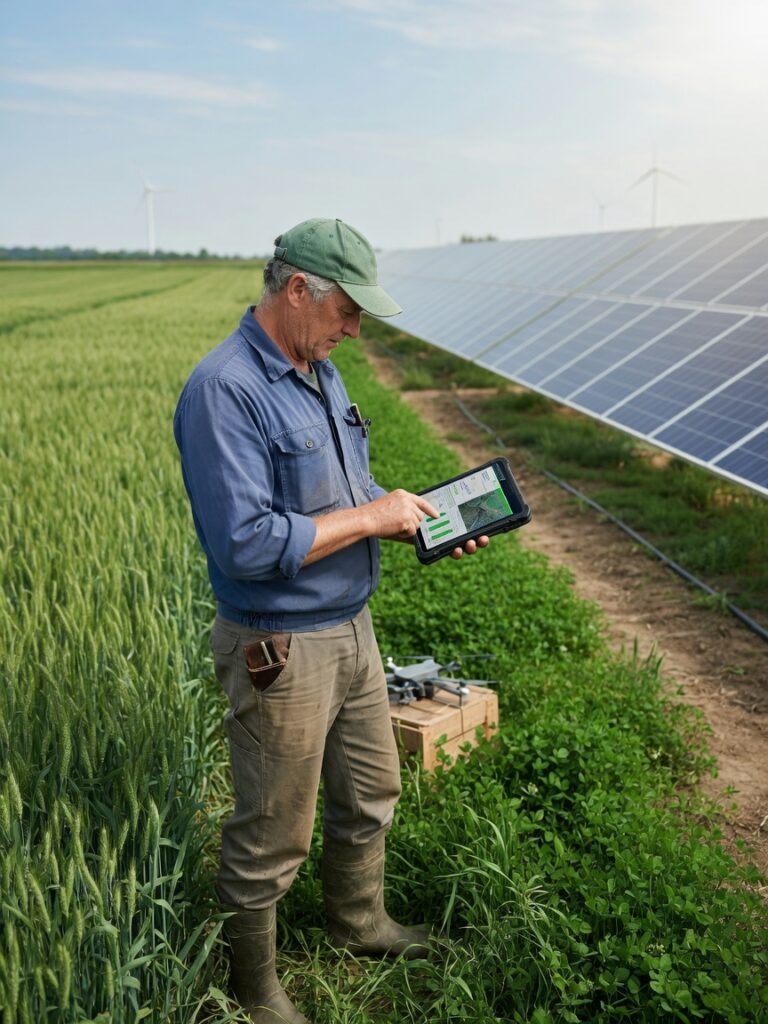
AgRI 2040 sets out five shared priorities: competitiveness, food security, protection of natural resources, fairness across the value chain, and global cooperation. What distinguishes this strategy from previous EU agricultural policy documents is its explicit backing of digitalisation, artificial intelligence, and robotics as tools to scale innovation across rural economies. Rather than funding isolated pilot projects, the Commission is signaling a shift toward systemic change—embedding sustainable agriculture practices into everyday farm operations through smart sensors, precision inputs, and AI-driven decision support.
This matters because European farmers face a structural bind: aging rural populations, volatile input costs, and increasing climate variability, all while being asked to reduce emissions and biodiversity loss. AgRI 2040 explicitly frames agroecology and circular resource use—recycling nutrients, reducing synthetic inputs, restoring soil health—as central to achieving both productivity and environmental resilience, rather than treating them as competing goals. The strategy also references stronger value chains, suggesting new funding mechanisms will favor cooperative models and short supply chains that keep more value with primary producers.
Food 2040: Diets, Consumers, and Zero-Pollution Ambitions
While AgRI 2040 addresses production, its counterpart Food 2040 turns to consumption. The strategy prioritizes healthy and sustainable diets, improved food environments, and consumer empowerment—language that hints at future action on labeling, public procurement standards, and product reformulation. A growing body of research links diets rich in legumes, whole grains, and plant-based proteins with lower environmental footprints and better health outcomes, and Food 2040 appears designed to nudge markets in that direction without mandating specific consumption patterns.
The zero-pollution resource use component is particularly significant for food businesses. Companies operating in the EU market should expect increasing scrutiny of packaging waste, pesticide residues, and water use throughout production. For manufacturers and retailers, this translates into near-term pressure on supply chain sustainability reporting, likely intersecting with existing frameworks such as the Corporate Sustainability Reporting Directive and Farm to Fork residual commitments.
Global Momentum: FAO Meetings and Climate Finance
The EU’s strategy does not exist in isolation. September’s international calendar includes FAO-convened discussions on One Health in agrifood systems and climate finance for agriculture—signals that resilience and adaptation financing are becoming permanent fixtures of global food policy, not one-off responses to crisis. For European stakeholders, this global backdrop reinforces the urgency of AgRI 2040: EU competitiveness in agrifood innovation increasingly depends on aligning with, and helping shape, international standards on emissions accounting, biodiversity metrics, and climate-adaptive financing for smallholders across the Global South, many of whom supply raw materials to European markets.
What This Means for Business and Policy
For companies across the agrifood value chain, the message is clear: innovation-led compliance is no longer optional. Businesses should anticipate:
- New EU funding calls tied to digital agriculture, robotics, and regenerative farming practices
- Tighter procurement and labeling expectations tied to healthy-diet and zero-pollution goals
- Increased demand for traceability and third-party verification in supply chain sustainability claims
- Greater alignment pressure between EU standards and international climate finance mechanisms
Decision-makers at national and regional levels will also need to translate these EU-level priorities into concrete rural development programs, balancing farmer livelihoods with environmental targets that remain politically sensitive, particularly regarding pesticide reduction and land-use change.
Key Takeaway
AgRI 2040 and Food 2040 mark a deliberate attempt to stop treating farming, forestry, food security, and public health as separate policy silos. By tying digital innovation, agroecology, and dietary shifts into one strategic framework, the European Commission is betting that systemic integration—not incremental fixes—is the only realistic path toward food systems that are both sustainable and resilient by 2040.