Heat-Proofing Europe’s Farms: Why Climate-Resilient Agriculture Is Becoming Non-Negotiable
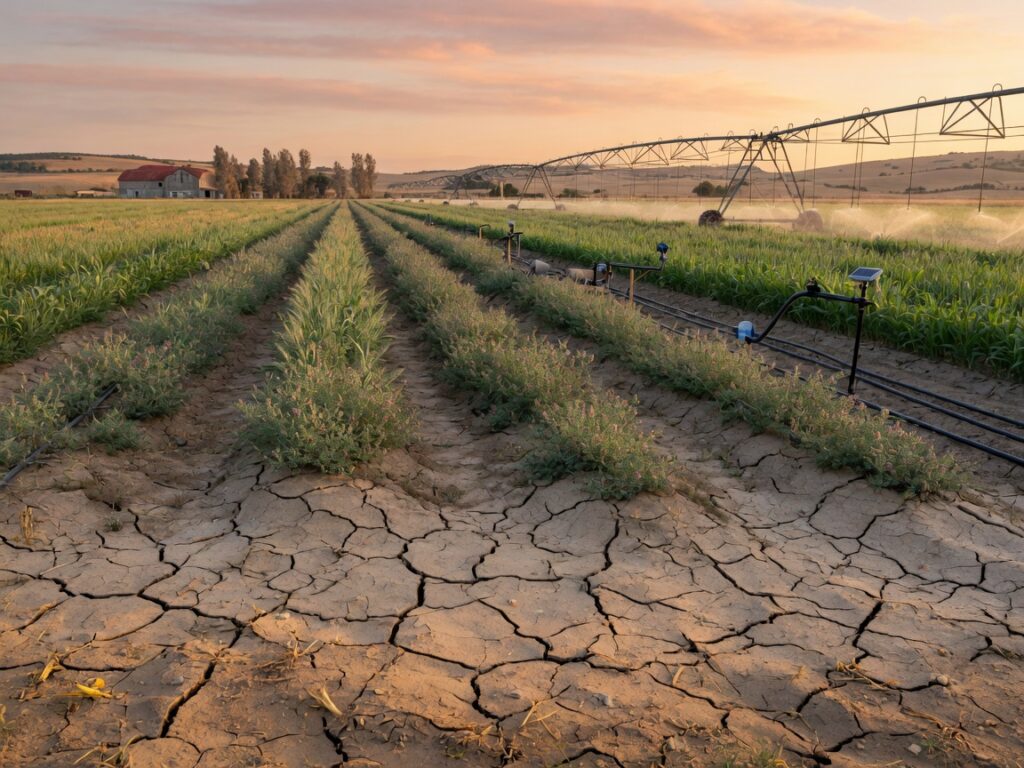
Extreme heat is no longer a distant risk for European agriculture — it is a present-day operational challenge reshaping how food gets grown, priced, and delivered. A Reuters report published on August 19 highlights growing momentum behind climate-resilient farming across the continent, as intensifying heat stress forces farmers, agribusinesses, and policymakers to treat adaptation as urgent, practical necessity rather than a distant sustainability goal. The shift carries direct consequences for input costs, farm economics, and ultimately the price of food on European shelves.
This acceleration doesn’t happen in isolation. It intersects with a broader global reassessment of how food systems must transform to remain viable under mounting climate pressure, biodiversity loss, and geopolitical uncertainty.
Europe’s Adaptation Imperative
Heat waves have become a recurring stress test for European agriculture, affecting yields for staple crops, livestock welfare, and irrigation demands from the Iberian Peninsula to Central Europe. The Reuters coverage underscores that adaptation measures — from drought-tolerant varieties to shifting planting calendars and investing in water-efficient infrastructure — are moving from pilot projects into mainstream farm management.
This matters because European agriculture sits at a unique crossroads: it must maintain food security for over 440 million citizens while meeting ambitious climate targets under the EU Green Deal and Farm to Fork strategy. The economic stakes are considerable. Analysts increasingly link heat-driven yield volatility to input cost inflation and insurance premium increases, meaning sustainable agriculture practices are becoming a financial risk-management tool as much as an environmental one.
Global Policy Signals Reinforce the Shift
Europe’s push doesn’t exist in a vacuum. The Food Systems Countdown Initiative’s newly released 2026 report finds that global food systems performance still falls short of critical targets — but for the first time, it maps a clearer trajectory toward 2050 benchmarks. This evidence-based roadmap is likely to influence corporate sustainability strategies and national policy design well beyond Europe’s borders.
Complementary developments reinforce this trend. Indonesia and the FAO have launched a 2026–2030 Country Programming Framework explicitly designed to accelerate resilient, inclusive agrifood systems — a signal that transformation efforts are being coordinated across both developed and developing economies. Meanwhile, CGIAR’s participation alongside the IUCN Pavilion at UNCCD COP17 in Mongolia highlights a growing consensus that land restoration, biodiversity protection, and agroecology are inseparable from climate adaptation in farming. These aren’t parallel tracks anymore; they are converging into a single policy and investment agenda.
Innovation, Genetics, and the Supply Chain Question
A third pillar of this transformation involves crop and livestock genetics. APEC economies recently discussed safer genome technologies to bolster food security, while Europe’s own debate over New Genomic Techniques (NGTs) continues to intensify. The European Parliament and Council remain in negotiations over how to regulate gene-edited crops — a decision with major implications for yield resilience, pest resistance, and reduced input dependency.
For businesses managing supply chain sustainability, these genetic and regenerative innovations offer tangible risk mitigation: crops bred for drought tolerance or heat resistance reduce the likelihood of supply disruptions that ripple through processing, retail, and export markets. This is particularly relevant as demand for plant-based proteins and diversified crop portfolios grows, requiring resilient raw material sourcing that can withstand increasingly erratic weather patterns.
What This Means for Citizens, Businesses, and Policymakers
- For consumers: Expect continued volatility in food prices tied to weather events, alongside growing availability of climate-adapted product lines.
- For businesses: Supply chain diversification and investment in resilient sourcing are shifting from optional CSR initiatives to core risk management.
- For policymakers: Regulatory clarity — particularly around genomic techniques and land-use policy — will determine how quickly innovation reaches farms at scale.
Key takeaway: Europe’s climate-resilient farming push signals a maturation point: adaptation is no longer a future consideration but an immediate economic and food-security imperative. As global frameworks from the FAO, CGIAR, and UNCCD converge with regional innovation debates, the coming years will test whether policy, technology, and farming practice can align fast enough to keep pace with a warming climate.