From Biogas to Low-Carbon Potatoes: How India and Europe Are Rewiring Food Systems for Sustainability
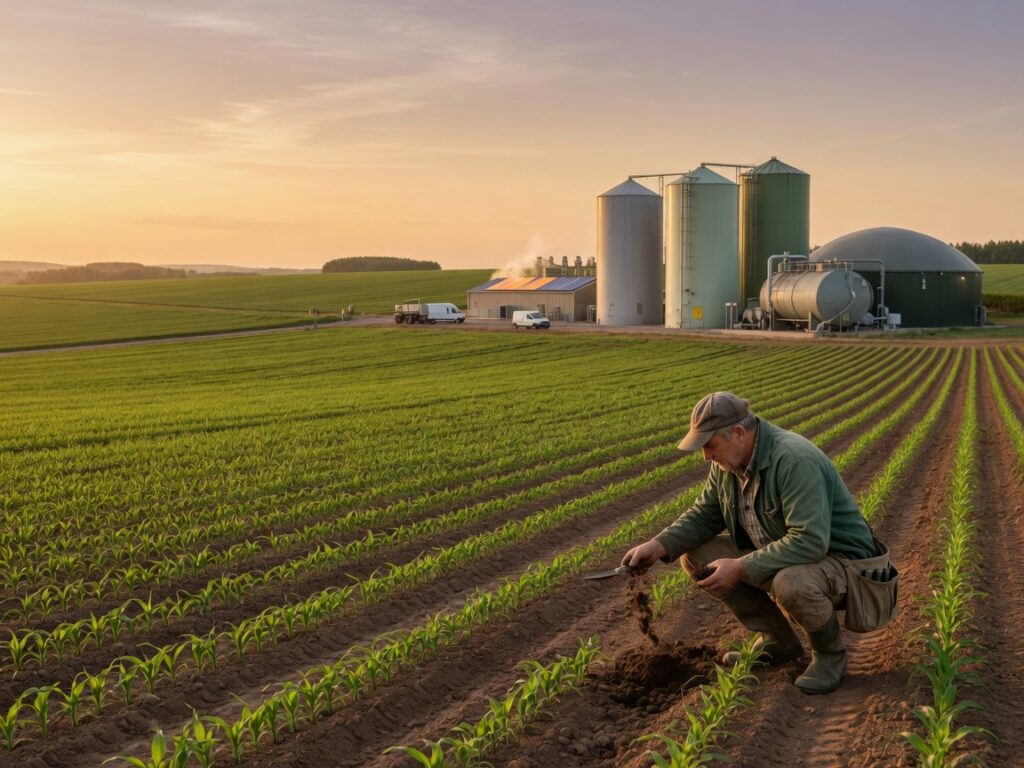
Two seemingly unrelated stories emerging over the past 48 hours reveal a common thread: the global food system is being re-engineered around measurable climate performance. In India, new government incentives are set to scale up compressed biogas production through higher guaranteed purchase prices and subsidies. Meanwhile, in the UK and across Europe, retailers and food giants are testing regenerative agriculture and low-carbon produce directly with consumers. Together, these developments suggest that sustainable agriculture is shifting from pilot projects to infrastructure-scale investment — with real consequences for farm incomes, food prices, and emissions.
India’s Biogas Push: Energy Security Meets Farm Economics
India’s expanded compressed biogas (CBG) initiative is notable not just for its environmental ambition but for its economic logic. By guaranteeing higher purchase prices and offering subsidies for new plant development, the government aims to reduce dependence on imported fossil fuels while creating a new revenue stream for farmers who supply agricultural residue and organic waste as feedstock. This matters for food systems resilience: CBG plants can convert crop stubble — often burned in open fields, a major source of seasonal air pollution in northern India — into clean fuel and organic fertilizer byproducts.
The approach mirrors a broader pattern seen globally, where climate-linked subsidies are used to de-risk investment in cleaner infrastructure. It also intersects with innovation at the grassroots level: Bengaluru-based Aqua Sattva’s low-cost, plant-based water filtration system was highlighted alongside the biogas news, underscoring how India’s rural sustainability push spans energy, water, and food resilience simultaneously. For smallholder farmers, these are not abstract climate policies — they represent tangible income diversification and reduced input costs.
Europe’s Retail Experiment: Can Consumers Pay for Regenerative Farming?
Across the Channel and continental Europe, the sustainability conversation is playing out at the supermarket shelf. McCain’s newly unveiled “Farm of the Future” initiative aims to accelerate regenerative agriculture practices — including reduced tillage, cover cropping, and improved soil health — across its potato supply network. Tesco, meanwhile, is piloting “low-carbon” potatoes, effectively testing whether British and European consumers will recognize and reward lower-emission produce at checkout.
This is a critical test for agroecology at commercial scale. Regenerative practices often carry upfront costs for farmers — new equipment, transition periods with lower yields, and additional certification requirements — before soil health improvements deliver long-term productivity and resilience gains. Retail partnerships that guarantee premium pricing or long-term purchase commitments can bridge this gap, similar in spirit to India’s guaranteed biogas pricing model. If Tesco’s low-carbon potato pilot succeeds commercially, it could become a template for how European retailers de-risk the agricultural transition without leaving farmers to absorb costs alone.
Verification and Credits: The Quiet Infrastructure of Trust
Behind these consumer-facing initiatives lies a less visible but equally important trend: the maturation of supply chain sustainability verification. Japan’s approval of a methane-cutting feed additive methodology for generating carbon credits is a signal that livestock emissions reduction is becoming bankable and auditable, not just aspirational. Similarly, expanding rice programs designed to cut emissions and water use across farm networks depend on robust measurement protocols to prove impact to buyers, regulators, and carbon markets.
This verification layer is what ultimately connects India’s biogas subsidies to Europe’s low-carbon potatoes: both depend on credible, auditable claims about emissions and resource use. Without standardized methodologies — whether for methane reduction, soil carbon, or water savings — claims of “low-carbon” or “regenerative” risk becoming marketing terms rather than measurable outcomes. The growing sophistication of carbon credit methodologies and retail-grade traceability systems suggests the industry is moving, however unevenly, toward accountability.
What This Means for Businesses, Farmers, and Citizens
- For businesses: Early movers in verified low-carbon supply chains may gain competitive advantage as regulatory and consumer scrutiny intensifies across Europe and Asia.
- For farmers: Guaranteed purchase schemes and retail partnerships can offset the financial risk of transitioning to regenerative or circular practices like biogas feedstock supply.
- For citizens: Expect gradual shifts in food pricing and labeling as low-carbon and regenerative products move from niche pilots to mainstream retail shelves.
- For policymakers: India’s subsidy model and Europe’s retail pilots offer contrasting but complementary blueprints — public incentives versus market-driven premiums — for scaling sustainable agriculture.
Key Takeaway
The past 48 hours illustrate a maturing global food transition: incentive structures are becoming more sophisticated, measurement systems more rigorous, and consumer-facing pilots more ambitious. Whether through India’s biogas subsidies or Europe’s low-carbon potato trials, the message is consistent — sustainable agriculture is no longer just an environmental goal, but an emerging economic and commercial reality reshaping food systems from farm to fork.