Gaza Disarmament Deal: A New Chapter in Israel-Palestine Peace? July 31, 2026
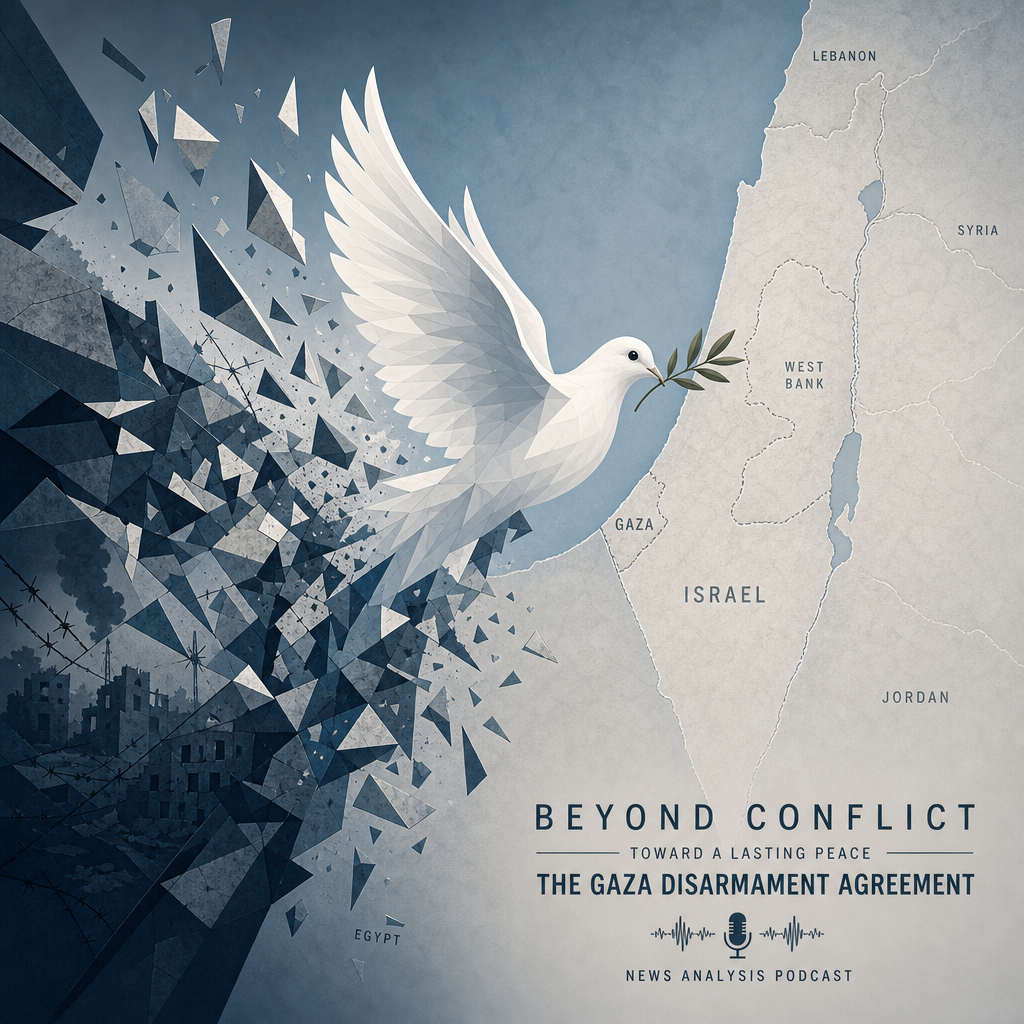
The Israel-Palestine conflict is one of the most enduring and complex issues of our time. Recently, a new development has emerged with the announcement of a Gaza disarmament agreement. This peace initiative has the potential to redefine not only the political landscape in Gaza but also the broader geopolitical dynamics in the region.
Significance of the Gaza Disarmament Agreement
This announcement is significant because it directly addresses the long-standing obstacle of Hamas’s military presence. The implications of its disarmament are profound. The agreement is being heralded as a major step forward in the peace process, offering a glimmer of hope for a situation that has seen repeated cycles of violence and fragile ceasefires. However, it also introduces substantial uncertainty about whether the agreement’s terms can be implemented and sustained in a meaningful way.
Understanding the Historical Context
To grasp the weight of this development, we must first consider the historical context. The conflict in Gaza is deeply rooted, characterized by a complex web of political, social, and military factors. The presence of Hamas as a significant military force has often derailed peace talks and complicated efforts to establish a lasting political settlement. Disarmament has long been a focal point in negotiations, but it’s one of the most contentious topics.
Shifts in Diplomatic Strategy
This latest initiative is noteworthy not only for what it proposes but for how it situates itself within a broader peace framework. The announcement references a larger effort involving a Gaza peace body, suggesting a level of coordination that extends beyond a single bilateral agreement. This reflects a shift in diplomatic strategy, potentially opening new channels for dialogue and reshaping negotiations.
Potential Implications and Challenges
If the agreement advances, it could lead to a significant redefinition of authority within Gaza, altering the political and security landscape. Such changes could have far-reaching implications for humanitarian access, border arrangements, and reconstruction efforts. However, the key uncertainty lies in whether this announcement signifies a genuine breakthrough or merely an initial diplomatic opening.
Skepticism and Previous Attempts
The skepticism surrounding the agreement is not unwarranted. Previous attempts at similar initiatives have struggled with implementation, often falling apart amid distrust and political maneuvering. The challenge lies not in the articulation of peace initiatives but in their execution, requiring steadfast commitment from all parties involved.
Global Resonance and Broader Implications
For observers and policymakers, the implications of this agreement are significant. Beyond the immediate region, this development touches on broader issues of international security and diplomacy, particularly in aligning with U.S. foreign policy interests. Even if the agreement does not ultimately resolve the conflict, its advancement marks a notable shift in diplomatic discourse.
As this situation unfolds, it’s crucial to recognize that it is not merely a regional issue but one with global resonance. The implications of success—or failure—will be watched closely in capitals across the Middle East, Europe, and Washington.
In conclusion, the complexity of the Israel-Palestine conflict reminds us that peace is not simply the absence of war but a process requiring continual dialogue and compromise. Through sustained effort and genuine engagement, transformative change remains possible. Share your thoughts in the comments below.