Europe’s Clean Power Buildout Gains Speed: Wind, Solar, and Storage Reach New Milestones
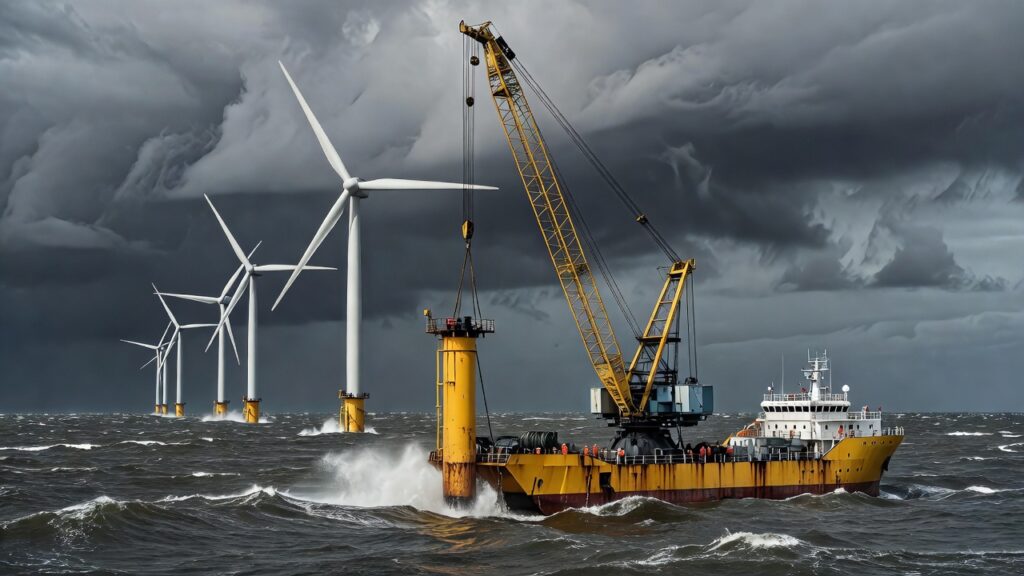
Europe’s energy transition is shifting from ambition to execution. In just the past 48 hours, developments across offshore wind, solar, and grid-scale storage have shown that renewable energy is no longer a policy aspiration but an operational reality reshaping how the continent powers homes, businesses, and industry. From a new offshore wind farm taking physical shape in the German North Sea to a record-breaking renewables share in the UK’s electricity mix, the signals point to accelerating deployment—even as permitting bottlenecks and market volatility remain persistent challenges.
Offshore Wind and Solar: Building the Backbone of Clean Power
Vattenfall’s installation of the first monopile for the Nordlicht I offshore wind farm in the German North Sea marks a tangible step forward for one of Europe’s flagship wind projects. Monopile installation is the unglamorous but critical foundation work that precedes turbine erection—each pile driven into the seabed represents months of engineering, supply chain coordination, and capital deployment. Projects like Nordlicht I are essential to Germany’s and the EU’s broader offshore wind targets, which aim to multiply installed capacity several times over by the early 2030s.
Meanwhile, the UK has hit a symbolic milestone: according to RenewableUK, renewables generated a record 53.1% of UK electricity in the first quarter of 2026, with wind power supplying the bulk of that output. This is more than a statistic—it demonstrates that intermittent generation, when paired with grid investment and market design, can consistently outcompete fossil fuels on both cost and volume.
On the solar side, a 150 MW solar farm in Cumbria has received development consent, joining a wave of local approvals across England. Solar’s falling costs and modular deployment continue to make it one of the fastest levers available to add generation capacity, particularly for regions seeking to boost energy security without waiting years for large infrastructure to come online.
Storage, Hydropower, and the Rise of Flexibility
Generation capacity alone cannot guarantee a reliable grid. The World Bank’s approval of $265 million for the Ifahsa pumped hydropower storage project in Morocco—alongside new battery and storage transactions in Europe—reflects a broader industry recognition: flexibility assets are becoming as strategically important as the wind and solar farms they support. Pumped hydropower, batteries, and emerging technologies like green hydrogen storage all serve the same purpose—absorbing excess renewable output and releasing it when demand peaks or generation dips.
This growing emphasis on flexibility also intersects with resource management more broadly. Pumped hydro systems depend on careful water stewardship, balancing energy storage needs with ecological and agricultural water use—a tension that will intensify as more countries pursue similar projects amid shifting rainfall patterns and drought risk. Getting this balance right is increasingly a matter of long-term infrastructure planning, not just engineering.
Why Permitting and Affordability Now Drive the Narrative
Across these developments, a consistent pattern emerges: renewables are advancing fastest where permitting is clear, grid connections are available, and public support is strong. The UK’s Cumbria solar approval and Germany’s offshore wind progress both benefited from established regulatory pathways—something still lacking in many EU member states where bureaucratic delays continue to slow project timelines.
Equally important is the shift in how clean energy is being framed. Governments and utilities are increasingly pairing decarbonization goals with messaging around affordability and reliability. Record renewable generation shares are valuable not only for emissions reductions but because they help stabilize consumer bills and reduce exposure to volatile fossil fuel markets—an argument that resonates strongly with households and businesses facing energy cost pressures.
What This Means Going Forward
- Grid infrastructure investment must keep pace with generation growth, or curtailment and connection delays will undermine progress.
- Energy efficiency measures remain a cost-effective complement to new supply, reducing overall demand pressure on grids.
- Storage and flexibility technologies, including hydrogen and pumped hydro, will determine how much variable renewable capacity the system can actually absorb.
- Streamlined permitting is emerging as the single biggest lever governments can pull to accelerate deployment.
Key takeaway: Europe’s renewable buildout is no longer just about adding turbines and panels—it’s about integrating them into a resilient, flexible, and affordable energy system. The next phase of the transition will be defined less by generation records and more by how effectively storage, grid capacity, and smart resource management keep pace with the clean power already coming online.