EU Softens Carbon Market Rules for Industry: What the ETS Delay Means for Climate Policy
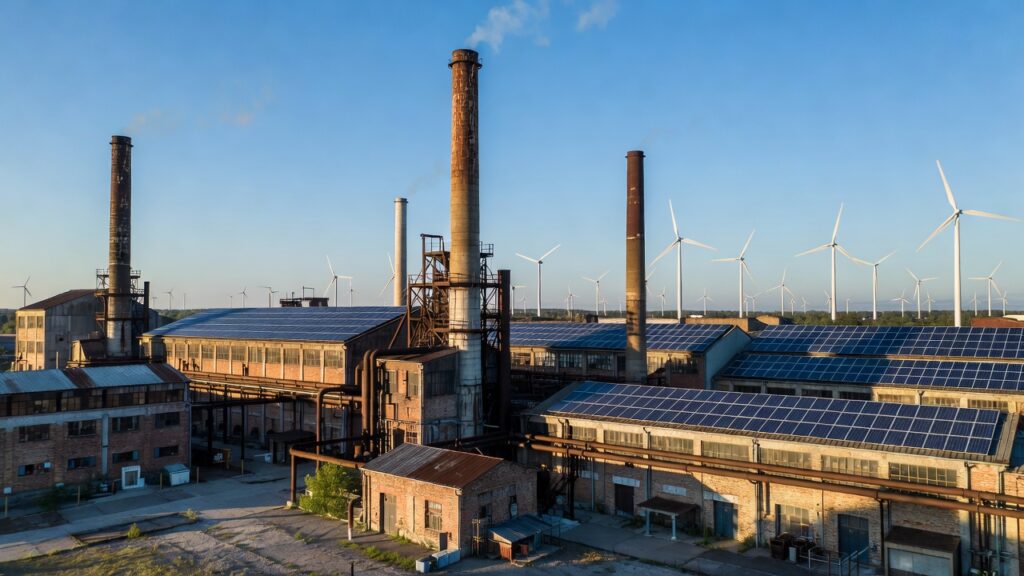
The European Commission has proposed slowing the phaseout of free carbon permits under the EU Emissions Trading System (ETS), extending the benefit for certain industrial sectors until 2038 instead of the previously planned 2034 cutoff. The decision marks one of the more consequential adjustments to the bloc’s flagship carbon market since its expansion to buildings and transport, and it signals a broader recalibration between climate ambition and industrial competitiveness within the EU Green Deal framework.
For citizens, professionals, and businesses tracking European climate policy, the proposal raises a central question: can the EU maintain its emissions trajectory while giving industry more breathing room to adapt? The answer will shape investment decisions, compliance costs, and the credibility of Europe’s climate commitments for the rest of the decade.
Why the Commission Is Easing the Transition
The EU ETS has long been the cornerstone of European environmental regulation, putting a price on carbon emissions from power generation, industry, and, more recently, buildings and transport. Free allowances were originally designed as a temporary cushion to prevent “carbon leakage”—the risk that companies relocate production to regions with laxer climate rules. Under current law, these free permits were set to disappear entirely by 2034, aligning with the phase-in of the Carbon Border Adjustment Mechanism (CBAM), which becomes fully operational in 2026 and will impose carbon costs on imports of steel, cement, aluminum, and other carbon-intensive goods.
The Commission’s new proposal ties the extended timeline explicitly to decarbonization investment: industries benefiting from free allowances through 2038 would need to demonstrate concrete progress on emissions-reducing technologies. This conditional approach attempts to answer criticism from European manufacturers, who have argued that a faster removal of free permits—especially amid high energy prices and global competition from the U.S. and China—could accelerate deindustrialization rather than decarbonization.
Balancing Carbon Markets With Industrial Competitiveness
The proposal must still clear the European Parliament and the Council of the EU, where member states are divided. Countries with large industrial bases, such as Germany, Poland, and Italy, have pushed for more flexibility, while others, including several Nordic states, worry that delaying the phaseout undermines the environmental integrity of carbon markets and sends mixed signals to investors betting on Europe’s low-carbon transition.
This tension reflects a wider theme now shaping EU policy: how to keep the 2030 target of at least a 55% emissions cut, and the newly proposed 2040 target of a 90% cut, credible without triggering industrial backlash. The EU Climate Law remains the legal anchor for these goals, but implementation details—like ETS permit timelines—determine whether the targets translate into real emissions reductions or become aspirational benchmarks.
- CBAM implementation in 2026 will still apply carbon costs to imports, creating a parallel pressure point even as free permits persist domestically.
- Sustainability reporting requirements under the Corporate Sustainability Reporting Directive continue to expand, meaning companies must disclose transition plans regardless of ETS permit timelines.
- Clean-tech policy, through the Net-Zero Industry Act and Critical Raw Materials Act, aims to secure inputs for batteries, hydrogen, and renewable manufacturing, complementing—rather than replacing—carbon pricing tools.
What This Means for Businesses and Investors
For companies operating in carbon-intensive sectors, the extended timeline offers more predictability for capital planning, potentially easing the financial burden of compliance in the short term. However, it also introduces uncertainty: firms betting on early decarbonization to gain a competitive edge under a faster ETS phaseout may now face a longer runway shared with less-transitioned competitors.
Investors focused on transition finance will be watching closely how “tied to decarbonization investment” is defined and enforced. Vague or weakly monitored conditions could dilute the policy’s climate impact, while strict criteria could still drive meaningful emissions reductions even with free permits in place. This is where sustainability reporting frameworks become critical—verifiable, standardized disclosure will determine whether the extension delivers real decarbonization or simply postpones costs.
Globally, the EU’s approach is being watched as a bellwether. Other regions developing carbon pricing systems, from California’s cap-and-trade program to China’s national ETS, often reference EU design choices. A perceived softening of ambition could influence how aggressively other jurisdictions pursue similar carbon market reforms.
Key Takeaway
The EU’s proposal to extend free carbon permits until 2038 illustrates the ongoing balancing act at the heart of European climate policy: sustaining industrial competitiveness while not derailing long-term decarbonization goals. Whether this proves to be a pragmatic bridge or a costly delay will depend on how rigorously the Commission, Parliament, and member states enforce the investment conditions attached to the extension. For businesses and policymakers alike, the coming months of negotiation will be a critical test of the EU Green Deal’s resilience.