Spain’s €162 Million Cleantech Push Signals Europe’s Shift to Industrial Energy Transition
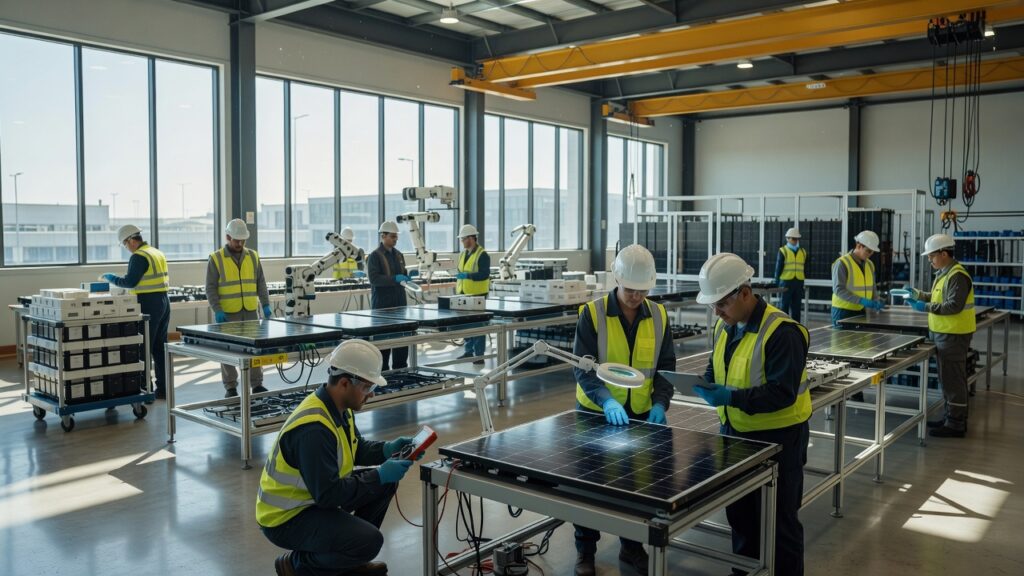
Europe’s energy transition is entering a new phase—one defined less by ambitious targets and more by concrete industrial capacity. The latest signal comes from Spain, where the government’s energy agency IDAE has approved more than 162 million euros in support for 40 industrial projects dedicated to manufacturing clean technologies and reinforcing the domestic energy value chain. This is not simply another subsidy announcement; it reflects a deliberate strategy to localize cleantech production, reduce dependency on imported components, and accelerate deployment of the infrastructure Europe needs to meet its climate goals.
For citizens, this translates into faster access to cleaner energy systems and new jobs tied to the green economy. For businesses, it lowers the financial risk of scaling up factories that produce batteries, solar components, and grid technologies. And for policymakers across the continent, Spain’s move offers a template for how industrial policy and climate policy can reinforce each other.
Industrial Policy Becomes the New Climate Lever
For years, European climate strategy centered on subsidies for renewable installation and carbon pricing. Increasingly, however, governments are recognizing that energy transition success depends on who manufactures the technology—not just who deploys it. Spain’s IDAE funding round is emblematic of this shift: rather than only supporting solar farms or wind installations, it directly finances the factories and supply chains that produce the components those projects require.
This approach mirrors similar moves elsewhere in Europe. Solaria, a major Spanish renewable developer, recently secured 41 million euros in IDAE aid specifically to accelerate battery storage deployment—addressing one of the sector’s most persistent bottlenecks: intermittency. Meanwhile, corporate demand for clean power continues to grow, illustrated by Amazon’s agreement with Skyborn Renewables, now Germany’s largest individual power purchase agreement (PPA). Together, these developments suggest that green technology investment is maturing from policy-driven pilot projects into commercially self-sustaining markets.
Grids and Hydrogen: The Infrastructure Race
Even as manufacturing capacity expands, infrastructure remains the critical constraint. The European Union’s commitment of up to 690 million euros to modernize Egypt’s electricity network and integrate renewables underscores a broader truth: the energy transition is a grid problem as much as a generation problem. Without adequate transmission and storage capacity, even abundant clean electricity cannot reach where it’s needed.
Hydrogen is emerging as a parallel front in this infrastructure race. Spain’s Andalusian hydrogen project with Moeve, alongside EU-backed hydrogen initiatives and the launch of the country’s first hydrogen price index, points to a market moving beyond pilot demonstrations toward genuine commercialization. Price indices, in particular, are a strong signal of maturity—they exist only when a market has enough transactional volume and diversity of buyers and sellers to warrant standardized pricing. This is a meaningful step for cleantech sectors that have long struggled to prove commercial viability at scale.
Cities as Testing Grounds for Green Innovation
While national and EU-level policy shapes the big picture, much of the practical deployment of climate solutions happens at the municipal level. Phoenix, Arizona’s recent securing of over 16 million dollars for emission-free transport and city infrastructure illustrates how local governments are becoming primary vehicles for electric mobility and smart cities initiatives. These investments—covering everything from electric bus fleets to charging infrastructure—directly improve air quality and daily life for residents, often faster than national programs can.
European cities have followed similar paths for years, integrating renewable energy, low-emission zones, and digital traffic management into cohesive urban strategies. The Phoenix example, though outside Europe, reinforces a global pattern: climate action increasingly depends on coordinated action across governance levels, from IDAE’s industrial grants in Spain to city halls funding electric buses.
What This Means Going Forward
- For investors: Government-backed manufacturing incentives reduce risk and may open new opportunities in battery, hydrogen, and grid technology sectors.
- For policymakers: Spain’s model suggests that pairing industrial subsidies with climate targets can strengthen both economic resilience and emissions reduction simultaneously.
- For citizens: Expect continued growth in green jobs, alongside gradual improvements in energy affordability as domestic supply chains reduce reliance on volatile international markets.
The convergence of industrial policy, infrastructure investment, and municipal action marks a maturing phase for Europe’s climate strategy. Spain’s 162-million-euro cleantech push is not an isolated announcement—it’s part of a broader continental and global trend toward building the physical and economic foundations necessary for a genuine green innovation economy. The next several years will test whether this industrial approach can keep pace with the urgency the climate crisis demands.