From Algae Fertilisers to Carbon Credits: How Agriculture Is Reinventing Its Future
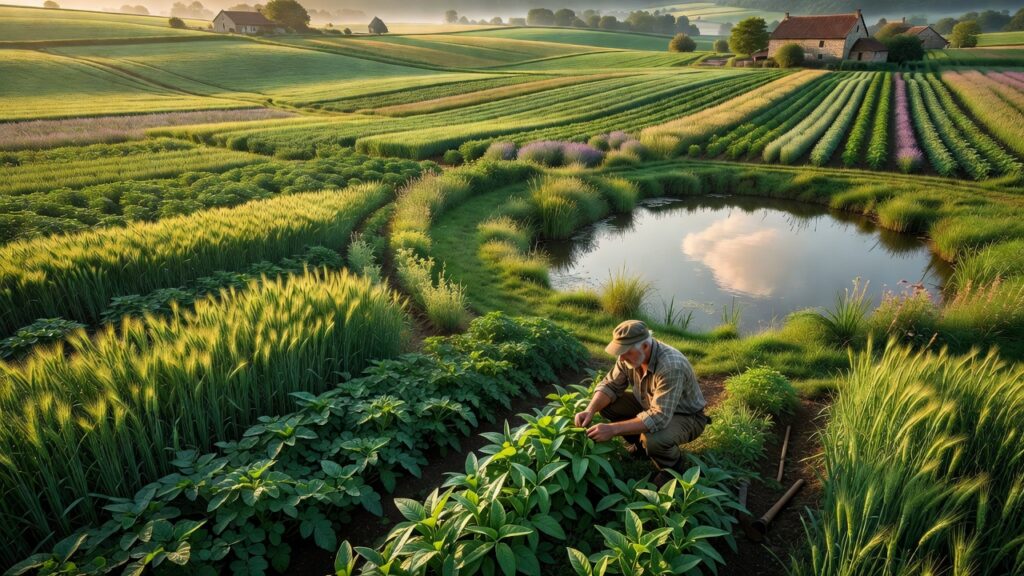
Agriculture stands at a crossroads. Squeezed by volatile commodity prices, extreme weather events, and tightening environmental regulations, farmers and food producers worldwide are under mounting pressure to produce more with less — and to do so in ways that don’t cost the planet. A cluster of recent developments, from a striking algae fertiliser trial to Japan’s new carbon credit methodology for livestock, signals that the transition toward genuinely sustainable agriculture is accelerating — and that the tools to get there are becoming more tangible by the season.
Algae in the Field: A 21% Yield Boost With a Smaller Footprint
One of the most eye-catching innovations to emerge from recent field research is the use of algae-based fertilisers as a replacement — or at least a partial substitute — for conventional synthetic inputs. According to trials highlighted by the BBC’s sustainable agriculture coverage, applying algae-derived fertiliser produced a 21% increase in crop yields compared to untreated control plots. That is not a marginal gain; it is the kind of number that makes agronomists and investors pay attention.
For European food systems, this matters enormously. The EU’s Farm to Fork Strategy has set a target of reducing chemical fertiliser use by at least 20% by 2030. Synthetic nitrogen fertilisers are both energy-intensive to produce — largely dependent on natural gas through the Haber-Bosch process — and a significant source of nitrous oxide emissions, a greenhouse gas roughly 265 times more potent than CO₂ over a 100-year period. Algae-based alternatives, which can be cultivated with relatively low resource inputs and even integrated into circular nutrient cycles, represent a compelling direction for agroecology in practice: working with biological systems rather than against them.
The challenge now is scaling. Pilot results are promising, but moving from controlled field trials to widespread commercial availability across diverse soil types and climates requires investment, regulatory clarity, and farmer trust — all areas where European agricultural policy can play a decisive role.
Carbon Credits for Livestock: Japan Points the Way
Meanwhile, on the other side of the world, Japan’s Ministry of Agriculture, Forestry and Fisheries (MAFF) has approved a new methodology that allows livestock producers to earn carbon credits by incorporating methane-reducing feed additives into their animals’ diets. Enteric fermentation — the digestive process in ruminants like cattle and sheep — accounts for roughly 14.5% of global greenhouse gas emissions, according to the UN Food and Agriculture Organization. Feed additives such as 3-nitrooxypropanol (3-NOP) have demonstrated reductions in methane output of up to 30% in clinical settings.
Japan’s move to formalise this within a carbon market framework is significant. It creates a direct financial incentive for farmers to adopt lower-emission practices, embedding climate action into the economic logic of livestock production rather than leaving it as a voluntary, cost-absorbing choice. For Europe, which is still developing the rules of its own voluntary carbon market under the EU Carbon Removal Certification Framework, Japan’s methodology offers a concrete model worth examining. Integrating livestock emission reductions into credible, verifiable carbon accounting could become a cornerstone of supply chain sustainability for the meat and dairy sectors.
Policy Levers: From Washington to Brussels
Regulatory momentum is building on multiple fronts. In the United States, the EPA has proposed updated Renewable Fuel Standard volumes for 2026–2027, alongside new funding streams for biofuel development and nutrient-management technical assistance in sensitive watersheds like the Western Lake Erie Basin. While these are US-specific measures, they reflect a broader global pattern: governments are increasingly using a combination of standards, grants, and market mechanisms to steer agriculture toward lower-emission, higher-resilience models.
In the UK, post-Brexit agricultural policy is coalescing around a sustainable food-and-farming plan that ties public payments to environmental outcomes — a model that influenced, and was influenced by, the EU’s own agri-environment schemes. For plant-based food producers and alternative protein developers, this regulatory environment is creating new opportunities: lower-emission supply chains are increasingly valued not just ethically, but commercially and legally.
Implications for Europe’s Food Transition
Taken together, these developments sketch a coherent direction of travel for sustainable food systems:
- Input innovation (algae fertilisers, precision nutrition) can decouple productivity from environmental harm.
- Market mechanisms (carbon credits, green procurement) can make sustainable choices economically rational for producers.
- Policy alignment across the EU, UK, US, and beyond is gradually closing the gap between ambition and enforcement.
European farmers, food businesses, and policymakers who engage with these shifts early — rather than waiting for mandates — will be better positioned to compete in a market where sustainability credentials are becoming a baseline expectation, not a premium feature.
Key takeaway: The future of agriculture is being written now, in field trials, carbon registries, and regulatory proposals. The technologies and policy frameworks to make farming genuinely sustainable are no longer theoretical — they are arriving, imperfectly but unmistakably, in the real world. Europe has both the ambition and the institutional capacity to lead. The question is whether it will move fast enough.