EU Green Deal at a Crossroads: Brussels Softens Reporting Rules While Betting on Clean Industry
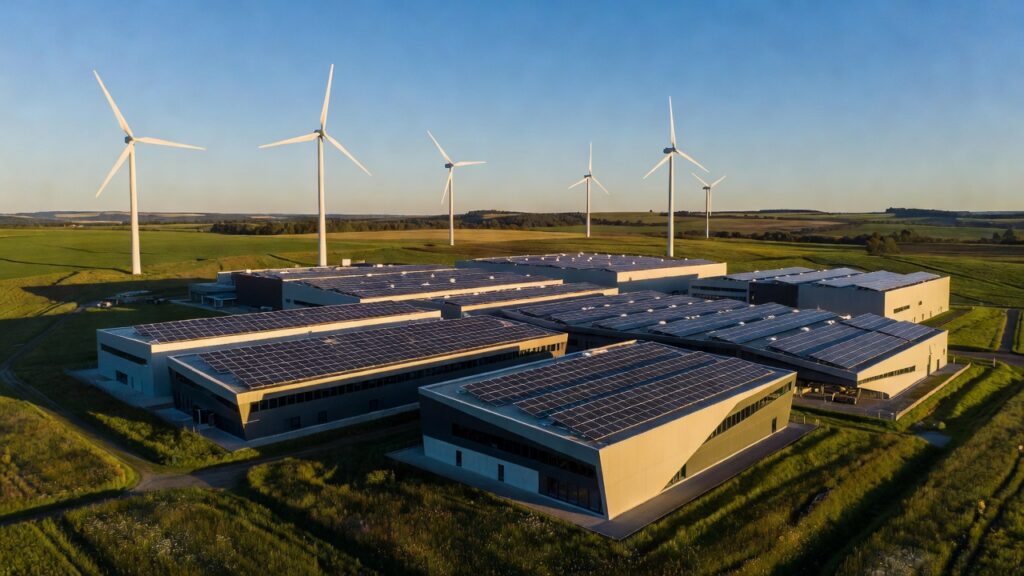
The European Union is recalibrating its climate and sustainability strategy in ways that will affect businesses, investors, and citizens across the continent. The European Commission is simultaneously relaxing corporate sustainability reporting obligations and doubling down on industrial decarbonisation investment — a balancing act that reflects mounting tension between environmental ambition and economic competitiveness.
Scaling Back Sustainability Reporting: Simplification or Retreat?
One of the most debated moves is the proposed overhaul of the Corporate Sustainability Reporting Directive (CSRD). Under the so-called “omnibus simplification” package, the Commission is expected to significantly narrow the directive’s scope, keeping only the largest companies within its mandatory reporting perimeter and pushing implementation back to 2028 — a delay of several years from the original timeline.
For many small and mid-sized businesses that had been preparing for compliance, this comes as relief. But critics warn it risks undermining the transparency that investors, civil society, and supply chain partners depend on to make informed decisions. Environmental regulation experts argue that sustainability reporting is not red tape — it is the infrastructure of accountability. Without it, greenwashing becomes harder to detect and penalise.
The debate mirrors a wider European conversation: can the EU Green Deal survive political pressure to prioritise short-term industrial competitiveness over long-term climate commitments?
The Clean Industrial Deal: Decarbonisation as Economic Strategy
Brussels is not simply stepping back from climate policy — it is redirecting its energy. The Clean Industrial Deal, the Commission’s flagship industrial strategy, pairs decarbonisation goals with concrete financial tools: new state-aid frameworks, tax incentives for low-carbon investment, a pilot decarbonisation bank, and support for long-term renewable energy Power Purchase Agreements (PPAs) designed to lower energy costs for energy-intensive industries.
This approach signals a shift in how the EU frames climate policy — less as environmental regulation and more as an industrial competitiveness strategy. It draws clear inspiration from the United States Inflation Reduction Act, which mobilised hundreds of billions in clean investment through incentives rather than mandates. The goal is to make Europe an attractive destination for clean technology manufacturing and green hydrogen production, while keeping heavy industry on a credible decarbonisation path.
The Emissions Trading System (ETS), now expanded to cover buildings and transport, remains a central pillar. The Carbon Border Adjustment Mechanism (CBAM) — which places a carbon price on imports of carbon-intensive goods — is on track to become fully operational by 2026, maintaining external pressure on global supply chains to align with European climate standards.
A Flexible 2040 Target and the Return of Carbon Credits
On long-term climate targets, the Commission has proposed a 90% net emissions reduction goal by 2040 — a figure endorsed by the European Scientific Advisory Board on Climate Change. Notably, the proposal opens the door to using high-quality international carbon credits from 2036, a move that could reshape both European and global carbon markets.
Proponents say this flexibility is necessary to manage transition costs and maintain political consensus. Opponents fear it creates a loophole that allows emissions to be “offset” rather than genuinely reduced, weakening the integrity of EU climate policy. The design of quality standards for these credits will be critical — and heavily contested in the months ahead.
What This Means for Businesses and Citizens
The practical implications of this policy shift are significant:
- Businesses outside the revised CSRD scope will face fewer mandatory reporting requirements, but market and investor pressure for ESG disclosure is unlikely to disappear.
- Energy-intensive industries stand to benefit from new financing tools and lower-cost renewable energy access under the Clean Industrial Deal.
- Importers of goods from outside the EU must prepare for CBAM compliance by 2026, regardless of any domestic simplification measures.
- Carbon market participants should monitor how international credit eligibility rules evolve under the 2040 framework.
Key Takeaway
The EU is not abandoning its green ambitions — the climate-neutrality target remains legally binding, and the architecture of the Green Deal is still standing. But Brussels is clearly trading regulatory breadth for political durability, betting that a more flexible, industry-friendly approach will keep the clean transition alive in a challenging economic and geopolitical climate. Whether that bet pays off — for the planet and for Europe’s long-term competitiveness — depends on the details still being negotiated.