Europe’s Clean Energy Momentum: Grid Modernisation, Offshore Wind, and Storage Lead the Way
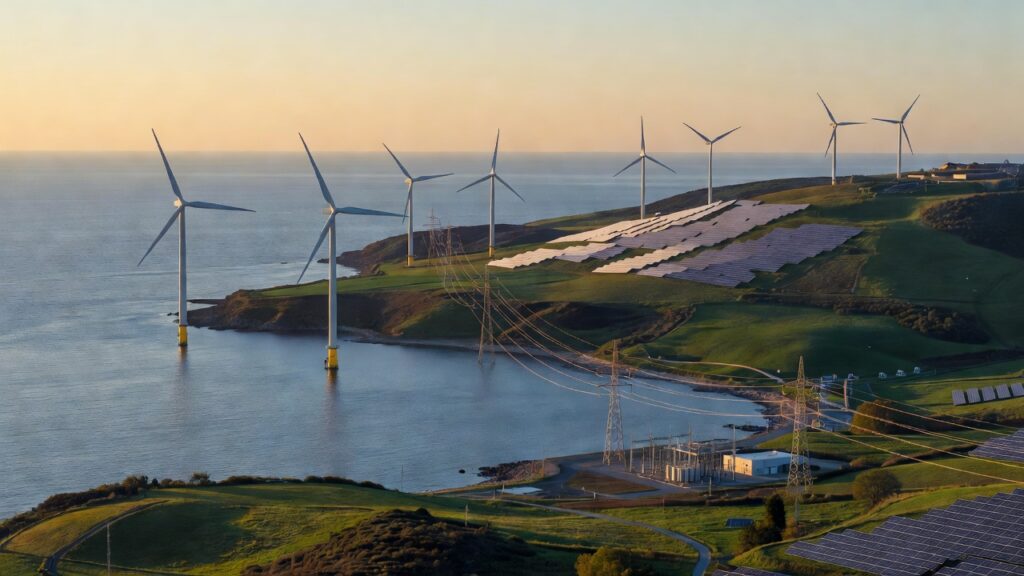
The clean energy transition is no longer a distant promise — it is an accelerating economic reality. Across Europe and beyond, a convergence of falling costs, ambitious permitting activity, and major infrastructure investment is reshaping how electricity is generated, stored, and delivered. Understanding these parallel developments helps citizens, businesses, and policymakers see the full picture of where the energy system is heading — and how fast.
Renewables Are Now the Cheapest Option — Almost Everywhere
A striking headline from an IRENA-linked report cited by the Spanish outlet Energías Renovables confirms what analysts have been tracking for years: renewable energy is now cheaper than fossil fuels in more than 85% of new energy projects worldwide. Solar and wind installations consistently undercut new coal and gas plants on a cost-per-megawatt-hour basis, and the gap continues to widen as technology matures and supply chains scale up.
For Europe, this cost advantage carries profound implications. It means that every delay in permitting or grid connection is not just an environmental setback — it is an economic one. Countries that streamline approvals for solar parks, onshore wind farms, and offshore wind arrays stand to capture cheaper electricity prices, reduce import dependency, and attract industrial investment hungry for affordable, low-carbon power.
Spain illustrates both the progress and the complexity of this moment. Recent weeks have seen the approval of an experimental offshore wind farm near Roses on the Catalan coast, alongside administrative authorisation for the Somaloma-Las Quemadas wind project. At the same time, the Benavieja wind project was formally archived, a reminder that not every proposal clears regulatory and environmental hurdles. Permitting remains one of the most critical bottlenecks in European renewable deployment, and Spain’s mixed record reflects a challenge shared from the Baltic to the Adriatic.
Grid Modernisation: The Invisible Infrastructure That Makes It All Work
Cheap renewable energy is only useful if the grid can carry it. This is why grid modernisation has emerged as the defining infrastructure challenge of the energy transition — and why investment is flowing at scale.
A notable example comes from outside Europe’s borders but with direct European backing: the European Union has committed up to €690 million to modernise Egypt’s power grid and improve its capacity to integrate renewables. The project underscores a broader EU strategy of exporting grid-readiness expertise and financing to neighbouring regions, securing future corridors for green electricity and green hydrogen that could eventually flow northward into European markets.
Within Europe, the logic is identical. Offshore wind capacity in the North Sea, solar generation in southern Spain and Italy, and hydropower in Scandinavia all need upgraded transmission lines, smarter switching infrastructure, and cross-border interconnections to reach consumers efficiently. Without this backbone, even the most competitive renewable energy projects cannot deliver their full value.
Storage, Hydrogen, and the Industrial Decarbonisation Push
Two further developments signal the maturing of the clean energy market beyond simple generation. First, Solaria has secured €41 million in support from Spain’s IDAE (Institute for Energy Diversification and Saving) for battery storage deployment — a direct acknowledgement that solar power needs to be paired with storage to deliver round-the-clock value. Battery systems smooth out supply fluctuations, reduce curtailment, and make renewable-heavy grids more resilient.
Second, the commercial sector is locking in long-term clean power commitments. Amazon and Skyborn Renewables have signed a large power-purchase agreement (PPA) in Germany, channelling corporate demand directly into new wind capacity. These industrial-scale deals are increasingly vital: they provide the revenue certainty that project developers need to secure financing, accelerating builds that might otherwise wait years for merchant market confidence.
Hydrogen, while still in earlier deployment phases, threads through both stories. Storage and electrolysis infrastructure share many of the same grid-flexibility requirements, and EU policy frameworks continue to position green hydrogen as the key to decarbonising sectors — steel, chemicals, shipping — where direct electrification remains difficult.
What This Means for the Transition Ahead
Taken together, these developments paint a picture of an energy transition that is financially credible, technically achievable, and politically active — but still unevenly paced. The priorities are clear:
- Accelerate permitting reform across EU member states to unlock the renewable pipeline already waiting for approval.
- Invest in grids with the same urgency applied to generation — transmission and storage are now the critical path.
- Scale corporate PPAs and public financing tools like IDAE grants to de-risk clean energy projects and attract private capital.
- Integrate international partnerships — from North Africa to the Western Balkans — into Europe’s energy security strategy.
The economics of renewable energy have already won the argument. The work now is operational: building faster, connecting smarter, and storing better. Europe has the policy architecture and the industrial base to lead — the question is whether it moves quickly enough to make the most of the advantage it has built.
Key takeaway: With renewables beating fossil fuels on cost in over 85% of new projects, the bottlenecks are no longer financial or technological — they are logistical. Grid investment, storage deployment, and faster permitting are the levers that will determine how quickly Europe captures the clean energy dividend.