EU Electrification Push and Carbon Pricing for Waste: What It Means for Business and Citizens
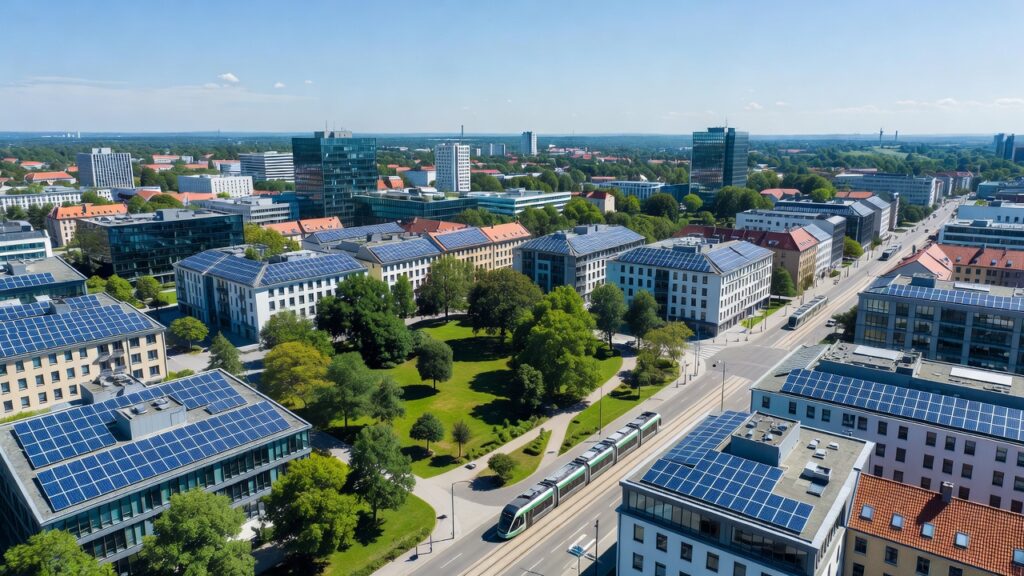
Europe is entering a new phase of climate governance. Two significant policy moves from Brussels — a sweeping electrification package and the extension of carbon pricing to waste incineration — are reshaping the rules of the game for businesses, investors, and citizens alike. Taken together with a summer of record-breaking heat, these developments make one thing clear: the cost of inaction is rising, and the EU is determined to accelerate the transition.
A Continent Plugging In: The EU’s Electrification Agenda
According to a draft plan reported by Reuters, the European Commission is preparing a comprehensive package of policies and funding schemes designed to shift more of the EU economy away from oil and gas and toward electricity. The initiative targets three critical sectors: industry, buildings, and transport — together responsible for the vast majority of Europe’s energy consumption and carbon emissions.
For businesses navigating ESG commitments and sustainable finance frameworks, this is a structural signal, not a distant aspiration. Capital allocation decisions made today — on heating systems, industrial processes, fleet management — will either align with or run against the direction of EU regulation. Companies that move early on electrification stand to benefit from funding schemes and avoid stranded-asset risk. Those that delay face both regulatory exposure and reputational pressure from investors increasingly focused on corporate responsibility and climate alignment.
The electrification push also carries a broader message for sustainable finance: the EU is actively engineering demand for clean electricity infrastructure, creating long-term investment opportunities in grids, storage, heat pumps, and electric mobility across the bloc.
Putting a Price on Waste: Incineration Enters the Carbon Market
In a separate but equally consequential move, EU officials have confirmed that waste incineration plants will be required to purchase carbon allowances under the EU Emissions Trading System (ETS). This brings one of Europe’s most carbon-intensive — and until now largely unregulated — waste disposal methods into the bloc’s core climate tool.
The implications for the circular economy are significant. By raising the compliance cost of burning waste, the EU is strengthening the economic case for waste reduction, reuse, and recycling. Municipalities and waste operators will face direct financial pressure to shift away from incineration as a default solution. For businesses, this translates into growing incentives — and likely future mandates — to design products for recyclability, reduce packaging waste, and engage seriously with extended producer responsibility schemes.
From an ESG perspective, companies with high waste footprints or those operating in sectors with complex end-of-life product streams should treat this development as an early warning. Carbon pricing for waste is not just an operational cost issue; it is becoming a material sustainability risk that investors and analysts will increasingly scrutinise in ESG assessments and green business evaluations.
Climate Extremes Are Already Here — and the Costs Are Real
The policy shifts are unfolding against a backdrop of accelerating climate impacts. Europe recorded its warmest June on record in 2025, with a late-month heatwave disrupting power supplies and forcing school closures across multiple countries. In Germany alone, an estimated 5,120 heat-related deaths have already been recorded this year — a stark reminder that climate change is not a future scenario but a present-day public health and economic crisis.
For employers, facility managers, and urban planners, heat resilience is rapidly becoming a core component of responsible operations. Business continuity planning, worker protection protocols, and investment in cooling infrastructure are shifting from best practice to basic necessity. These are precisely the kinds of physical climate risks that ESG frameworks — from the EU’s own Corporate Sustainability Reporting Directive (CSRD) to global standards like TCFD — require companies to identify and disclose.
Implications for Businesses and Decision-Makers
- Review energy strategies now: The EU’s electrification funding package will create both opportunities and obligations. Businesses should map their energy exposure and identify where electrification investments align with incoming policy support.
- Assess waste-related carbon liability: Companies generating significant waste volumes should model the potential cost impact of ETS inclusion for incineration and accelerate circular economy initiatives accordingly.
- Integrate physical climate risk into ESG reporting: Heat-related disruptions are material risks. Boards and sustainability teams should ensure climate adaptation is reflected in both strategy and disclosure.
- Engage with sustainable finance instruments: Green bonds, sustainability-linked loans, and EU taxonomy-aligned funding are increasingly available for electrification and circular economy projects.
Key Takeaway
The EU’s twin moves on electrification and waste carbon pricing are not isolated regulatory updates — they are part of a coherent, accelerating shift toward a low-carbon, circular economy. For businesses committed to genuine corporate responsibility and sustainability leadership, the message from Brussels is unambiguous: the transition is being actively engineered through policy, pricing, and public funding. The organisations that treat these signals as strategic opportunities — rather than compliance burdens — will be best positioned for the decade ahead.