Record Renewables, Unfinished Business: Why 582 GW Is Still Not Enough
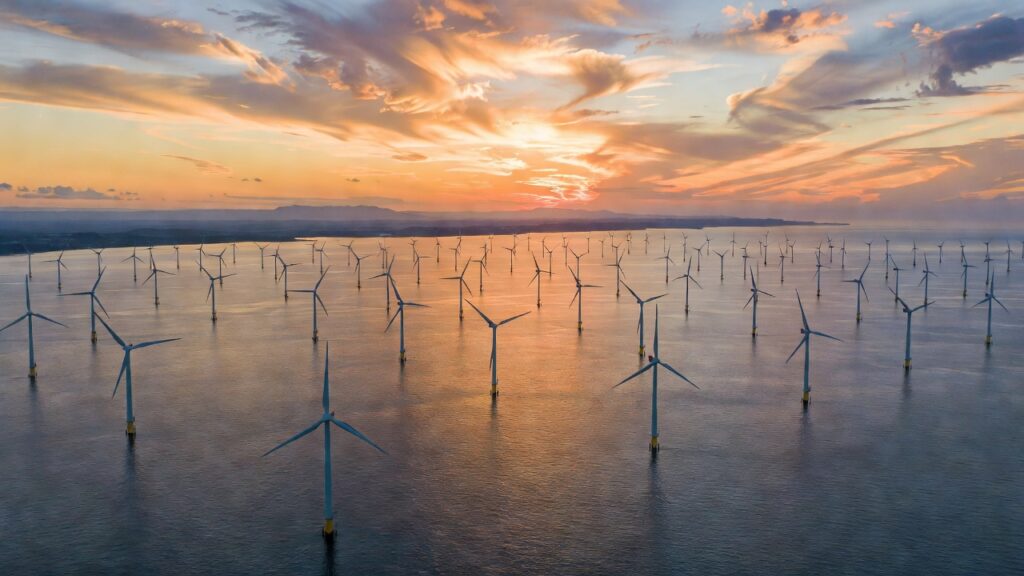
The numbers are impressive on paper. In 2024, the world installed a record 582 gigawatts of renewable energy capacity — the highest single-year addition in history, according to the International Renewable Energy Agency (IRENA). In the United States alone, 56 GW of solar, wind, and storage came online in the first half of 2025. Yet despite this momentum, global deployment remains off track to meet the COP28 pledge of tripling renewable capacity by 2030. The gap between ambition and reality is closing — but not fast enough.
Europe Builds the Foundations: Storage, Hydrogen, and Jobs
While the headline figures are global, some of the most structurally significant moves are happening across Europe, where policy is beginning to align with industrial strategy in concrete ways.
Under the Net-Zero Industry Act, the European Union has granted strategic-project status to a fully integrated battery energy storage system based in Bulgaria. The decision is more than symbolic: it signals that the EU is treating grid-scale storage and flexibility as a core pillar of energy security, not just a technical afterthought. As intermittent solar and wind generation grows, the ability to store and dispatch electricity on demand becomes the critical bottleneck — and Europe is beginning to address it at the policy level.
In the Netherlands, Air Liquide reached a final investment decision on a 200-megawatt electrolyser project in Rotterdam, with TotalEnergies signed on as an offtaker. This is exactly the kind of industrial-scale hydrogen deal the sector has been waiting for: a large, committed buyer, a port location with export potential, and a clear pathway to decarbonising heavy industry. Rotterdam’s position as Europe’s largest port makes it a natural hub for hydrogen industrialisation, and this project could serve as a template for similar deals across the continent.
Across the Channel, the UK government has set a target of 400,000 clean-energy jobs by 2030, with employment in wind, solar, and nuclear expected to roughly double. This framing — linking the energy transition directly to labour-market growth and regional economic development — marks a shift in how policymakers are selling the green transition to the public. Energy efficiency and clean power are no longer just environmental imperatives; they are presented as engines of economic renewal.
Innovation at the Edges: Water, Waste, and Clean Energy Converge
Beyond the megawatt announcements, a quieter revolution is taking place at the intersection of resource management, water, and clean energy. Two recent research breakthroughs illustrate how the boundaries between energy sectors are dissolving.
- A new solar desalination system has demonstrated the ability to produce drinking water from seawater without generating the environmentally damaging brine that conventional desalination plants discharge into oceans. For water-stressed regions — including parts of Southern Europe and the Mediterranean basin — this could reframe solar not just as an electricity source but as a direct tool for water security.
- Separately, researchers have developed solar-driven methods to convert plastic waste into clean fuels, including hydrogen. The approach addresses two crises simultaneously: plastic pollution and the need for low-carbon energy carriers. While still at an early stage, it points toward a future where waste streams become feedstocks for the energy transition.
These innovations reflect a broader trend: the most promising clean-energy solutions are increasingly those that tackle multiple resource challenges at once, turning liabilities — brine, plastic, wastewater — into assets.
What This Means for Decision-Makers and Citizens
The record 582 GW figure should be read as both an achievement and a warning. It proves that renewable energy deployment at scale is technically and economically feasible. But IRENA’s own modelling suggests the world needs to be adding closer to 1,000 GW per year through the end of the decade to stay on a credible 1.5°C pathway. The infrastructure — grids, storage, hydrogen networks — must scale in parallel with generation capacity, or the energy produced will have nowhere reliable to go.
For European citizens and businesses, the practical implications are tangible: more stable long-term energy prices, new employment opportunities in manufacturing and engineering, and cleaner air in industrial corridors from Rotterdam to the Black Sea coast.
Key takeaway: Record renewable installations confirm that the energy transition is real and accelerating — but ambition gaps remain. The next phase will be won or lost not on solar panels and wind turbines alone, but on storage, hydrogen infrastructure, smart resource management, and the political will to match industrial policy with climate targets.