Binding Targets, Central Bank Shifts, and the Rhine’s Warning: What This Week Means for Sustainability
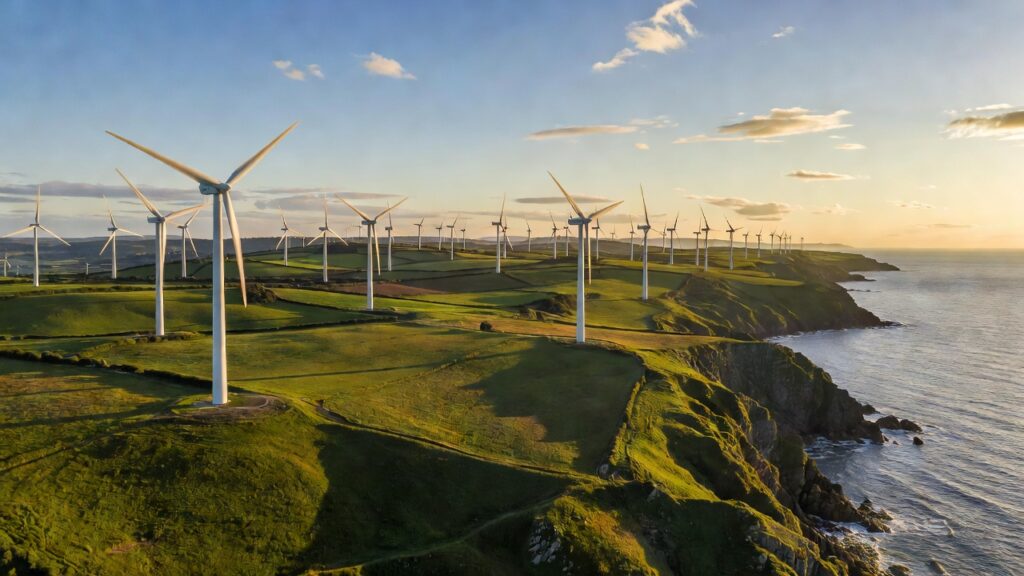
Something quietly decisive happened in global sustainability this week. Across three continents, the language of climate action shifted — from voluntary commitments to binding obligations, from risk awareness to risk pricing, from planning to enforcement. For citizens, businesses, and policymakers tracking ESG and corporate responsibility, the signals are too significant to ignore.
China Sets a Binding Renewable Target — and the World Should Pay Attention
The most consequential development of the past 48 hours came from Beijing. China released a new five-year renewable energy plan calling for a 53% increase in wind and solar power generation by 2030 — and, critically, made that target legally binding for the first time. This is not a pledge or an aspiration; it is a mandate backed by state authority.
The implications for global clean-energy investment are enormous. China is already the world’s largest manufacturer of solar panels, wind turbines, and battery storage systems. A binding expansion target at this scale will accelerate industrial output, intensify competition in global supply chains, and likely push down equipment costs further — which is good news for European green business looking to deploy renewable capacity. It also puts pressure on Western governments to match ambition with enforceable policy, rather than relying on voluntary corporate commitments that have repeatedly fallen short.
For sustainability professionals and ESG analysts, this development reshapes emissions trajectory models. If China delivers on a binding 53% increase in green power generation, the global energy mix looks materially different by the end of the decade — and that changes the assumptions underpinning everything from carbon pricing to stranded-asset risk.
The ECB Moves on Climate Risk — and Europe’s Courts Clear the Way for Renewables
Closer to home, two developments this week underline that Europe is also moving from voluntary to mandatory frameworks — just through different institutions.
The European Central Bank has begun applying climate risk factors within its collateral framework, a significant step in sustainable finance policy. In practical terms, this means the ECB is starting to price climate-related risk into the assets it accepts from banks as collateral for funding. It is a structural signal: financial institutions that hold high-carbon or climate-exposed assets may face higher funding costs. For ESG-focused investors and corporate treasury teams, this is the kind of institutional shift that eventually rewrites the rules of capital allocation across the eurozone.
Meanwhile, in Italy, the Constitutional Court struck down a Sardinian regional law that had effectively frozen renewable energy authorisations by designating large areas as ‘non-suitable’ for wind and solar development. The ruling removes a significant legal barrier and opens the door for new projects on an island with exceptional solar and wind resources. It is a reminder that permitting reform and legal clarity are as important to the energy transition as technology or finance — and that the circular economy of clean energy depends on getting governance right at every level.
Disaster Losses and the Rhine: Physical Climate Risk Is Already Here
Two further developments this week serve as grounding reminders that climate risk is not a future scenario — it is a present-tense business and policy challenge.
- The World Bank released an early assessment estimating that the June 24 earthquakes in Venezuela caused $19.6 billion in direct physical damage. While seismic events are not directly climate-driven, the scale of disaster-loss financing required underscores a broader trend: governments, insurers, and multilateral lenders face rapidly growing demands for resilience funding that current frameworks are not designed to meet.
- The Rhine in Germany has fallen again, restricting cargo shipping and pushing up freight costs. Low water levels on the Rhine — a recurring consequence of climate-linked drought and heat — disrupt industrial supply chains, raise costs for manufacturers, and expose the fragility of infrastructure built for a more stable climate. For companies with European operations, this is a live ESG and corporate responsibility issue, not a theoretical one.
Implications for Businesses and Decision-Makers
Taken together, this week’s developments point toward a clear and accelerating trend: binding policy is replacing voluntary action as the primary driver of sustainability outcomes. China’s enforceable renewable target, the ECB’s collateral framework shift, and Italy’s court ruling all reflect the same underlying dynamic — institutions are hardwiring climate into the rules of the game, not leaving it to goodwill.
For European businesses, the practical takeaways are straightforward. Climate risk must be integrated into financial planning, not treated as a reputational add-on. Renewable deployment opportunities are real and growing — but so are the physical risks from a climate that is already changing. And the companies and investors that treat ESG as a compliance exercise rather than a strategic lens will find themselves increasingly out of step with the direction of both policy and markets.
Key takeaway: This week confirmed that the transition from climate ambition to climate enforcement is well underway — in Beijing, Frankfurt, Rome, and on the banks of the Rhine. The question for every organisation with a sustainability strategy is no longer whether binding targets will arrive, but whether they are ready when they do.