Fossil Fuel Phaseout, Carbon Pricing, and Clean Energy Trade: A Turning Point for Global Climate Policy
The world’s climate and energy landscape is shifting faster than many anticipated. In recent days, a convergence of diplomatic meetings, regulatory moves, and trade data has painted a picture of accelerating — if uneven — progress on environmental policy. From a landmark fossil-fuel phaseout summit to record-breaking clean-energy exports from China, the signals are clear: the transition away from carbon is no longer a distant ambition. It is becoming economic and political reality, with direct consequences for European citizens, businesses, and decision-makers.
60 Countries Gather to Discuss Ending Fossil Fuels — and Europe Is at the Table
An inaugural international meeting bringing together approximately 60 countries — including Brazil, Germany, Canada, and Nigeria — has opened a new diplomatic front on fossil-fuel elimination. The gathering signals that a critical mass of nations is now willing to move beyond vague net-zero pledges and engage in concrete discussions about a gradual phaseout of coal, oil, and gas.
For Europe, this is both an opportunity and a test. Germany’s presence at the table is symbolically significant: the country has spent years navigating the tension between its industrial base, its dependence on Russian gas, and its ambitious renewable energy targets. The EU as a whole has positioned itself as a global leader in environmental policy, and this forum offers a chance to consolidate that role. However, leadership requires more than attendance — it demands binding commitments and credible timelines.
The broader implication for climate change mitigation is substantial. If even a portion of these 60 nations translate discussions into enforceable national policies, the cumulative effect on global emissions could be significant. Civil society and conservation groups will be watching closely to ensure that “gradual elimination” does not become a euphemism for indefinite delay.
A Global CO₂ Price for Shipping: Europe Pushes for a Maritime Revolution
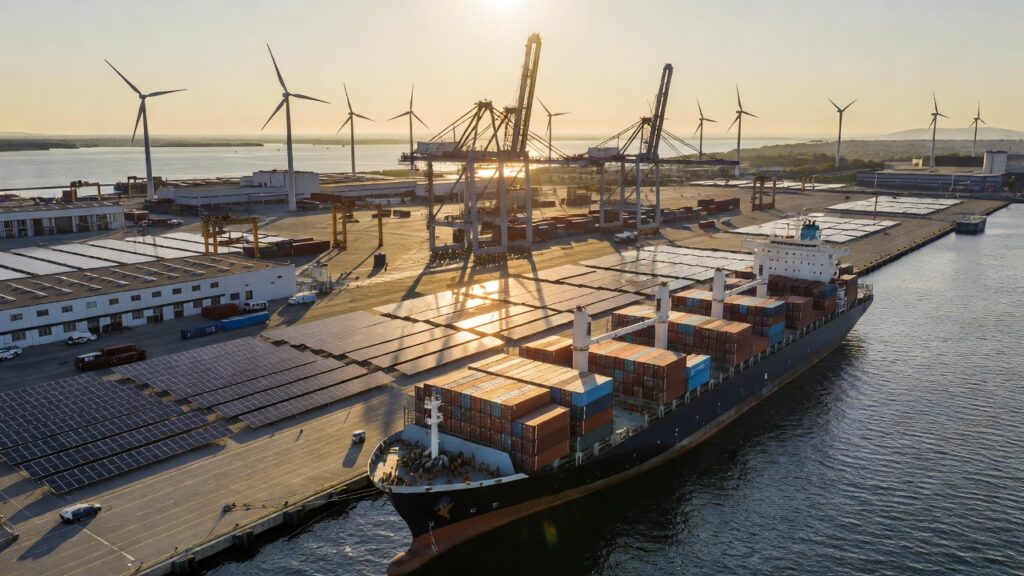
Simultaneously, EU member states have reaffirmed their commitment to pursuing a global CO₂ price on shipping at upcoming United Nations talks. Maritime transport accounts for roughly 3% of global greenhouse gas emissions — comparable to the aviation sector — yet it has historically escaped the kind of carbon regulation applied to land-based industries.
The EU already operates the world’s most comprehensive carbon market, the Emissions Trading System (ETS), which was extended to cover shipping within European waters in 2024. Pushing for a global equivalent at the International Maritime Organization (IMO) would level the playing field, preventing carbon leakage to non-European carriers and reducing pollution in international waters.
For European trade and logistics, the stakes are high. A global shipping carbon price would raise freight costs in the short term but incentivise investment in green fuels — hydrogen, ammonia, and advanced biofuels — accelerating the decarbonisation of supply chains. Ports like Rotterdam, Hamburg, and Antwerp are already positioning themselves as hubs for this energy transition.
China’s Clean-Energy Export Boom: Competition or Opportunity?
Perhaps the most striking data point in recent coverage is the record-breaking performance of Chinese exporters of batteries, solar panels, and electric vehicles. China’s dominance in clean-energy manufacturing is reshaping global supply chains and intensifying debate within Europe about industrial strategy.
On one hand, affordable Chinese solar panels and batteries have accelerated the deployment of renewable energy across Europe, helping countries meet their climate targets at lower cost. On the other hand, European manufacturers — particularly in the EV sector — face severe competitive pressure, prompting the EU to impose provisional tariffs on Chinese electric vehicles in 2024.
The tension reflects a deeper question: should Europe prioritise cheap clean technology now, or invest in building its own resilient, sovereign supply chains for the long term? The answer likely involves both — strategic investment in European manufacturing while maintaining open trade in technologies critical to fighting climate change.
What This Means for Citizens and Businesses
- Energy costs: A credible fossil-fuel phaseout timeline will affect gas and electricity prices, though the long-term trajectory of renewables points toward greater price stability.
- Carbon exposure: Businesses with high emissions — especially in shipping, heavy industry, and logistics — face growing regulatory and financial risk from expanding carbon pricing.
- Supply-chain resilience: The clean-energy trade boom underscores the need for European companies to audit their exposure to geopolitical disruptions in battery and solar supply chains.
- Biodiversity and conservation: Faster phaseout of fossil fuels reduces the habitat destruction and ocean acidification that threaten biodiversity and marine ecosystems globally.
Key takeaway: The convergence of fossil-fuel phaseout diplomacy, maritime carbon pricing, and clean-energy trade competition marks a genuine inflection point in global climate governance. Europe is well-positioned to lead — but only if it translates diplomatic ambition into coherent industrial, trade, and environmental policy at home.