Data Centers, Refrigerants, and Carbon Markets: Why Corporate Accountability Is the New Climate Battleground
In the space of a single news cycle, three separate policy developments — spanning New York State, Brussels, and a coalition of eighteen U.S. states — have sent an unmistakable signal to businesses worldwide: the era of treating environmental impact as a footnote is drawing to a close. For sustainability professionals, ESG investors, and corporate decision-makers, the convergence of these stories is not coincidental. It reflects a deepening global consensus that green business practices can no longer be voluntary, incremental, or purely reputational.
New York’s Data Center Moratorium: A Wake-Up Call for the Digital Economy
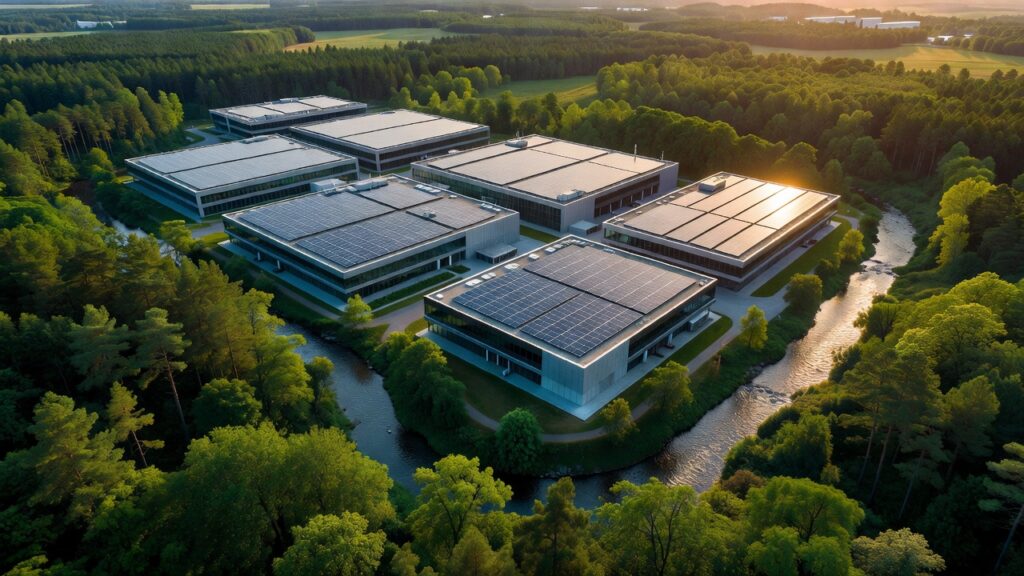
New York has become the first U.S. state to impose a one-year moratorium on the construction of large new data centers, citing the mounting environmental and social costs of AI-driven infrastructure. The concerns are concrete and measurable: facilities powering artificial intelligence and cloud computing are driving up local electricity prices, placing extraordinary strain on water supplies used for cooling, and burdening communities that host them with noise, heat, and grid instability.
The timing is significant. Global data center electricity consumption is projected to double by 2030, according to the International Energy Agency, with AI workloads accounting for a growing share of that demand. From a sustainable infrastructure standpoint, the moratorium forces a critical question that the tech sector has largely avoided: who bears the true cost of digital growth?
For European policymakers, the New York decision carries direct relevance. The EU is already grappling with data center energy demand under its Energy Efficiency Directive, which requires large facilities to report consumption and efficiency metrics. But reporting is not the same as accountability. New York’s pause suggests that regulation may need to move from transparency requirements toward hard limits — a conversation that is only beginning in Brussels and national capitals across Europe.
EU Emissions Trading and the Push to Link Carbon Permits to Real Decarbonisation
Across the Atlantic, the European Union is weighing a reform that could fundamentally reshape how its Emissions Trading System (ETS) functions as a tool of corporate responsibility. The proposal under consideration would condition the allocation of free pollution permits on companies making verifiable investments in decarbonisation. In other words, businesses would need to demonstrate climate action — not merely hold a permit — to benefit from the system’s allowances.
Investors tracking sustainable finance and ESG metrics have broadly welcomed the direction. Linking free permits to genuine green investment would close a long-standing loophole that has allowed some heavy industries to profit from carbon allowances without accelerating their transition away from fossil fuels. However, critics warn that a broader ETS overhaul risks introducing uncertainty that could, paradoxically, weaken emissions-cutting incentives in the short term.
The debate illustrates a tension familiar to anyone working in circular economy policy: well-designed market mechanisms can drive transformation, but poorly sequenced reforms can create instability that slows it. The outcome of this discussion will shape corporate climate strategy across the EU’s most energy-intensive sectors for years to come.
The HFC Lawsuit: When States Push Back Against Federal Rollbacks
Meanwhile in the United States, a coalition of eighteen Democratic-led states, Washington D.C., and New York City has filed suit against the Trump administration over a federal rule they argue would delay the phaseout of hydrofluorocarbons (HFCs) — potent greenhouse gases widely used in commercial refrigeration and air conditioning. HFCs can be hundreds to thousands of times more warming than carbon dioxide over a 20-year period, making their rapid elimination a high-priority target under the Kigali Amendment to the Montreal Protocol.
The legal challenge underscores a broader pattern: as federal climate ambition retreats in the U.S., sub-national actors — states, cities, and increasingly the private sector — are stepping into the regulatory vacuum. For European observers, this dynamic reinforces the value of supranational frameworks like the EU Green Deal, which provide a stable, long-term policy environment that businesses can plan around.
Implications for ESG Strategy and Green Business
Taken together, these developments point toward several clear implications for organisations navigating the sustainability landscape:
- Digital infrastructure must be included in ESG assessments. Energy and water consumption from cloud and AI services represent material risks that investors and regulators are beginning to scrutinise seriously.
- Carbon market reforms demand proactive engagement. Companies operating under the EU ETS should model scenarios in which free permit allocation becomes conditional on credible decarbonisation investment.
- Supply chain emissions — including refrigerants — are under growing scrutiny. The HFC lawsuit is a reminder that Scope 3 emissions and product-level climate impacts are increasingly subject to legal and regulatory challenge.
- Regulatory fragmentation is a strategic risk. Diverging rules between U.S. states, federal agencies, and the EU create compliance complexity that only strengthens the case for adopting the most stringent applicable standard as a baseline.
Key Takeaway
The common thread running through New York’s data center pause, the EU’s carbon market debate, and the HFC litigation is straightforward: corporate accountability on climate is no longer a matter of voluntary ambition — it is becoming a legal and regulatory expectation. For businesses committed to genuine sustainability, this shift is not a threat. It is the level playing field they have been asking for. The question now is whether strategy, investment, and governance structures are ready to meet it.