EU Green Deal in 2025: Nature Restoration, Carbon Markets, and the Road to 2030
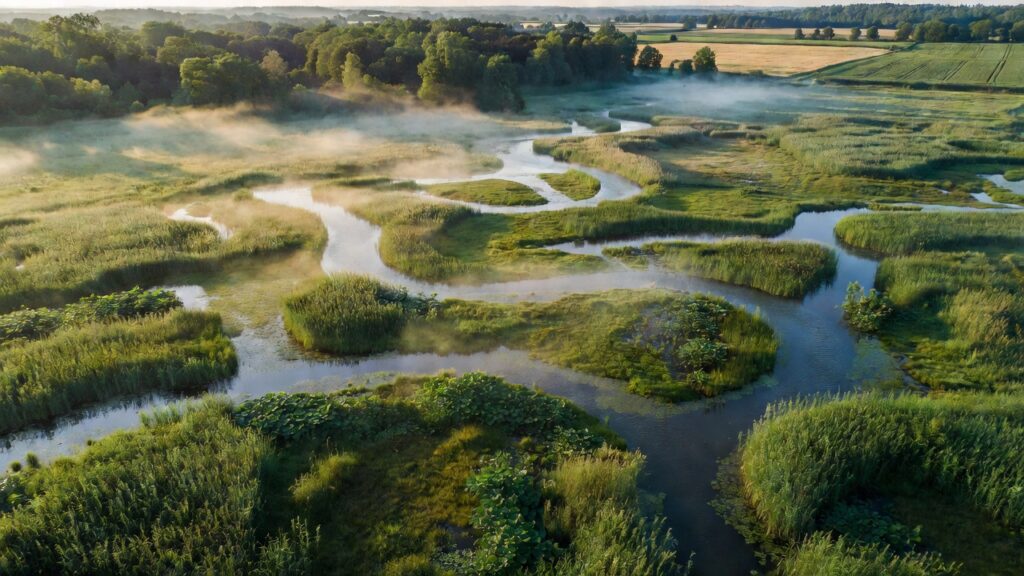
The European Union’s Green Deal has entered a decisive operational phase. With the Nature Restoration Law now fully in force, a binding target to restore at least 20% of the EU’s degraded ecosystems by 2030 is no longer a political aspiration — it is enforceable law. Combined with an expanding carbon market and a trade mechanism that is reshaping global supply chains, Europe’s environmental regulation framework is becoming one of the most comprehensive in the world.
Nature Restoration Law: From Paper to Practice
Adopted in June 2024 and effective since August 2024, the EU Nature Restoration Law represents the biodiversity pillar of the Green Deal — and arguably its most ambitious ecological commitment to date. The 20% ecosystem restoration target by 2030 covers degraded forests, wetlands, rivers, grasslands, and marine habitats across member states. This is not a voluntary pledge: national restoration plans must be submitted and implemented under binding EU oversight.
The law arrives at a critical moment. Europe has lost over 80% of its natural wetlands since the 1700s, and pollinators — essential for food security — are in steep decline. Restoring these ecosystems is not only an environmental imperative but an economic one: healthy ecosystems provide services estimated to be worth trillions of euros annually in flood protection, carbon sequestration, and agricultural productivity. For citizens and local governments alike, this law will translate into visible changes in land use, urban green spaces, and river management over the next five years.
Carbon Markets Expand: ETS2 Brings Buildings and Transport Into the Frame
One of the most significant structural shifts in EU climate policy is the expansion of the Emissions Trading System to cover buildings and transport — the so-called ETS2. These two sectors account for a substantial share of European emissions yet were previously regulated at the national level, creating fragmented and often insufficient incentives to decarbonise.
The expanded carbon markets framework has already generated over €200 billion in revenue, channelled into green transition and social funds. This is not a minor fiscal footnote: it represents a direct pipeline from carbon pricing to clean investment and worker support. The Just Transition Fund, with a budget of €17.5 to €20 billion, is specifically designed to cushion the economic impact on communities most dependent on fossil fuels — funding reskilling programmes and economic diversification in regions from Silesia to the Ruhr.
Critics have raised concerns about the cost-of-living implications of bringing household heating and private transport under a carbon pricing regime. These are legitimate concerns that policymakers must address with targeted social protections, and the Just Transition Fund is a direct response to that challenge.
CBAM and the Global Reach of EU Environmental Regulation
Scheduled to be fully operational by 2026, the Carbon Border Adjustment Mechanism (CBAM) is the EU’s answer to carbon leakage — the risk that stricter European rules simply push polluting production outside EU borders. Under CBAM, importers of carbon-intensive goods such as steel, cement, aluminium, and fertilisers will pay a price aligned with EU carbon costs if their country of origin does not apply equivalent carbon pricing.
The global implications are profound. Trading partners from India to the United States are already adjusting industrial strategies in anticipation of CBAM. This is environmental regulation functioning as a geopolitical instrument — using market access to the world’s largest single market as leverage for greener global production. For European industries that have already invested in decarbonisation, CBAM levels a playing field that has long been tilted against them.
What This Means for Citizens, Businesses, and Decision-Makers
As of January 2025, 168 Green Deal initiatives have been proposed, with 98 adopted and 37 still under negotiation. Despite some setbacks — notably withdrawals on pesticide regulation and fisheries — the overall policy momentum remains substantial. For businesses, this means sustainability reporting obligations, carbon costs, and supply chain scrutiny are not temporary disruptions but permanent features of the European market landscape.
- Citizens will see the Nature Restoration Law reshape local landscapes, green urban infrastructure, and river corridors.
- Businesses must prepare for full CBAM compliance by 2026 and integrate carbon cost planning into long-term strategy.
- Decision-makers at national and regional level must submit credible restoration plans and align public investment with Just Transition Fund priorities.
Key takeaway: The EU Green Deal is no longer a vision document — it is operational law with enforceable targets, expanding carbon markets, and global trade consequences. The window for preparation is narrowing. Whether you are a farmer, a factory owner, or a city planner, the regulatory landscape of 2030 is being built right now.