EU Rewrites Its Carbon Market Rules: What the New ETS Deal Means for Industry, Drivers, and Households
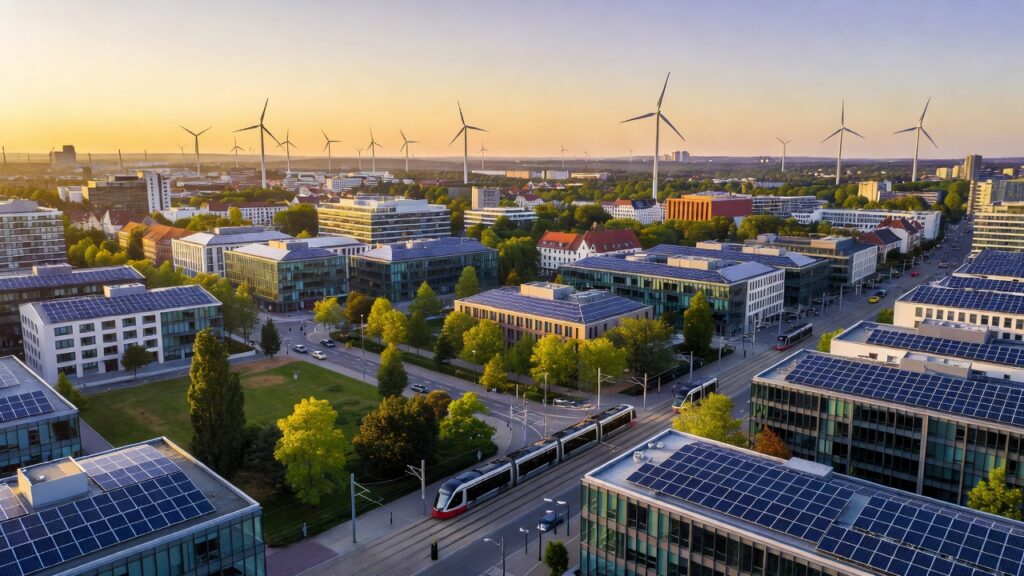
On July 19, 2026, European Union governments and lawmakers sealed a provisional agreement that fundamentally reshapes how Europe prices carbon pollution. The reformed EU Emissions Trading System (ETS) raises the industrial emissions reduction target to 62% below 2005 levels by 2030 — up sharply from the previous 43% goal — and extends the carbon market to cover road transport and building heating starting in 2027. It is one of the most significant steps forward under the EU Green Deal since the original ETS launched two decades ago.
A Tougher Cap on Industrial Emissions
The core of the deal is a dramatically stricter emissions ceiling for heavy industry. Under the revised framework, free pollution allowances — which have long shielded energy-intensive sectors such as steel, cement, and chemicals from the full cost of their carbon output — will be phased out at an accelerated pace. This means the cost per tonne of CO₂ for industrial polluters will rise significantly, creating stronger financial incentives to invest in cleaner technologies and processes.
The timing is not accidental. Official EU data published alongside the deal confirms that greenhouse gas emissions across the bloc fell a further 3% between 2023 and 2024, bringing the total reduction to 40% below 1990 levels. CO₂ emissions from new passenger cars also dropped sharply in 2025. The trajectory is moving in the right direction — but climate scientists and EU policymakers agree the pace must accelerate to stay aligned with the Paris Agreement. This reformed ETS is designed to provide exactly that acceleration, embedding climate policy into the economic logic of European industry.
Carbon Markets Come to Your Fuel Pump and Boiler
Perhaps the most consequential — and politically sensitive — element of the agreement is the creation of a new, separate ETS covering road transport and building heating. From 2027, fuel distributors supplying petrol stations and heating oil suppliers will be required to purchase carbon allowances for the emissions their products generate. In practice, this is likely to push up the price of fossil-fuel heating and driving, making the energy transition tangible for millions of European households and small businesses.
To cushion the impact, negotiators agreed on two important safeguards:
- An emergency delay mechanism allowing the expansion to be postponed by one year if energy prices surge beyond defined thresholds.
- A Social Climate Fund worth tens of billions of euros, financed by revenues from ETS auctions, specifically designed to support vulnerable families and small enterprises facing higher fuel costs during the transition.
The Social Climate Fund is a direct acknowledgement that environmental regulation cannot succeed without social equity. Poorly managed carbon pricing risks becoming regressive, hitting lower-income households hardest. By ring-fencing a substantial share of auction revenues for targeted support, the EU is attempting to demonstrate that climate policy and social protection can advance together — a model with relevance well beyond Europe’s borders.
Carbon Farming and the Road to 2040
The ETS reform does not stand alone. In parallel, the European Commission adopted three new certification methodologies for carbon farming under the Carbon Removals and Carbon Farming (CRCF) Regulation, establishing standardised benchmarks for how land-use practices that sequester carbon can be measured, verified, and credited. This is a critical step for sustainability reporting and for building credible voluntary and compliance carbon markets that include agriculture and forestry.
Looking further ahead, Commission Vice President Teresa Ribera is expected to announce the outcome of negotiations on the EU’s 2040 target of a 90% emissions reduction — a milestone that will define Europe’s path to net zero and set the framework for the next generation of climate legislation. Separately, nations in the North Seas Energy Cooperation are preparing to sign a pact with the United Kingdom to scale up offshore wind generation and green hydrogen production, signalling that post-Brexit energy cooperation on climate remains very much alive.
What This Means for Europe — and the World
The reformed ETS sends a clear signal to global markets: the price of carbon in Europe is going up, and it is spreading to new sectors. For multinational companies operating in or trading with the EU, this raises the stakes around decarbonisation strategies, sustainability reporting obligations, and supply chain emissions. For citizens, it marks the moment when carbon pricing moves from an abstract industrial concept to something felt at the petrol station and on the heating bill.
Critically, the deal also demonstrates that the EU’s climate policy architecture is resilient to political headwinds. After months of debate about competitiveness and energy costs, European institutions found a compromise that tightens ambition while building in social protections — a template other major economies will be watching closely.
Key takeaway: The EU’s landmark ETS reform — combining a 62% industrial emissions cut, carbon market expansion to transport and buildings, and a Social Climate Fund — represents the most ambitious overhaul of European carbon markets to date. It raises the cost of pollution, broadens who pays it, and attempts to ensure the transition is fair. For anyone tracking the EU Green Deal, this is the week the rules of the game fundamentally changed.