Tyrannosaurus Rex “Gus” Sells for $50.1M at Sotheby’s: July 21, 2026
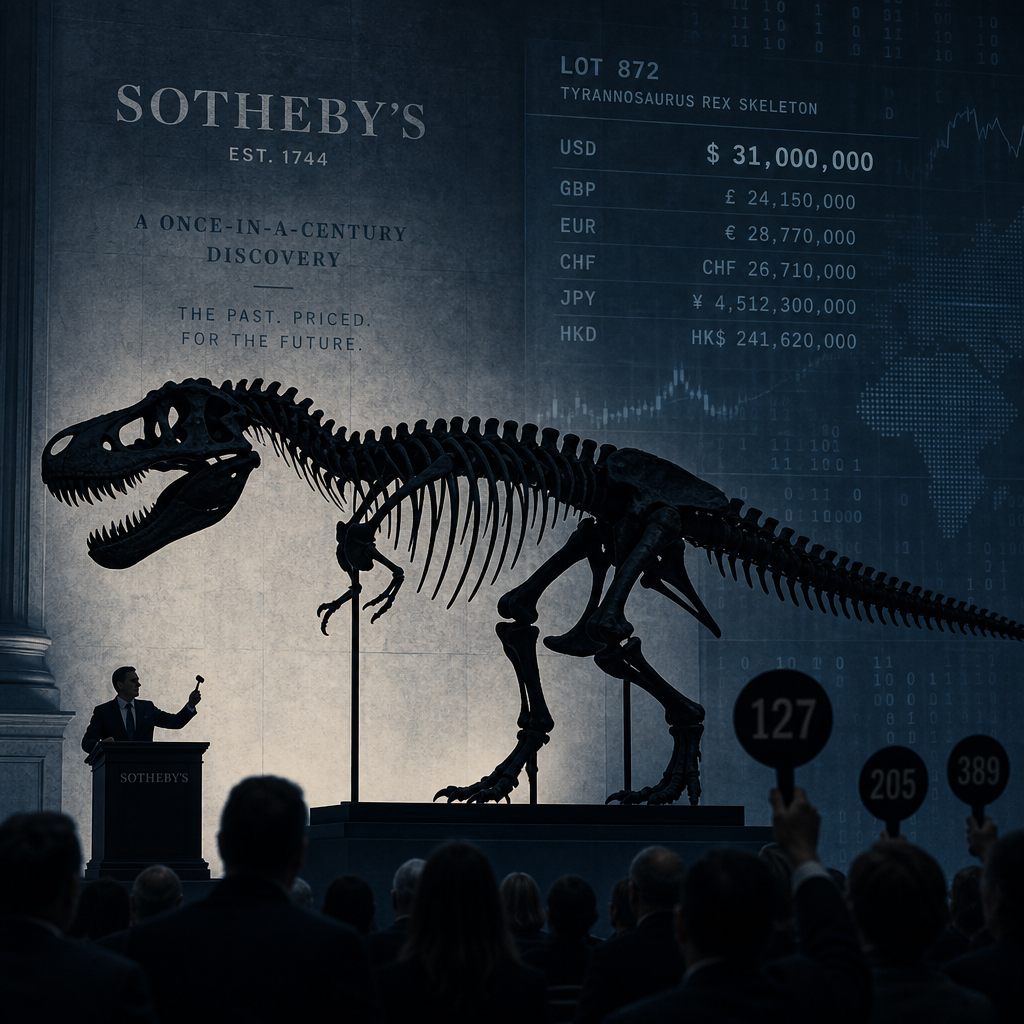
Today, we delve into an extraordinary event that has captivated the world of paleontology and beyond: the sale of a Tyrannosaurus rex skeleton named “Gus.” This remarkable fossil fetched an unprecedented $50.1 million at Sotheby’s auction in New York City, setting a new global standard in the sale of dinosaur fossils. More than just a transaction, this sale stands as a historic milestone in the ongoing narrative of how we value and interact with the prehistoric past.
The Allure of Prehistoric Giants
Gus’s sale is not merely a tale of numbers and records but a testament to the profound allure that these prehistoric giants still hold in our collective imagination. The Tyrannosaurus rex, a name that evokes power and mystery, remains a symbol of the Earth’s distant past. This skeleton’s completeness and preservation quality are particularly noteworthy, making it an exceptional find in the world of paleontology. Such fossils are seldom available for public purchase, enhancing their desirability among museums, private collectors, and researchers.
The Escalating Value of Dinosaur Fossils
The backdrop to this monumental sale is the escalating financial and cultural value placed on dinosaur fossils. The soaring price highlights the competitive nature of this niche market where institutions and individuals alike vie for ownership of these irreplaceable historical pieces. This dynamic creates a fascinating tension between the need for scientific access and the allure of private ownership, prompting essential questions about the future of fossil trade and conservation.
The Debate Over Private Sales vs. Public Preservation
A long-standing debate underlies this auction, questioning whether dinosaur fossils, treasures of immense scientific and educational value, should be sold privately or preserved within public scientific institutions. On one hand, private sales can inject much-needed funds into excavation and research endeavors. On the other, these transactions can lead to restricted access, limiting the potential for broader scientific exploration and public benefit. The case of Gus brings this debate into sharp focus, likely intensifying discussions about the ethical and practical implications of such sales.
Implications for Museums and Research
The ripple effects of this sale are likely to be far-reaching. It could trigger increased scrutiny on the provenance of high-value fossils, ensuring they are ethically sourced and legally acquired. Museums and research institutions may need to reconsider their acquisition strategies, balancing the desire to expand their collections with budget constraints and donor expectations. Additionally, the record-breaking nature of this sale might spur more vigorous fossil hunting, raising potential environmental and ethical concerns.
Renewed Public Interest in Paleontology
Moreover, the sale of Gus could inspire renewed public interest in paleontology, drawing more attention to the importance of science education and conservation. It serves as a reminder of the enduring human fascination with the Earth’s ancient history and the role that such relics play in bridging the past with the present. As we marvel at the skeletal remains of creatures that once roamed the Earth, we’re encouraged to ponder the vastness of time and our place within the natural world.
In conclusion, the sale of the Tyrannosaurus rex skeleton named Gus is more than a record-setting auction; it is a moment that underscores the complex dynamics at play in the world of paleontological artifacts. It challenges us to consider the value we place on our natural heritage and how that value is expressed through the lenses of science, commerce, and culture. As we move forward, this event will likely serve as a benchmark for future deliberations over the trade and preservation of fossils. Share your thoughts in the comments below.