Green Innovation Quietly Reshaping Our World: Solar Desalination, Natural Hydrogen, and the Cleantech Frontier
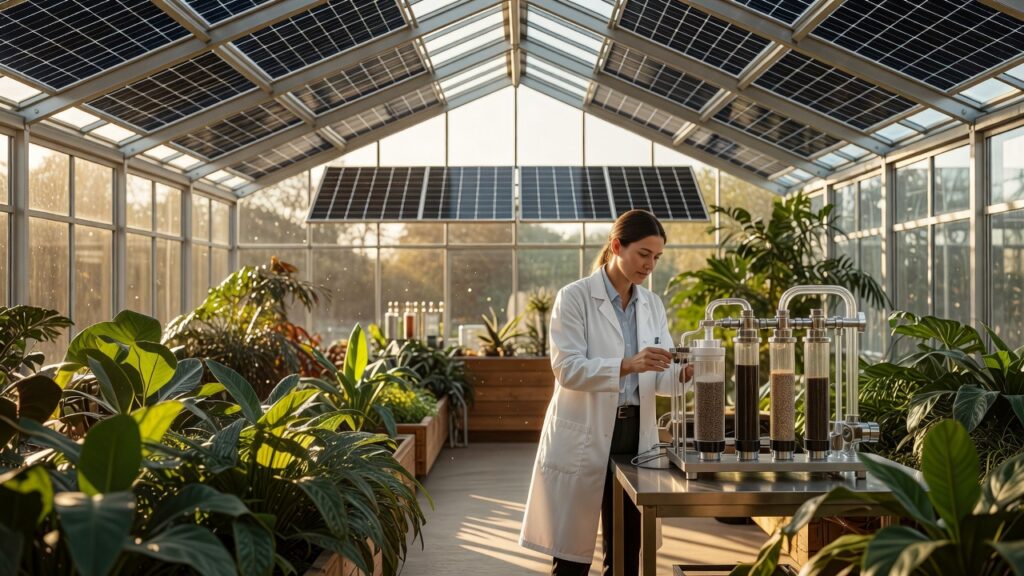
Not every revolution announces itself with a headline. Sometimes, the most significant shifts in green technology emerge quietly from research labs and pilot projects — innovations that don’t trend on social media but carry the potential to fundamentally reshape how humanity produces energy, manages water, and handles waste. As the energy transition accelerates globally, a cluster of recent breakthroughs deserves closer attention from citizens, policymakers, and investors alike.
Three Cleantech Breakthroughs Worth Watching
Three innovations that surfaced in recent months illustrate just how broad the cleantech frontier has become — stretching well beyond solar panels and wind turbines into chemistry, geology, and materials science.
- Solar desalination without brine waste: Researchers have developed a solar-powered desalination system that eliminates the toxic brine byproduct traditionally associated with turning seawater into drinking water. Conventional desalination plants discharge concentrated salt back into the ocean, harming marine ecosystems. This new approach recovers valuable minerals from the brine instead, turning a waste problem into a resource opportunity. For water-stressed Mediterranean countries — including Spain, Italy, and Greece — this could be transformative.
- Natural hydrogen from underground rocks: Scientists have confirmed that geological formations across several continents are producing hydrogen naturally through a process called serpentinization, where water reacts with iron-rich rocks deep underground. Unlike green hydrogen produced via electrolysis, this so-called “gold hydrogen” requires no electricity input. Early estimates suggest global reserves could be enormous, though extraction technology is still in its infancy. Europe, which has committed billions to its hydrogen strategy, is watching closely.
- Plastic-to-fuel conversion using sunlight: A photocatalytic process capable of breaking down plastic waste into hydrogen fuel using only sunlight has moved closer to practical application. Given that Europe generates over 25 million tonnes of plastic waste annually — and recycles less than a third of it — a technology that converts that waste into clean energy addresses two crises simultaneously.
Why These Innovations Matter for the European Green Agenda
Europe’s green innovation strategy has long focused on scaling proven technologies: offshore wind, utility-scale solar, and the electrification of transport. Electric mobility targets remain central to the EU’s Fit for 55 package, with combustion engine car sales effectively banned from 2035. Smart cities across the continent — from Amsterdam to Vienna — are integrating digital infrastructure to optimise energy use and reduce emissions in real time.
But the innovations described above point to a second, less visible layer of the transition: the deep decarbonisation of sectors that electrification alone cannot easily reach. Water production, industrial feedstocks, and waste management all require solutions beyond batteries and heat pumps. That is precisely why the European Commission’s Horizon Europe programme has ring-fenced funding for what it calls “breakthrough technologies” — recognising that the path to climate neutrality by 2050 runs through laboratories as much as through policy chambers.
The geopolitical dimension matters too. Europe’s vulnerability to energy import dependency — exposed brutally by the post-2022 gas crisis — has given new urgency to any technology that could diversify domestic energy sources. Natural hydrogen, if extractable at scale on European soil, would represent a strategic asset of the first order.
From Lab to Life: The Gap That Still Needs Bridging
Enthusiasm for emerging green technology must be tempered by realism about timelines. The history of cleantech is littered with promising discoveries that took decades to commercialise — or never did. Solar desalination systems still face cost and scalability challenges. Natural hydrogen extraction is years away from commercial viability. Photocatalytic plastic conversion has so far been demonstrated only at small scale.
What closes this gap is rarely the science itself. It is investment, regulation, and public procurement. The EU’s Innovation Fund, capitalised by revenues from the Emissions Trading System, exists precisely to de-risk the transition from prototype to market. Member states that align national industrial policy with these emerging opportunities — training workers, updating grid infrastructure, reforming permitting rules — will be better positioned to capture both the climate and economic benefits.
Citizens, too, have a role: as consumers who create demand signals, as voters who shape policy priorities, and as communities that decide whether new infrastructure is welcomed or blocked.
Key takeaway: The energy transition is not a single technology story. It is a mosaic of innovations — some mature, some nascent — that together must add up to a carbon-neutral economy within a generation. The breakthroughs emerging today in desalination, hydrogen geology, and waste conversion are not footnotes. They are early chapters of that larger story, and Europe has both the incentive and the institutional capacity to help write them.