EU Green Deal Under Pressure: What the 2026 Rollbacks Mean for Europe’s Climate Future
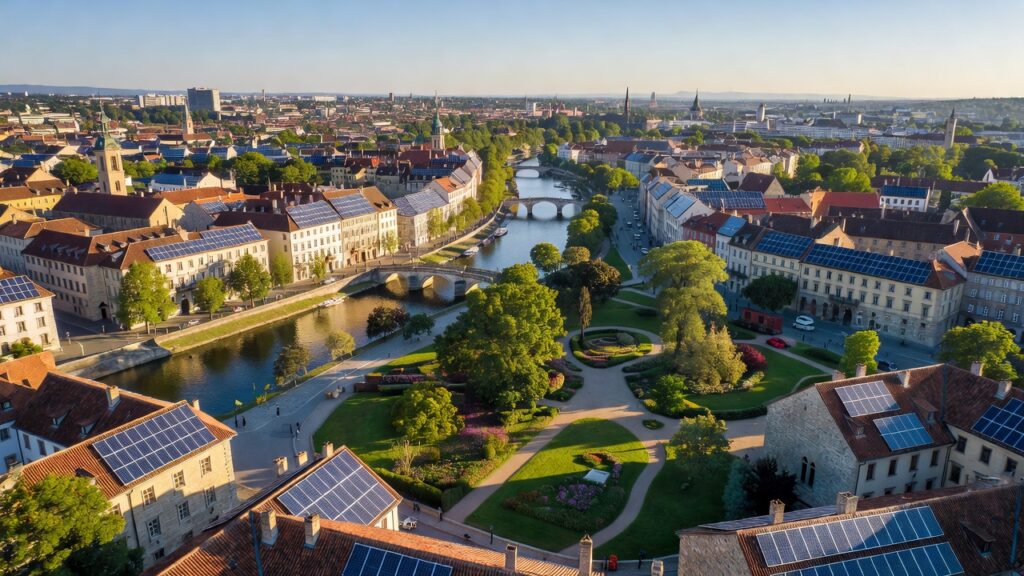
Europe’s landmark climate framework, the EU Green Deal, is showing visible cracks. A series of regulatory rollbacks and policy delays announced in early 2026 has raised serious questions about whether the bloc can maintain the ambition that once made it the global benchmark for climate policy. From revisiting the 2035 combustion engine ban to dramatically narrowing the scope of corporate sustainability reporting, the European Commission and member states appear to be trading long-term environmental targets for short-term economic relief.
Key Policies Weakened or Delayed
The most symbolic shift is the EU’s decision to formally review the 2035 ban on internal combustion engine vehicles. Rather than a firm phase-out date, the policy now enters a period of uncertainty, potentially delaying or reversing one of the Green Deal’s most visible commitments. For automakers and consumers who had already begun planning for an electric future, the signal is deeply disorienting.
Equally significant is the delay of carbon pricing for buildings and transport. The extension of the Emissions Trading System (ETS2) — which would have applied carbon markets to households and road transport — has been pushed from 2027 to 2028. Critics argue this postponement undermines the urgency needed to reduce emissions in two of Europe’s most polluting sectors.
Agricultural policy has also shifted. Small farms of up to 10 hectares can now access EU subsidies without complying with certain environmental regulation standards, a concession that follows months of farmer protests across the continent but that conservationists warn could accelerate biodiversity loss and soil degradation.
Sustainability Reporting: A Narrower Net
Under what Brussels is calling a “Simplification Package,” both the Corporate Sustainability Reporting Directive (CSRD) and the Supply Chain Due Diligence Act have been significantly diluted. The new thresholds — applicable only to companies with more than 5,000 employees and revenues exceeding €1.5 billion — effectively exempt the vast majority of European businesses from mandatory sustainability reporting.
This is a dramatic retreat from the original framework, which was designed to bring tens of thousands of companies into scope and create a culture of transparency across supply chains. Investors, NGOs, and ESG analysts have warned that the rollback will reduce data quality, weaken accountability, and make it harder to track progress toward net-zero commitments. The deforestation-free product regulation has also been pushed back to the end of 2026, with fewer companies required to comply.
What Remains Standing — and Why It Matters
Not everything is in retreat. In March 2026, EU member states granted final approval to a legally binding 2040 climate target aimed at cutting greenhouse gas emissions by 90% compared to 1990 levels, with an 85% reduction required from industrial sectors. This is a significant commitment on paper, and one that will require enormous structural transformation over the next 14 years.
The Carbon Border Adjustment Mechanism (CBAM) is also on track to become fully operational in 2026, applying a carbon price to imports of energy-intensive goods like steel, cement, and aluminium. This tool is designed to prevent carbon leakage and encourage global industries to adopt greener production methods — a rare example of EU climate policy with genuine international reach.
Implications: A Credibility Gap in the Making
The picture that emerges is one of structural tension: ambitious long-term targets coexisting with weakened near-term mechanisms. The EU risks entering a credibility gap — setting bold 2040 goals while dismantling the regulatory scaffolding needed to get there. For businesses, the mixed signals complicate investment planning. For citizens, they raise a fundamental question about political will.
- Automakers face renewed uncertainty over EV transition timelines
- Mid-sized companies are largely exempted from sustainability reporting obligations
- Farmers gain short-term subsidy access but at potential long-term environmental cost
- Global trading partners will feel pressure from CBAM, even as internal rules soften
The key takeaway: The EU Green Deal is not dead, but it is being reshaped under political and economic pressure. The 2040 climate target and CBAM show that Europe has not abandoned its climate ambitions entirely — but the erosion of near-term environmental regulation and sustainability reporting requirements signals a shift in priorities that could make those long-term goals significantly harder to achieve. The next few years will be decisive in determining whether 2026 is remembered as a pragmatic adjustment or the beginning of a broader unravelling.