AI’s Hidden Energy Cost: Why New York’s Data Center Moratorium Matters for the Green Tech Transition
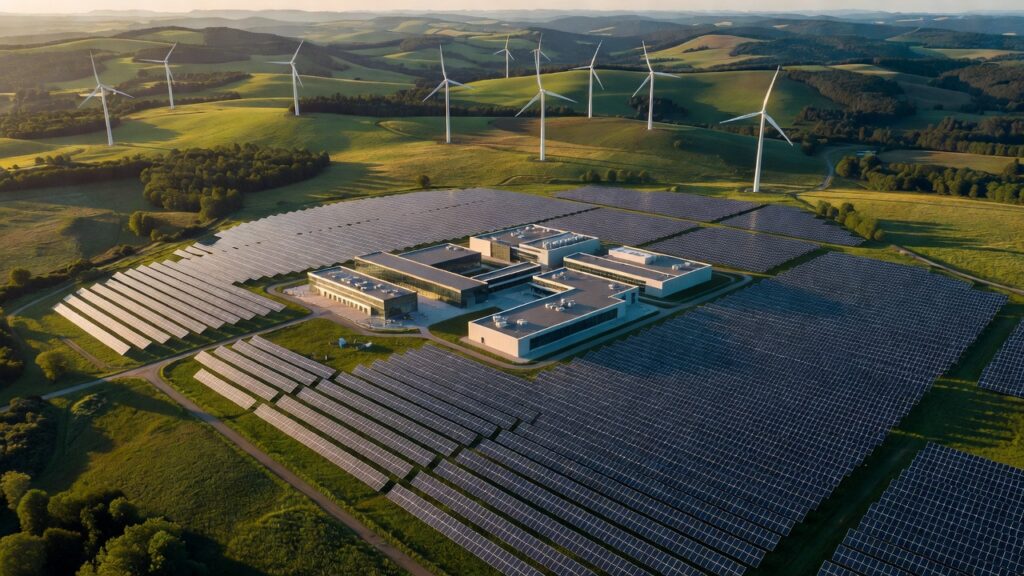
The artificial intelligence boom is reshaping the global economy — but it is also quietly straining the very infrastructure that the energy transition depends on. In a landmark policy move, New York became the first U.S. state to impose a one-year moratorium on the construction of large new data centers, citing surging power costs, pressure on water supplies, and mounting burdens on local communities. The decision, reported by Reuters, sends a clear signal: green innovation and digital growth cannot be treated as separate conversations any longer.
The Energy Hunger Behind the AI Revolution
Data centers are the physical backbone of artificial intelligence. Every query processed by a large language model, every autonomous system trained on terabytes of data, requires enormous and continuous electricity. According to the International Energy Agency (IEA), global data center electricity consumption could more than double by 2026, reaching over 1,000 TWh annually — roughly equivalent to Japan’s entire electricity demand.
New York’s moratorium targets facilities exceeding a certain power threshold, reflecting a growing awareness that unchecked digital infrastructure expansion directly competes with residential and industrial energy needs. Water consumption is equally critical: many data centers rely on water-intensive cooling systems, placing additional stress on already strained municipal supplies.
For Europe, this is not a distant American problem. The EU is home to some of the world’s largest data center clusters — in Ireland, the Netherlands, Germany, and the Nordic countries. Ireland alone hosts data centers that consume roughly 21% of the country’s total electricity, a figure that prompted Irish regulators to temporarily restrict new connections to the Dublin grid as early as 2021. New York’s moratorium may well accelerate similar policy debates across European capitals.
Green Technology Caught in the Middle
The tension here is not simply between technology and the environment — it is internal to the green tech ecosystem itself. On one hand, AI and digital infrastructure are essential tools for accelerating the energy transition: they optimize smart grids, improve renewable energy forecasting, and enable the intelligent management of electric mobility networks. On the other hand, their energy footprint risks undermining the very climate goals they are meant to support.
This contradiction is visible in the corporate sustainability space as well. As regulatory scrutiny of ESG claims intensifies across the EU — driven by the Corporate Sustainability Reporting Directive (CSRD) and the Green Claims Directive — many technology companies continue to rely heavily on carbon credits to offset emissions from their data operations. Critics argue this approach delays genuine decarbonization rather than driving it.
Meanwhile, promising cleantech breakthroughs offer a glimpse of more sustainable paths forward. Researchers have recently demonstrated solar-powered desalination systems that produce zero brine waste, methods for extracting natural hydrogen from underground rock formations, and processes for converting plastic waste into clean fuels. These innovations could eventually reduce both the water and energy intensity of digital infrastructure — but they remain at early stages of deployment.
Electric Mobility and Smart Cities: A Broader Lesson in Systemic Risk
The challenges facing data centers echo a wider pattern in green innovation: rapid scaling without adequate systemic planning. Amazon’s autonomous vehicle unit Zoox recently recalled 105 electric autonomous vehicles after safety concerns emerged around their ability to detect heavy smoke — a reminder that smart city technologies must be stress-tested against real-world environmental conditions, including those worsened by climate change such as wildfires and extreme weather events.
For European cities pursuing integrated smart mobility strategies, this underscores the importance of robust safety frameworks alongside deployment ambition. The EU’s AI Act and its forthcoming guidelines on autonomous systems will play a critical role in setting standards that protect both citizens and the credibility of green innovation.
Implications for Europe’s Cleantech Strategy
New York’s moratorium is a policy experiment worth watching closely. Europe has the regulatory tools — and the political will — to shape how AI infrastructure grows in alignment with climate targets. Key priorities should include:
- Mandatory renewable energy sourcing for new large-scale data centers, with verified additionality requirements
- Water efficiency standards integrated into data center permitting processes
- Territorial impact assessments that evaluate grid stress and community burdens before approvals are granted
- Investment in next-generation cooling and efficiency technologies as part of the EU’s cleantech industrial strategy
Key takeaway: The AI boom is not inherently at odds with the energy transition — but left unregulated, it risks becoming one of its biggest obstacles. New York’s moratorium is a wake-up call for policymakers, investors, and innovators alike: sustainable digital growth requires the same rigorous planning we demand of any other piece of critical infrastructure. Europe has both the tools and the responsibility to lead on this.