Solar Surges, Hydrogen Scales, and the $83 Billion Cost of US Clean Energy Rollbacks
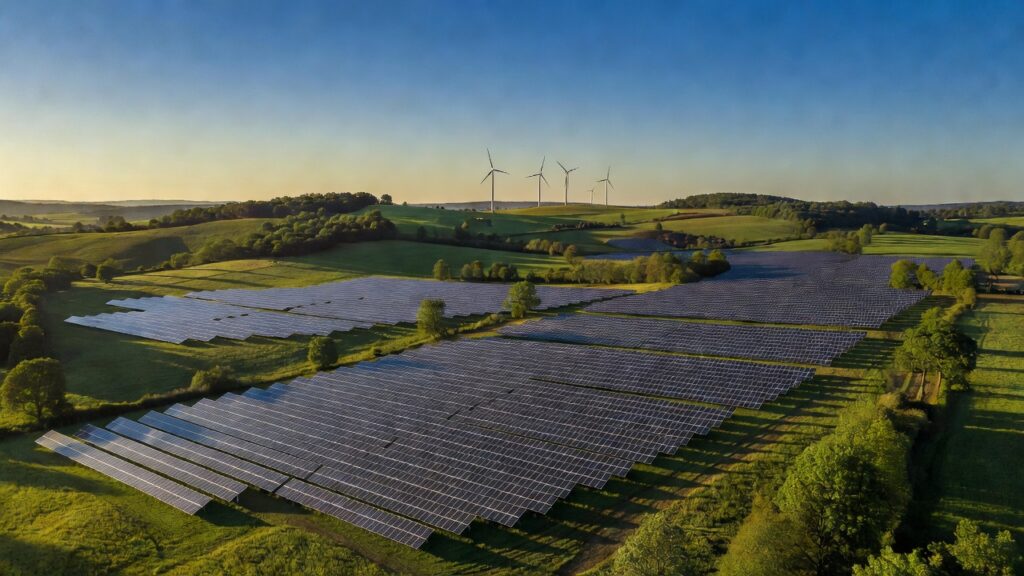
The global clean energy transition is accelerating in some corners of the world — and stalling dramatically in others. A stark new report from the BlueGreen Alliance reveals that Trump administration policies rolling back federal clean energy support have led to the cancellation or delay of $83 billion in investment, leaving nearly half a million jobs unrealised and derailing more than 200 major projects. At the same time, solar power is breaking records in California, Europe is locking in green hydrogen infrastructure, and renewable energy is proving its economic resilience on the global stage. The contrast could not be sharper.
The $83 Billion Warning: Policy Uncertainty Has a Price Tag
The BlueGreen Alliance’s findings, reported by Reuters, lay bare the real-world consequences of abrupt federal policy reversals in the United States. When governments withdraw support for renewable energy — through funding cuts, regulatory rollbacks, or the dismantling of incentive frameworks — private capital does not simply wait. It retreats, redirects, or disappears entirely.
Nearly 500,000 jobs went unrealised as a result of these cancellations and delays. These are not abstract statistics: they represent solar installers, wind technicians, battery engineers, and supply chain workers whose livelihoods were tied to a policy environment that shifted beneath them. For European observers, this serves as a cautionary tale about the fragility of investment pipelines when long-term policy frameworks are not protected from short-term political cycles.
The European Union, by contrast, has been doubling down on regulatory certainty. Under the Net-Zero Industry Act, the EU recently awarded strategic project status to Bulgaria’s Exeron battery energy storage system — a move designed to anchor net-zero manufacturing capacity within the Union and signal to investors that Europe’s clean energy commitments are durable and bankable.
Solar Overtakes Gas in California — A Glimpse of What’s Coming
In the first five months of 2026, something remarkable happened on California’s CAISO grid: utility-scale solar generation surpassed natural gas generation for the first time. This is not a temporary blip — it reflects years of sustained investment in solar capacity, grid infrastructure, and energy efficiency measures that have fundamentally reshaped the state’s energy mix.
The milestone matters far beyond California. It demonstrates that solar power can carry the weight of a major modern economy’s electricity demand, even in a grid that was built around fossil fuels. For European grid operators and policymakers, it validates the trajectory of the EU’s own solar expansion — and underlines the importance of pairing solar growth with adequate resource management, storage, and demand flexibility to handle intermittency.
The EU’s own solar fleet is already delivering measurable dividends. During the recent period of Middle East conflict and associated energy market volatility, EU solar installations avoided an estimated $22 billion in gas costs — a powerful demonstration of how renewable independence translates directly into economic and geopolitical resilience.
Green Hydrogen and Storage: Europe Builds the Infrastructure of Tomorrow
Europe is not just expanding solar. It is laying the groundwork for a fully integrated clean energy system. French industrial gas giant Air Liquide has finalised a 200-MW electrolyser project at the Port of Rotterdam, with TotalEnergies secured as a major offtaker for green hydrogen production. Rotterdam — already Europe’s largest port — is positioning itself as a central hub for the hydrogen economy, connecting production, storage, shipping, and industrial demand.
Green hydrogen produced via electrolysis powered by renewable electricity is central to decarbonising hard-to-abate sectors: steelmaking, heavy transport, chemicals, and maritime shipping. Projects of this scale signal that the technology is moving from pilot phase to commercial reality.
Meanwhile, India’s Central Electricity Regulatory Commission (CERC) is moving to unlock 15.7 GW of renewable grid capacity, and Japan is reinforcing the resilience of its offshore wind fleet amid climate and security pressures. The message from multiple continents is consistent: the energy transition is not slowing down — it is deepening.
Implications for Europe and the Global Transition
The divergence between US federal policy and global clean energy momentum raises important questions about competitive positioning. As the US delays hundreds of projects, European, Indian, and East Asian industries are moving ahead — capturing investment, building supply chains, and developing expertise that will define the energy economy for decades.
- Policy stability is itself a form of infrastructure: without it, even the most promising clean energy projects cannot attract capital.
- Solar and wind are no longer emerging technologies — they are the dominant force in new electricity generation globally.
- Green hydrogen and battery storage are the critical next layer, enabling the system to function reliably around the clock.
- Geopolitical events — from Middle East tensions to supply chain disruptions — continue to reinforce the economic case for renewable energy independence.
Key takeaway: The $83 billion in cancelled US clean energy investment is a warning, not just a headline. It shows what happens when political volatility overrides long-term industrial strategy. For Europe, the lesson is clear: the Net-Zero Industry Act, green hydrogen infrastructure, and sustained solar expansion are not just environmental commitments — they are strategic economic assets that must be protected and accelerated.