Gene-Edited Wheat, Heat-Resistant Rice, and Algae Fertilisers: How Science Is Reshaping Sustainable Agriculture
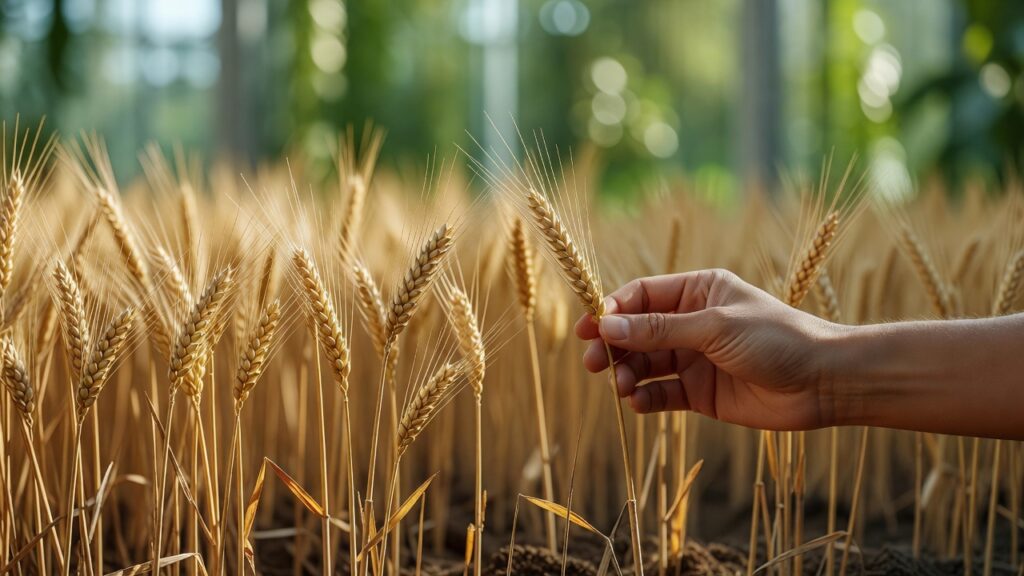
A quiet but significant revolution is underway in global agriculture. From South America to the UK, a wave of scientific breakthroughs — gene-edited crops, climate-resilient rice, and algae-derived fertilisers — is challenging the boundaries of what sustainable food systems can achieve. For Europe, which is navigating its own complex debate over gene editing and the Farm to Fork strategy, these developments offer both lessons and opportunities.
Chile’s CRISPR Wheat: A Regulatory Landmark With Global Implications
In a move that has drawn attention far beyond Latin America, Chile’s Agricultural and Livestock Service (SAG) has confirmed that gene-edited wheat developed by start-up Neocrop Technologies does not qualify as a GMO under Chilean law — clearing the path for field cultivation without additional regulatory hurdles. The wheat, produced using CRISPR technology, contains five to ten times more dietary fibre than conventional varieties, with potential benefits for public health and plant-based diets worldwide.
This is more than a domestic policy decision. It marks the first approval of its kind in the Americas and signals a broader shift in how regulators are beginning to distinguish between traditional genetic modification and precision gene editing. The logic is straightforward: CRISPR edits the plant’s existing genome without introducing foreign DNA, making the end product functionally similar to what could theoretically emerge through conventional breeding — only faster and more targeted.
Europe is watching closely. The EU is currently finalising its New Genomic Techniques (NGT) regulation, which would similarly exempt certain gene-edited crops from full GMO oversight. Chile’s move adds momentum to that debate and demonstrates that agroecological innovation and regulatory pragmatism can coexist.
Climate Adaptation on the Plate: Heat-Tolerant Rice and the Race Against Rising Temperatures
While the wheat story captures headlines, another development deserves equal attention. UK-based company Alora has developed gene-edited rice variants capable of tolerating temperatures above 40°C — conditions that would devastate conventional crops — achieving yields up to 273% higher than standard varieties under extreme heat. As climate projections for major rice-growing regions in Asia and Africa grow increasingly alarming, this kind of innovation is not a luxury; it is a necessity for global food security.
Heat stress already costs global rice production an estimated 10% of annual yield, a figure set to worsen as the climate crisis deepens. For Europe, which imports significant volumes of rice and depends on global supply chain sustainability, the resilience of tropical and subtropical food systems directly affects domestic food prices and availability. Investing in — or at least enabling — these technologies is therefore a matter of strategic interest, not just humanitarian concern.
Meanwhile, Argentina is set to approve 11 new GM crops in 2025, including insect-resistant corn and soybean varieties developed by Chinese biotech firms. Latin America’s accelerating embrace of agricultural biotechnology is reshaping the global competitive landscape, raising important questions about where Europe positions itself in this new era of food production.
Algae Fertilisers and the Push to Reduce Chemical Dependency
Not all innovation requires editing a genome. Field trials of algae-based fertilisers have shown a 21% increase in crop yield, offering a compelling, nature-derived alternative to synthetic chemical inputs that degrade soil health and contribute to water pollution. This aligns directly with the goals of the EU’s Farm to Fork strategy, which targets a 20% reduction in fertiliser use by 2030.
Algae fertilisers work by enhancing soil microbiology, improving nutrient uptake efficiency, and boosting plant resilience — a genuinely agroecological approach that complements, rather than replaces, traditional farming knowledge. For European farmers already under pressure to cut costs and meet sustainability benchmarks, this kind of input innovation could prove transformative.
- 21% yield increase recorded in algae fertiliser field trials
- Compatible with organic and regenerative farming systems
- Reduces dependency on nitrogen-based synthetic inputs
- Scalable production potential using coastal and inland algae cultivation
What This Means for Europe’s Food Future
Taken together, these developments paint a picture of a global food system in rapid transition. The question for European policymakers, farmers, and consumers is not whether to engage with this transformation, but how. Regulatory clarity on gene editing, investment in climate-resilient crop research, and support for sustainable input alternatives like algae fertilisers are not competing priorities — they are complementary pillars of a coherent strategy.
The U.S. EPA’s recent tightening of restrictions on dicamba herbicide use on cotton and soybeans also signals that even in traditionally permissive regulatory environments, the pendulum is swinging toward greater environmental protection. Supply chain sustainability is no longer a niche concern — it is becoming a baseline expectation.
Key takeaway: From CRISPR wheat in Santiago to algae trials in European fields, the tools for a more resilient, sustainable, and nutritious food system are emerging faster than our regulatory and policy frameworks can absorb them. Europe has a narrow but real window to shape these technologies on its own terms — before others set the global standard.