EU Green Deal at a Crossroads: Nature Restoration, Carbon Markets, and the Fight to Keep Climate Policy on Track
The European Union’s ambitious climate agenda is entering one of its most turbulent phases. While landmark tools like the Carbon Border Adjustment Mechanism and the expanded Emissions Trading System are quietly reshaping the rules of global trade and energy, a fierce political battle over the EU Nature Restoration Law threatens to fracture the very foundation of the Green Deal. For citizens, businesses, and policymakers alike, the stakes could not be higher.
The Nature Restoration Law: A ‘Moment of Truth’ for EU Environmental Regulation
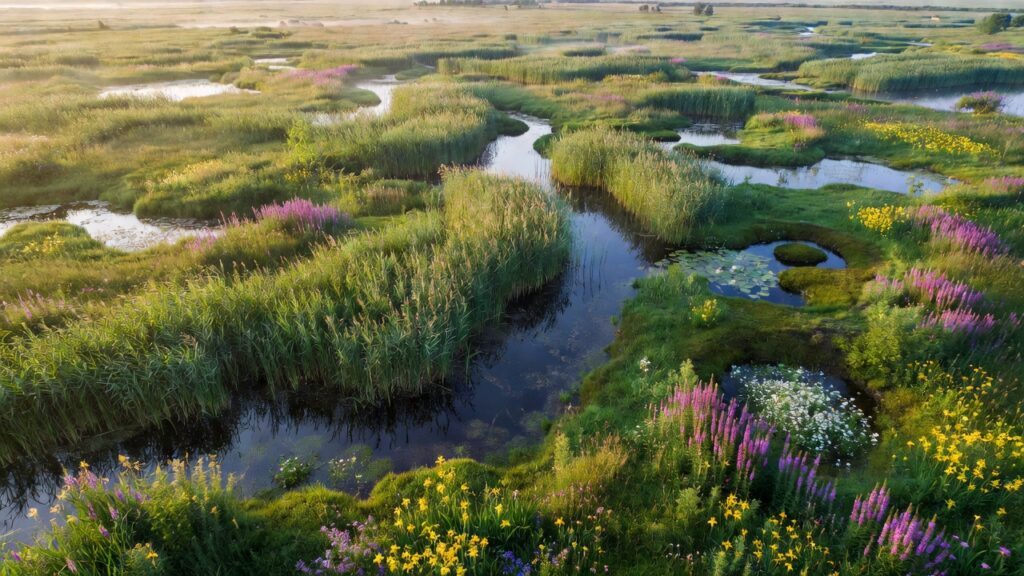
At the heart of the current political storm is the Nature Restoration Law, a flagship piece of EU environmental regulation that mandates the restoration of at least 20% of degraded EU ecosystems by 2030. Conservative groups in the European Parliament are mounting a serious push to reject the legislation outright — a move that, if successful, would stall the file until after the next EU election cycle, potentially delaying it by years.
Opposition centres on concerns from the agricultural sector, where farmers and their political allies argue that restoration targets could restrict land use and block renewable energy projects on rural land. These tensions are real and cannot be dismissed. Yet environmental scientists consistently warn that ecosystem collapse poses an existential threat to European food security itself — the very sector critics claim to protect.
If the law is rejected, it would represent a significant symbolic blow to the Green Deal’s credibility, signalling that political will is eroding just as implementation pressure grows. With 168 Green Deal initiatives proposed as of January 2025 — 98 already adopted and 37 under active negotiation — the broader legislative machinery is still moving. But losing nature restoration would leave a gaping hole in Europe’s biodiversity strategy.
Carbon Markets Expand: ETS2 and CBAM Redefine Climate Policy
While the nature debate dominates headlines, two quieter but transformative developments are reshaping European climate policy from the ground up. The EU Emissions Trading System has been extended through ETS2 to cover buildings and transport — sectors previously left to member states — generating over €200 billion in revenue directed toward green transition and social support funds. This expansion marks a decisive shift: carbon pricing is no longer confined to heavy industry. Households and commuters will feel its effects, making the social dimension of the transition impossible to ignore.
Simultaneously, the Carbon Border Adjustment Mechanism (CBAM) is on track to become fully operational by 2026. By placing a carbon price on imports from countries with weaker environmental regulation, CBAM aims to prevent carbon leakage — the risk that European industries simply relocate emissions abroad. Its global implications are already being felt, nudging international producers in steel, cement, aluminium, and fertilisers to reconsider their production standards. For sustainability reporting professionals and trade policy analysts, CBAM is fast becoming one of the most consequential instruments in the EU’s regulatory arsenal.
Just Transition: Ensuring No Region Is Left Behind
Ambitious environmental regulation only holds political legitimacy if it is paired with economic fairness. The Just Transition Fund (JTF) addresses this directly, having allocated nearly €20 billion — with a core budget of €17.5 billion distributed among member states — to reskill workers and diversify economies in regions most dependent on fossil fuels. From coal communities in Poland to lignite regions in Germany, the JTF is designed to ensure that the green transition does not become a source of social fracture.
This investment in people is not merely ethical; it is strategic. Without buy-in from workers and communities facing genuine economic disruption, the political backlash against measures like the Nature Restoration Law will only intensify.
Implications: What Comes Next for the Green Deal
The coming months will test whether the EU can hold its climate commitments together under mounting political pressure. Key questions include:
- Will the Nature Restoration Law survive the parliamentary vote, or will it become the Green Deal’s most visible casualty?
- Can ETS2 be implemented in a way that is socially acceptable, avoiding a repeat of the “yellow vest” backlash seen in France over fuel taxation?
- Will CBAM prove robust enough to withstand trade disputes with major partners like the US and China?
Key takeaway: The EU Green Deal is not failing — it is being tested. With nearly 100 legislative measures already adopted and transformative tools like CBAM and ETS2 advancing, the architecture of European sustainability policy is more developed than ever. But the battle over nature restoration is a warning signal: technical progress means little without sustained political courage. Europe’s green future depends on leaders willing to defend long-term science over short-term electoral calculation.