Europe’s Energy Transition Accelerates: From Bulgarian Battery Storage to Green Hydrogen and Solar Water Innovation
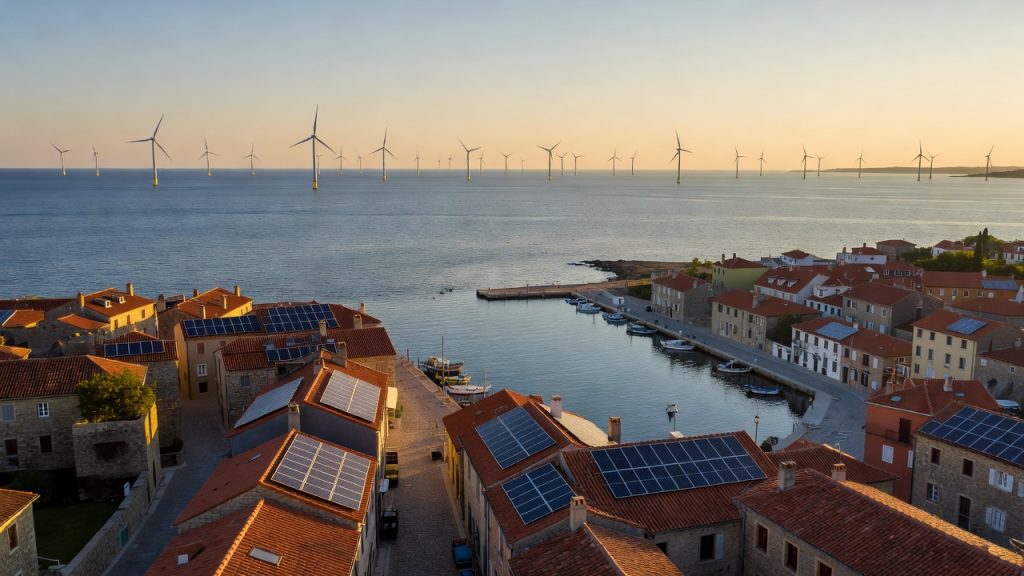
Europe’s clean energy transformation is no longer a distant ambition — it is being built, turbine by turbine, electrolyser by electrolyser, right now. A cluster of major developments this week illustrates just how rapidly the continent is moving across multiple fronts: from policy-backed battery storage in Bulgaria to offshore wind feeding Poland’s national grid, and from a landmark green hydrogen deal in Rotterdam to a scientific breakthrough that could redefine how we think about solar energy and water resource management simultaneously.
EU Policy Gives Strategic Boost to Battery Storage and Green Hydrogen
One of the most significant signals this week came from Brussels — or rather, from Sofia. International Power Supply’s Exeron project, a fully integrated battery energy storage system (BESS) located in Bulgaria, has been officially awarded strategic project status under the EU’s Net-Zero Industry Act (NZIA). This designation is not merely symbolic: it unlocks faster permitting, stronger regulatory support, and greater access to public and private financing, all aimed at scaling up net-zero technology production capacity within Europe.
The NZIA, adopted in 2024, is the EU’s industrial policy answer to the US Inflation Reduction Act. By granting strategic status to projects like Exeron, the European Commission is sending a clear message — energy storage infrastructure is a geopolitical and economic priority, not just a technical afterthought. As intermittent renewable energy sources like solar and wind dominate new capacity additions, large-scale battery systems become the backbone of a stable grid.
Meanwhile, in Rotterdam — Europe’s largest port and an emerging hub for the energy transition — Air Liquide finalized a 200-MW electrolyser project with TotalEnergies as off-taker. This is one of the largest green hydrogen infrastructure commitments in Western Europe to date, and it underscores how industrial-scale clean hydrogen is moving from pilot phase to real deployment. Rotterdam’s port ecosystem, already home to major fossil fuel refining, is actively repositioning itself as a green hydrogen gateway for the continent.
Offshore Wind Reaches the Grid, and Heat Pumps Get Easier to Install
Poland marked a historic milestone this week as Baltic Power, the country’s flagship offshore wind farm, delivered its first electricity to the national grid following successful turbine tests. Poland has long been one of Europe’s most coal-dependent economies, making this moment particularly meaningful. Baltic Power is a joint venture between PKN Orlen and Northland Power, and its grid connection signals that the Baltic Sea is rapidly becoming a cornerstone of European offshore wind energy expansion.
This development fits into a broader European trend: offshore wind capacity in the North Sea and Baltic Sea is scaling faster than many projections anticipated, driven by coordinated investment and improving grid integration technology. The challenge now is ensuring that transmission infrastructure keeps pace with generation — a policy and engineering task that will define the next decade.
On the demand side, the UK government removed planning restrictions that previously required homeowners to seek permission before installing a heat pump within one metre of a neighbour’s property. While it may sound like a minor regulatory tweak, the practical impact is substantial: millions of UK households in terraced and semi-detached homes were effectively blocked from upgrading to this key energy efficiency technology. Removing this barrier is expected to meaningfully accelerate heat pump adoption — a critical lever for reducing residential fossil fuel consumption.
Solar Innovation Tackles Both Energy and Water Scarcity
Perhaps the most forward-looking development of the week comes from the world of materials science. Researchers have developed a solar-powered desalination system capable of converting seawater into drinking water without producing brine waste — the toxic saline byproduct that makes conventional desalination environmentally damaging. By harnessing solar energy and eliminating harmful discharge, the system offers a dual solution to two of the planet’s most pressing resource challenges: clean energy and freshwater access.
For Europe, where southern regions increasingly face water stress driven by climate change, and for the Global South, where water scarcity is already acute, this kind of innovation in resource management carries enormous implications. Scaling such technology could transform coastal and arid communities’ relationship with both energy and water.
What These Developments Mean Together
Taken individually, each of these stories is significant. Taken together, they sketch a coherent picture of an energy system in genuine transition:
- Policy frameworks like the NZIA are translating political commitments into on-the-ground project acceleration.
- Infrastructure milestones — offshore wind, green hydrogen, battery storage — are moving from announcement to operation.
- Regulatory simplification is unlocking demand-side adoption of clean technologies like heat pumps.
- Scientific innovation is expanding the frontier of what renewable energy can achieve beyond electricity generation.
The key takeaway: Europe’s energy transition is no longer waiting for the right conditions — it is creating them. The pace of deployment, policy support, and technological innovation visible just this week suggests that the continent’s clean energy future is being built faster than the headlines often suggest. The task now is to ensure that speed, equity, and resilience all advance together.