CRISPR Wheat, Heat-Resistant Rice, and the Pollinator Crisis: How Science Is Reshaping Sustainable Agriculture
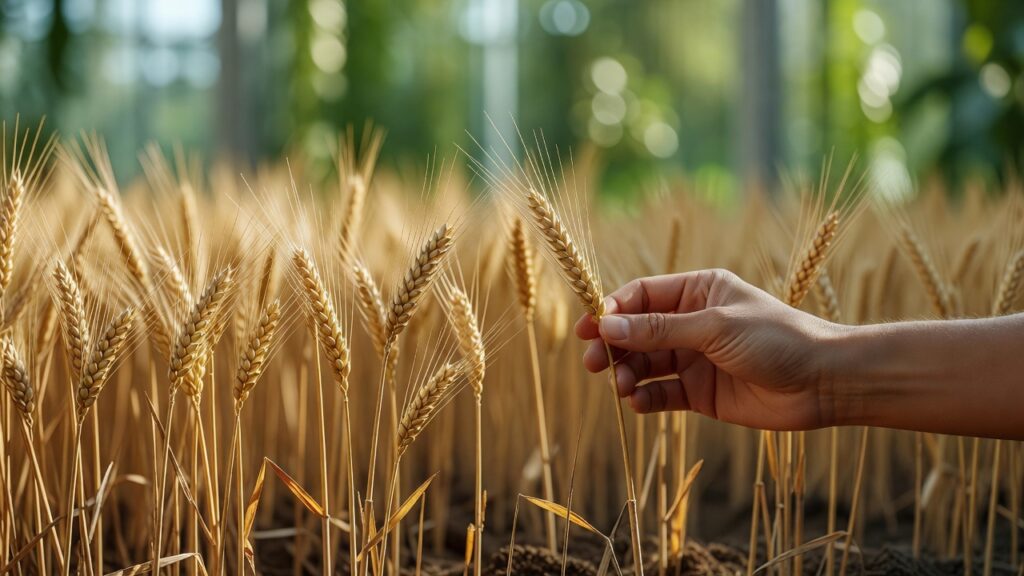
A quiet revolution is unfolding across the world’s fields and laboratories. From South America to the United Kingdom, gene-editing technologies are producing crops that can withstand climate extremes and deliver better nutrition — while regulators and policymakers scramble to keep pace. At the same time, Europe is confronting a biodiversity emergency that threatens the very foundation of its food supply. Together, these developments are redefining what sustainable agriculture looks like in the 2020s.
Gene Editing Breaks New Ground — Literally
Chile has made history by becoming the first country in the Americas to approve a CRISPR gene-edited wheat for field cultivation. The variety, developed by Neocrop Technologies, contains five to ten times more dietary fiber than conventional flour, while reportedly maintaining the same taste and texture consumers expect. Chile’s Agricultural and Livestock Service (SAG) confirmed the wheat does not fall under GMO classification, removing significant regulatory barriers to commercialisation.
This regulatory distinction matters enormously. Unlike traditional GMOs, which introduce foreign DNA, CRISPR-edited crops modify the plant’s existing genome — a difference that several jurisdictions, including the UK and parts of Latin America, are increasingly recognising in law. Argentina is set to approve a record 11 new GM and gene-edited crops in 2025, including insect-resistant corn and soybean varieties developed by Chinese-owned companies, signalling an accelerating wave of biotech adoption across the region.
Meanwhile, UK-based company Alora has developed heat-tolerant rice variants using gene editing that achieved up to 273% higher yields at temperatures above 40°C — a staggering figure given that conventional rice crops fail dramatically under such heat stress. The company is preparing the UK’s first large-scale rice field trial, involving 17,000 plants. As climate change pushes average temperatures higher across traditional growing regions, crops engineered for resilience are no longer a futuristic concept — they are an urgent necessity for global food systems.
Europe’s Pollinator Crisis Demands Policy Action
While gene editing captures headlines, a less visible but equally critical challenge is mounting in Europe. A new white paper co-authored by 135 researchers from eight EU-funded consortia has issued 15 science-based recommendations to address the continent’s deepening pollinator crisis. Bees, butterflies, and other pollinators underpin roughly one-third of the food we eat, yet their populations continue to decline due to habitat loss, pesticide exposure, and climate disruption.
The researchers are calling for pollinator protection to become a measurable policy priority across sectors — from agriculture and urban planning to infrastructure and trade. This aligns with the principles of agroecology, which seeks to design food production systems that work with natural ecosystems rather than against them. The EU’s Farm to Fork Strategy has already set targets to reduce pesticide use by 50% by 2030, but scientists warn that without binding, cross-sectoral commitments, these goals risk remaining aspirational rather than transformative.
Separately, the U.S. Environmental Protection Agency has implemented its strongest-ever protections against over-the-top dicamba use on cotton and soybeans for the next two growing seasons. Dicamba, a controversial herbicide, has been linked to widespread crop damage and ecological harm. The move signals a broader regulatory reckoning with agrochemicals that damage biodiversity — a trend European policymakers will be watching closely.
Implications for European Food Policy and Supply Chains
For Europe, these global developments carry direct consequences for supply chain sustainability and competitiveness. The EU is still debating its own New Genomic Techniques (NGT) regulation, which would determine whether CRISPR-edited crops can be fast-tracked to market. As Chile and Argentina move ahead, European farmers risk falling behind in accessing next-generation crop varieties — particularly those designed to cope with heat, drought, and shifting rainfall patterns.
At the same time, the pollinator white paper reminds us that technology alone cannot solve the food system’s structural vulnerabilities. A truly resilient food future requires both innovation and ecological integrity. Plant-based food production, reduced chemical inputs, and habitat restoration must advance alongside precision breeding tools.
- Chile approves CRISPR wheat with up to 10x more dietary fiber — no GMO classification required
- UK researchers report 273% yield gains in heat-tolerant gene-edited rice above 40°C
- 135 EU scientists call for binding pollinator protection across all policy sectors
- Argentina set to approve 11 new biotech crops in 2025, accelerating Latin American adoption
Key takeaway: The future of sustainable agriculture is being written simultaneously in gene-editing labs, farm fields, and policy chambers. Europe must engage proactively — embracing science-based innovation while placing biodiversity and ecological health at the centre of its food strategy. The tools exist; what is needed now is the political will to use them wisely.