EU Carbon Border Tax Goes Live in 2026: What CBAM Means for Global Trade and Climate Policy
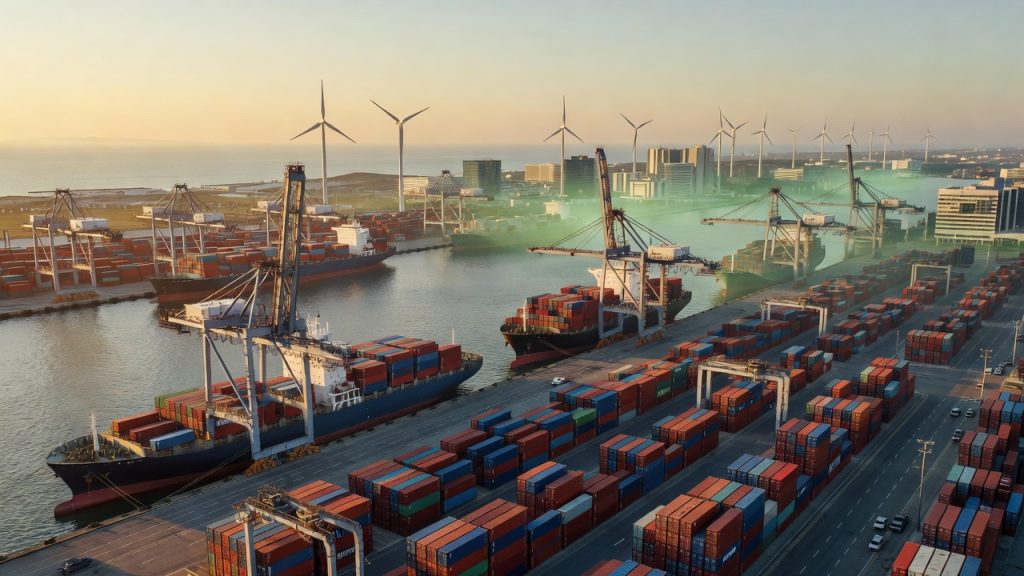
A quiet but seismic shift is coming to global trade. In 2026, the European Union’s Carbon Border Adjustment Mechanism (CBAM) will become fully operational, marking one of the most consequential developments in international climate policy in decades. Designed to prevent so-called carbon leakage — the practice of relocating carbon-intensive production to countries with weaker environmental rules — CBAM effectively puts a carbon price on imports entering the EU from sectors like steel, cement, aluminium, fertilisers, and electricity. For businesses, governments, and citizens worldwide, the implications are profound.
What Is CBAM and Why Does It Matter?
At its core, CBAM is a trade instrument built on an environmental principle: if you sell goods into the EU market, you should face the same carbon costs as European producers operating under the EU Emissions Trading System (ETS). The mechanism, a cornerstone of the EU Green Deal, entered a transitional reporting phase in October 2023 and is now on track for full implementation by 2026, according to the European Commission.
The timing is no coincidence. The EU ETS — the world’s largest carbon market — has already generated over €200 billion in revenues directed toward green and social transition funds. Carbon prices under the ETS are projected to exceed €120 per tonne by 2030, creating a significant competitive gap between EU producers and their counterparts in countries without equivalent carbon pricing. CBAM closes that gap.
For exporters in countries like China, India, Turkey, and the United States, CBAM is a wake-up call. To avoid paying the carbon border levy, foreign manufacturers will need to demonstrate the embedded carbon content of their goods — and pay for any shortfall relative to EU carbon prices. In practice, this means that environmental regulation in Brussels is now shaping industrial decisions far beyond Europe’s borders.
Carbon Markets Expand: ETS2 Brings Buildings and Transport Into the Frame
CBAM does not stand alone. Simultaneously, the EU is broadening the scope of its carbon market architecture through the introduction of ETS2, a parallel emissions trading system covering road transport and buildings — two of the most stubborn sources of greenhouse gas emissions in Europe. Currently in a pilot phase, ETS2 is also set to enter full effect by 2026.
The expansion reflects a broader strategic logic: if the EU is to meet its climate policy commitments under the European Climate Law — a legally binding target of net-zero emissions by 2050 and a 55% reduction by 2030 — then carbon pricing must reach every corner of the economy, not just heavy industry. Buildings account for roughly 40% of the EU’s total energy consumption, while road transport remains one of the largest sources of CO₂ emissions across member states.
Critics have raised concerns about the social impact of ETS2, particularly on lower-income households facing higher fuel and heating costs. In response, the EU has established the Social Climate Fund, financed through ETS2 revenues, to cushion the transition for vulnerable groups — a recognition that effective sustainability reporting and equitable policy design must go hand in hand.
Green Deal Momentum: 168 Initiatives and Counting
Despite political headwinds and a challenging geopolitical environment, the EU Green Deal continues to advance. As of January 2025, 168 initiatives have been proposed under the framework, with 98 already adopted and 37 under active negotiation. The European Commission has acknowledged these are “turbulent times,” yet the legislative pipeline remains robust.
A key policy recommendation accompanying this momentum is that member states invest at least 25% of EU ETS revenues specifically in scaling cleantech solutions and manufacturing. This directive aims to ensure that the billions flowing from carbon markets translate into tangible industrial transformation — new factories, green hydrogen infrastructure, battery manufacturing, and energy-efficient building retrofits.
Implications for Business, Policy, and Citizens
- For European industry: CBAM levels the playing field, reducing the risk of carbon leakage and rewarding early investment in low-carbon production.
- For global exporters: Compliance with CBAM reporting and pricing requirements will become a prerequisite for EU market access — driving decarbonisation incentives well beyond European borders.
- For policymakers: The revenue generated by carbon markets offers a powerful tool for financing the green transition, but equitable distribution remains a political and social imperative.
- For citizens: Higher carbon prices in transport and heating may affect household budgets, but the Social Climate Fund and national support schemes are designed to offset the burden for those most exposed.
The key takeaway: 2026 is not a distant deadline — it is arriving fast. The convergence of CBAM, ETS2, and sustained Green Deal momentum signals that the EU is moving from climate ambition to enforceable architecture. For anyone operating in global trade, energy, construction, or finance, understanding these carbon market mechanisms is no longer optional. It is a strategic necessity.