EU Carbon Border Adjustment Mechanism: How CBAM Will Reshape Global Trade from 2026
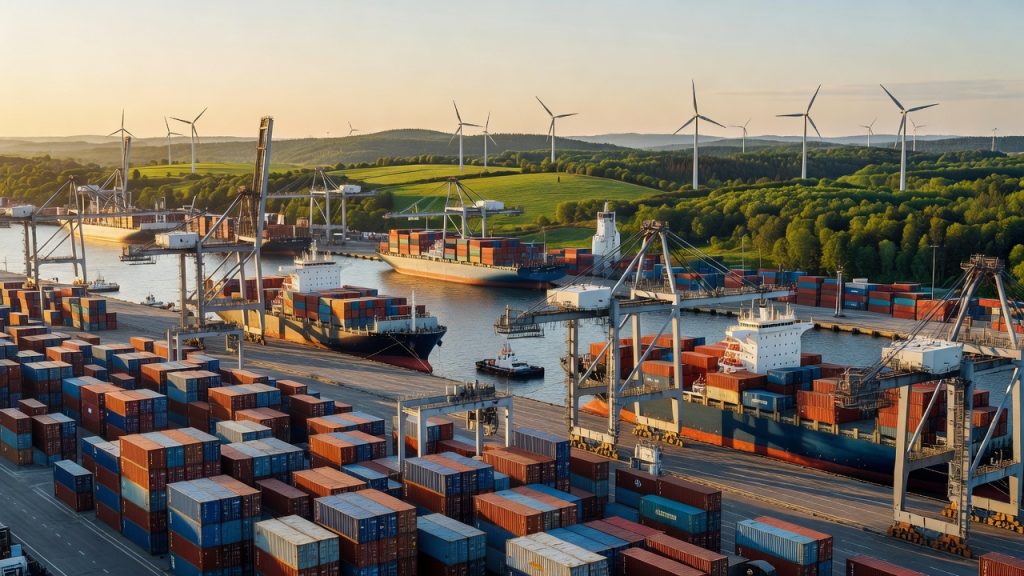
The European Union is preparing to pull one of its most powerful levers in the fight against climate change. By 2026, the Carbon Border Adjustment Mechanism (CBAM) will be fully operational, requiring non-EU manufacturers to pay carbon tariffs on a range of carbon-intensive goods entering the European single market. It is not just a trade measure — it is a signal to the world that the EU intends to make carbon pricing a global standard, not merely a European one.
What Is CBAM and Why Does It Matter?
At its core, CBAM is the EU’s answer to a long-standing problem in climate policy: carbon leakage. When European industries face strict emissions rules under the EU Emissions Trading System (ETS), there is a risk that production simply shifts to countries with weaker regulations, undermining the environmental gains made at home. CBAM closes that loophole by placing a carbon price on imports of goods such as steel, cement, aluminium, fertilisers, and electricity.
Importers will be required to purchase CBAM certificates corresponding to the carbon price that would have been paid under EU carbon markets rules. The mechanism entered a transitional reporting phase in October 2023, and full enforcement — including actual financial obligations — kicks in on 1 January 2026. For global supply chains, this is a fundamental shift. Factories in Brazil, India, China, or the United States that export to Europe will now face a direct financial incentive to clean up their production processes.
A Green Deal in Full Motion: ETS, Product Rules, and Just Transition
CBAM does not stand alone. It is one pillar of a much broader architecture being built under the EU Green Deal. As of January 2025, the European Commission has proposed 168 Green Deal initiatives, of which 98 have been formally adopted and 37 are still under negotiation — a pace of environmental regulation that has few precedents in EU legislative history.
Alongside CBAM, the EU Emissions Trading System has been expanded through the creation of ETS2, which now extends carbon pricing to the buildings and road transport sectors — areas previously left to individual member states. This expansion has already generated over €200 billion in revenue, channelled into green investment and social support funds.
New rules are also reshaping how companies design and sell products. Businesses are now prohibited from destroying unsold consumer goods, and sustainability reporting obligations require greater transparency on environmental impact across supply chains. Repairability standards are being enforced, pushing manufacturers to design products that last longer and generate less waste — a quiet but significant shift in the EU’s approach to the circular economy.
Meanwhile, the Just Transition Fund (JTF) has allocated nearly €20 billion to support workers and communities most exposed to the fossil fuel phase-out. With a dedicated budget of €17.5 billion targeting economic diversification and reskilling programmes, the JTF acknowledges that the green transition carries real social costs that must be managed with care and political commitment.
Implications for Businesses, Governments, and Citizens
The combined effect of these policies is significant across multiple levels:
- For businesses: Companies importing into the EU must now integrate carbon compliance into their procurement and supply chain strategies. Early movers that invest in low-carbon production will gain a competitive edge as CBAM costs rise.
- For governments outside the EU: Trading partners face growing pressure to introduce or strengthen domestic carbon pricing mechanisms. Countries that do so may be able to offset CBAM costs, redirecting revenue to their own green transition rather than to Brussels.
- For citizens: The expansion of ETS to buildings and transport could affect energy bills, making the social dimension of climate policy — and the role of funds like the JTF — increasingly important for public acceptance.
Key Takeaway
The full operationalisation of CBAM in 2026 marks a turning point: the EU is no longer just regulating emissions within its borders, it is exporting its carbon markets logic to the rest of the world through trade. Combined with the sweeping scope of the EU Green Deal — from product design to worker reskilling — Europe is constructing a regulatory ecosystem where sustainability is not optional. For businesses, policymakers, and citizens alike, understanding these mechanisms is no longer a niche interest. It is a practical necessity.