Green Energy at a Crossroads: Subsidies, Regulation, and the Future of Sustainable Finance
The global transition to clean energy has never looked more urgent — or more complicated. In the span of a single week, major developments across the United States, Europe, China, and Morocco have exposed the fault lines running through the world’s sustainability agenda. For businesses, investors, and policymakers committed to ESG principles and corporate responsibility, the signals are mixed but unmistakable: the rules of the green economy are being rewritten in real time.
The U.S. Solar Subsidy Rush: A Warning for Green Markets
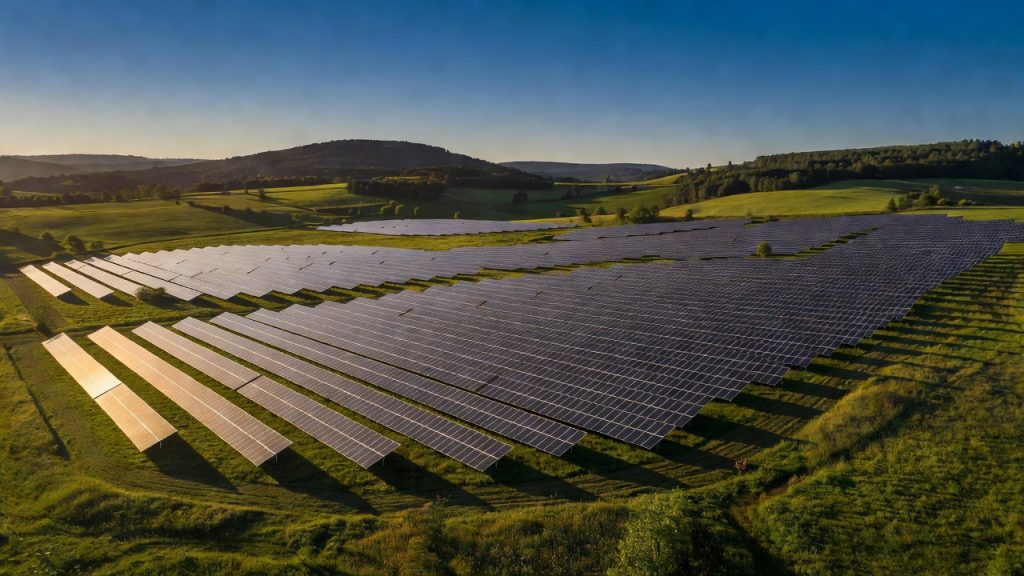
In the United States, major solar developers have scrambled to lock in federal subsidies for projects large enough to nearly double current national solar capacity — all before a July 4 deadline that could dramatically increase the cost of renewable energy. According to Reuters, this rush has been triggered by political uncertainty around the continuation of clean energy incentives, raising serious concerns about market stability and long-term green energy affordability.
From a European perspective, this episode illustrates a critical vulnerability in sustainability policy: when incentives are tied to short political cycles rather than long-term frameworks, the result is market distortion rather than genuine green transition. The EU’s own experience with the Emissions Trading System (ETS) — which took years to stabilise — shows that consistent, predictable regulation is the backbone of sustainable finance. Businesses cannot plan decade-long infrastructure investments around a countdown clock.
The broader ESG implication is clear: corporate responsibility in the energy sector requires not just ambition, but regulatory certainty. Without it, even the most well-intentioned green business strategies become hostage to political volatility.
Europe’s Regulatory Turbulence: Private Jets, Methane, and the Cost of Inconsistency
Europe is grappling with its own contradictions. The EU’s second-highest court has ruled that private jet manufacturing must be classified as an environmentally sustainable activity under the EU Taxonomy — annulling a prior European Commission decision. The ruling forces a rethink of how aviation sector compliance strategies are structured, and raises uncomfortable questions about the integrity of green labelling frameworks that underpin billions in sustainable investment.
Meanwhile, Germany has joined a growing coalition of member states pushing back against the EU’s proposed methane emissions rules for oil and gas imports. Berlin’s concern is pragmatic: amid ongoing energy shocks linked to the Iran conflict, strict methane standards could disrupt jet fuel supplies. The tension between short-term energy security and long-term climate commitments is not new, but it is intensifying.
These developments matter for the circular economy and ESG reporting alike. If the EU Taxonomy — the cornerstone of European sustainable finance — can be stretched to accommodate private aviation, its credibility as a tool for directing capital toward genuinely green activities is weakened. Investors and sustainability professionals across Europe should watch these legal and regulatory shifts closely.
China and Morocco: Where Green Infrastructure Investment Is Accelerating
Not all the news is cause for concern. China has updated its five-year energy plan with a bold new target: 50% of electricity from non-fossil sources by 2030, up from 42.3% for 2025. This signals a massive acceleration in green infrastructure investment from the world’s largest emitter, with profound implications for global supply chains, clean technology markets, and the competitive landscape for European green business.
In parallel, the World Bank board approved $265 million for a pumped hydropower storage plant in Morocco — a vital piece of sustainable infrastructure for North Africa’s energy transition and a potential model for EU-Africa green energy partnerships. The decision comes, however, alongside the Bank’s abandonment of its goal to devote 45% of lending to climate-related projects, reflecting the complex trade-offs at the heart of global sustainable finance today.
Implications for ESG Strategy and Corporate Responsibility
Taken together, these developments point to several priorities for organisations navigating the sustainability landscape:
- Regulatory resilience: ESG strategies must account for policy reversals and legal challenges, not just current frameworks.
- Supply chain scrutiny: As methane rules and taxonomy definitions evolve, due diligence across energy and aviation supply chains becomes more critical.
- Global opportunity: China’s clean energy pivot and African infrastructure investment open new corridors for sustainable finance and green technology partnerships.
- Taxonomy integrity: Stakeholders should actively engage with EU taxonomy reviews to ensure green labelling remains meaningful and credible.
Key takeaway: The green transition is accelerating globally, but its path is increasingly shaped by legal rulings, geopolitical shocks, and political deadlines. For businesses and investors committed to genuine corporate responsibility and ESG leadership, the ability to navigate regulatory turbulence — not just chase subsidies — will define who builds a truly sustainable future.