El Niño Returns, Emperor Penguins Face Extinction: The Climate Crisis Is Accelerating
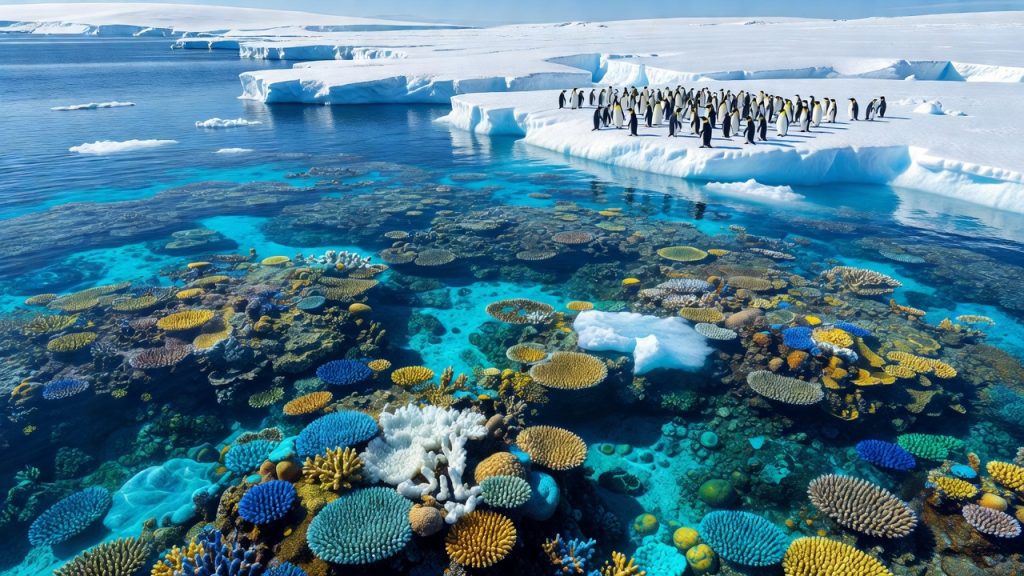
The signals are converging with alarming clarity. Major meteorological organisations, including the World Meteorological Organization, are forecasting the emergence of a significant El Niño weather phenomenon as early as next month. Coming on the heels of 2024 being declared the hottest year on record in the Arab region — where temperatures rose at twice the global average — this new development risks pushing the planet into uncharted thermal territory. For Europe and the wider world, the implications for biodiversity, agriculture, food security, and environmental policy are profound.
El Niño and the Looming Coral Bleaching Crisis
El Niño events occur when unusually warm surface waters spread across the central and eastern tropical Pacific Ocean, disrupting atmospheric circulation and amplifying global temperatures. Scientists warn that this incoming event could trigger the fifth mass coral bleaching episode on record — a catastrophic prospect for marine biodiversity.
Coral reefs cover less than 1% of the ocean floor, yet they support approximately 25% of all marine species. The Great Barrier Reef, the Caribbean reefs, and the Indo-Pacific systems are all considered at high risk. Previous mass bleaching events, particularly those linked to the 2015–2016 El Niño, caused mortality rates exceeding 50% in some reef systems. A fifth event, occurring against the backdrop of already elevated baseline sea temperatures, could be the most destructive yet.
From a European perspective, this is not a distant crisis. Mediterranean marine ecosystems are already under severe stress from rising sea temperatures and ocean acidification. The EU Biodiversity Strategy for 2030 explicitly targets the protection of 30% of marine areas — but conservation goals become increasingly difficult to achieve when the underlying climate conditions continue to deteriorate.
Biodiversity Under Siege: The Emperor Penguin’s Warning
The climate emergency is not confined to the tropics. In a landmark and deeply troubling development, the emperor penguin has been officially declared an endangered species, a direct consequence of accelerating ice loss in Antarctica. Emperor penguins depend on stable sea ice for breeding; as that ice disappears, entire colonies face collapse.
This listing is more than a symbolic milestone — it is a measurable indicator of how climate change is restructuring entire ecosystems at both poles. The Arctic is warming nearly four times faster than the global average, and Antarctica is not far behind. For policymakers and citizens alike, the emperor penguin’s endangered status should serve as a concrete, visible benchmark of failure — and a call to urgency.
Europe’s role in global conservation efforts is significant. The EU is the world’s largest provider of international climate finance, and its environmental policy frameworks — from the European Green Deal to the Nature Restoration Law — set benchmarks that influence global standards. Protecting endangered species like the emperor penguin requires not only local conservation measures but a systemic reduction in greenhouse gas emissions worldwide.
Carbon Pricing and Clean Energy: Reasons for Cautious Optimism
Amid the alarm, there are structural shifts worth noting. Canada and Alberta are finalising an agreement to raise carbon pricing for industrial polluters, reinforcing North America’s climate policy architecture. This move aligns with the European model of carbon pricing through the EU Emissions Trading System (ETS) — a mechanism that has proven effective in driving down industrial pollution when set at sufficiently high levels.
Meanwhile, Chinese exporters of clean energy products — including batteries, solar panels, and electric vehicles — recorded record sales last month, partly driven by disruptions in Middle Eastern oil flows. While the geopolitical dimensions of this clean energy export boom are complex, the underlying trend is clear: renewable energy is no longer a niche alternative but a mainstream economic force reshaping global trade.
- El Niño is forecast to emerge imminently, risking the fifth mass coral bleaching event on record.
- The emperor penguin has been officially listed as endangered due to Antarctic ice loss.
- The Arab region recorded its hottest year ever in 2024, with temperatures rising at twice the global average.
- Carbon pricing reforms in Canada and surging clean energy exports signal growing policy and market momentum.
What This Means for Europe and the World
The convergence of El Niño, record regional temperatures, and accelerating biodiversity loss paints a picture of a climate system under mounting stress. For European citizens and decision-makers, the message is urgent: the targets enshrined in the Paris Agreement and the EU Green Deal are not bureaucratic abstractions — they are the minimum conditions needed to prevent the kind of cascading ecological damage now unfolding in real time.
The key takeaway is this: climate change is no longer a future risk to be managed — it is a present crisis demanding immediate, coordinated action on emissions reduction, biodiversity protection, and the accelerated deployment of renewable energy. The emperor penguin’s endangered status and the approaching El Niño are not isolated news items. They are chapters in the same story, and the next chapter is being written now.