Renewable Energy at a Crossroads: U.S. Solar Rush, Europe’s Wind Records, and the Hydrogen Bet
The global renewable energy sector is moving at a pace that is leaving both investors and policymakers scrambling to keep up. In the United States, a race against a political deadline is threatening to inflate the cost of solar power for millions of citizens. Meanwhile, across the Atlantic, Europe is quietly stacking up milestones — record wind generation in the UK, a landmark hydrogen investment in Rotterdam, and new strategic status for battery storage in Bulgaria. The contrast could not be sharper, and the lessons are worth examining closely.
The U.S. Solar Scramble: What a Deadline Reveals About Policy Risk
American solar developers have been moving with unusual urgency. According to Reuters, a wave of large-scale projects — capable of nearly doubling current U.S. solar capacity — has secured federal subsidies ahead of a July 4 deadline. After that date, changes to the subsidy framework could trigger a sharp rise in renewable energy costs, making new projects significantly more expensive to finance and build.
This kind of policy-driven rush is a double-edged sword. On one hand, it accelerates deployment and locks in clean capacity. On the other, it compresses timelines, inflates supply chain demand, and risks quality shortcuts. More fundamentally, it exposes a structural weakness: when renewable energy investment depends on beating a political clock rather than on stable, long-term frameworks, the entire transition becomes fragile.
From a European perspective, this is a cautionary tale. The EU’s experience with feed-in tariff cliffs in the early 2010s — when abrupt policy changes caused boom-bust cycles in solar markets across Spain, Italy, and Germany — offers a familiar warning. Predictability in energy efficiency policy and resource management frameworks is not a bureaucratic luxury; it is a prerequisite for durable investment.
Europe Builds Momentum: Wind Records, Hydrogen Infrastructure, and Strategic Storage
While the U.S. navigates political turbulence, Europe is registering concrete progress on multiple fronts.
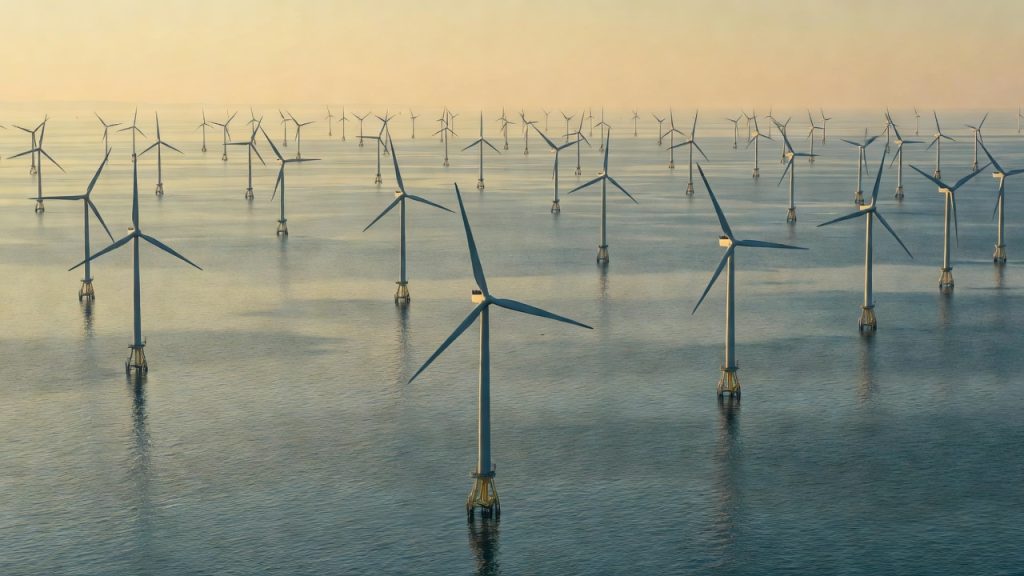
- United Kingdom: Renewables generated a record 53.1% of national electricity in Q1 2026, driven primarily by a surge in wind generation. This is not just a symbolic milestone — it reflects years of offshore wind investment, grid modernisation, and improved energy efficiency in demand management.
- Netherlands: France’s Air Liquide has taken a final investment decision (FID) on a 200-MW electrolyser project in Rotterdam, with TotalEnergies confirmed as a major offtaker. This is one of the largest green hydrogen infrastructure commitments in Europe to date, reinforcing Rotterdam’s ambition to become the continent’s hydrogen hub.
- Bulgaria: The European Union has officially granted strategic project status to Exeron BESS under the Net-Zero Industry Act, accelerating battery energy storage capacity across the bloc. Strategic status unlocks faster permitting and potential public support — critical tools for scaling net-zero technologies.
Together, these developments reflect a European model that, while imperfect, is increasingly built on institutional continuity rather than deadline-driven surges. The Net-Zero Industry Act, the hydrogen strategy, and national renewable targets provide a scaffolding that reduces the stop-start dynamics seen elsewhere.
Where the Gaps Remain: Offshore Wind and the Limits of Global Expansion
Not every bet is paying off. Norway’s Equinor has announced it is exiting its offshore wind operations in Japan and will close its Tokyo office by late 2026, after failing to secure any leases in successive auctions. It is a reminder that even well-capitalised European energy majors face hard limits when entering unfamiliar regulatory and competitive environments.
The Japan case also highlights a broader tension in resource management for energy companies: geographic diversification sounds strategically sound, but offshore wind development is intensely local — shaped by seabed conditions, grid infrastructure, permitting culture, and domestic industrial policy. Equinor’s retreat is not a failure of offshore wind as a technology; it is a lesson in market fit.
Implications for Citizens, Investors, and Policymakers
The common thread running through all these stories is the outsized role of policy design in shaping energy outcomes. Whether it is a U.S. subsidy cliff, an EU strategic project designation, or a Japanese auction structure that favours domestic players, the rules of the game determine who builds, what gets built, and at what cost.
For European citizens, the record UK wind figures and the Rotterdam hydrogen investment are encouraging signs that the clean energy transition is gaining real traction — not just in targets, but in electrons and infrastructure. For decision-makers, the U.S. solar rush is a live experiment in what happens when policy certainty is withdrawn: capital moves fast, but not always wisely.
Key takeaway: The renewable energy transition is accelerating globally, but its quality and resilience depend on stable, long-term policy frameworks. Europe’s current momentum — in wind, hydrogen, and storage — is built on exactly that foundation. Protecting it should be a political priority, not an afterthought.