EU Green Deal Finalised: 2040 Climate Target, Zero-Emission Cars by 2035, and a €65 Billion Social Fund
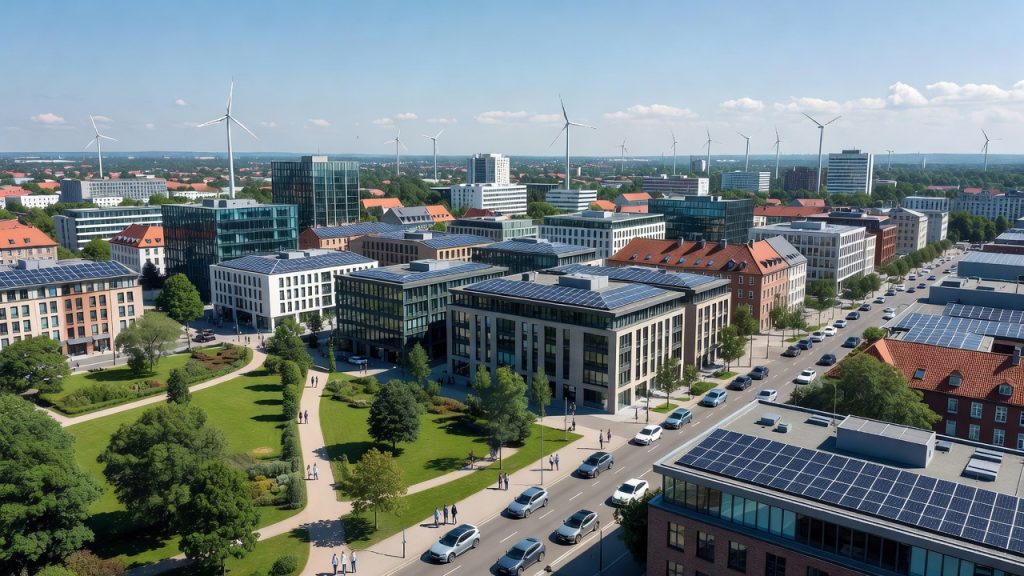
The European Union has taken its most decisive legislative steps yet on climate action, formally cementing a sweeping set of rules that will reshape energy, transport, and industry across the continent for decades to come. The finalised EU Green Deal package — anchored by a legally binding 90% net greenhouse gas reduction target for 2040 — leaves little room for ambiguity: Europe’s path to climate neutrality by 2050 is now written into law.
A Legally Binding 2040 Target: What It Actually Means
For the first time, the EU Climate Law has been amended to enshrine the 90% net emissions reduction target for 2040, measured against 1990 levels. This intermediate milestone bridges the existing 2030 target — a 55% reduction under the ‘Fit for 55’ package — and the ultimate goal of climate neutrality by 2050.
Crucially, the legislation includes a provision allowing up to 5% of the 2040 reductions to be met through international carbon credits, a concession that acknowledges the complexity of decarbonising certain sectors while keeping the overall ambition intact. Critics argue this flexibility could weaken domestic action; supporters say it enables global climate finance and cooperation.
From a climate policy standpoint, the 2040 target also sends a powerful signal to investors and industries planning capital expenditure over 10–20 year horizons. Sectors from steel and cement to aviation and agriculture now have a clearer regulatory trajectory — and less excuse for delay.
Zero-Emission Vehicles and the Carbon Market Expansion
On mobility, the EU has confirmed one of its most consequential environmental regulations to date: all new cars and vans registered in Europe must be zero-emission by 2035, with intermediate fleet-average CO₂ reduction targets of 55% for cars and 50% for vans by 2030. This effectively ends the sale of new internal combustion engine vehicles across the bloc’s 27 member states.
Complementing this, road transport emissions trading (ETS) officially commenced in 2027, placing a direct carbon price on fuel suppliers for road transport and heating. This expansion of carbon markets into everyday sectors marks a structural shift: pollution is no longer just regulated — it is priced. Revenues generated must be reinvested into clean technologies and the newly established Social Climate Fund, endowed with €65 billion to support lower-income households and vulnerable communities during the energy and mobility transition.
The carbon market expansion is being watched closely beyond Europe’s borders. As the EU’s Carbon Border Adjustment Mechanism (CBAM) also phases in, trading partners from the US to China are recalibrating their own climate strategies to avoid economic friction with the world’s largest single market.
Renewables, F-Gases, and the Industrial Reset
Underpinning the entire framework is a dramatically raised binding renewable energy target for 2030: a minimum of 42.5% of total energy consumption, up from the previous 32%, with an indicative ambition to reach 45%. This will drive hundreds of billions in investment into solar, wind, and grid infrastructure across the continent.
Meanwhile, new regulations on fluorinated gases (F-gases) and methane emissions have been fully adopted, targeting substances with global warming potentials thousands of times higher than CO₂. These rules affect refrigeration, air conditioning, and the energy sector globally — and are already influencing supply chains and sustainability reporting obligations for multinational companies operating in or trading with the EU.
Implications for Citizens, Business, and Global Climate Action
For European citizens, the transition brings both opportunity and disruption. The Social Climate Fund is designed to ensure the shift does not fall disproportionately on those least able to afford it — a recognition that just transition is not optional, but foundational.
For businesses, the message is unambiguous: align with net-zero trajectories or face rising compliance costs. Sustainability reporting requirements under the Corporate Sustainability Reporting Directive (CSRD) will make climate exposure increasingly visible to investors and regulators alike.
- 2027: Road transport ETS begins; carbon pricing hits fuel suppliers
- 2030: 42.5% renewable energy minimum; 55% car fleet CO₂ cut
- 2035: Zero-emission vehicle mandate takes full effect
- 2040: 90% net emissions reduction legally required
- 2050: Full climate neutrality target
Key takeaway: The EU Green Deal is no longer a roadmap — it is the law. With binding targets, expanded carbon markets, and a social safety net baked in, Europe has constructed the world’s most comprehensive climate policy architecture. The question now is not whether the transition happens, but how fast, how fairly, and whether the rest of the world follows.