EU Green Deal in 2026: From Legislation to Implementation — Where Europe Stands Now
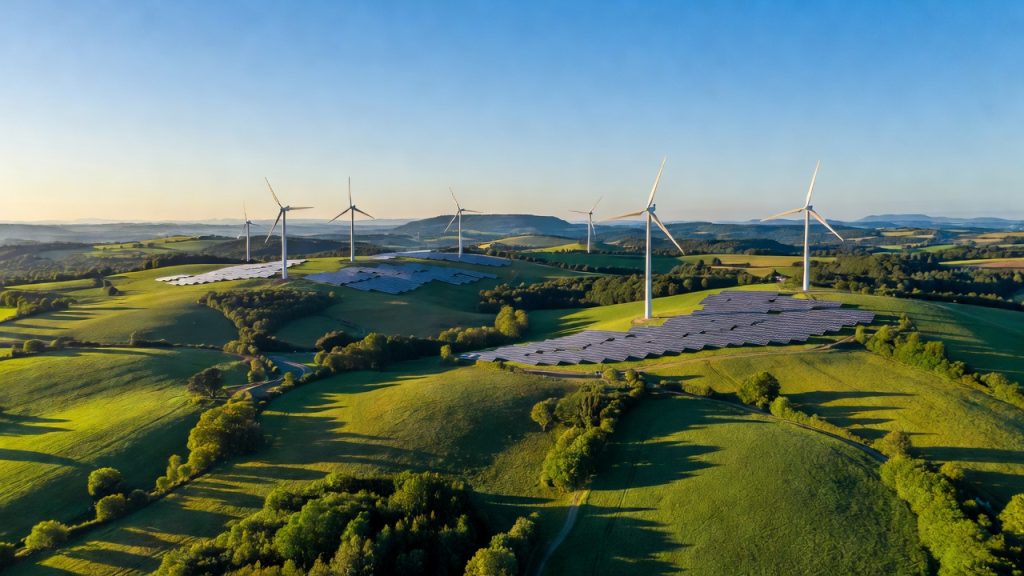
After years of landmark legislation, the European Union’s green transition has entered a quieter but arguably more consequential phase: implementation. As of mid-2026, no major new EU Green Deal policies have been introduced in recent days — and that, paradoxically, is significant news in itself. The framework is in place. Now comes the hard part: making it work.
A Stable Legislative Framework — and What It Contains
The EU Green Deal’s core architecture is now firmly established. The 2040 climate target, adopted in 2025, commits the EU to a 90% net reduction in greenhouse gas emissions by 2040 compared to 1990 levels — one of the most ambitious legally binding climate goals anywhere in the world. This sits on the pathway toward full climate neutrality by 2050, as required under the European Climate Law.
Alongside this, the binding 2030 renewables target of 42.5% of total energy consumption from renewable sources is now in force, pushing member states to accelerate wind, solar, and other clean energy deployments. The Social Climate Fund, endowed with €65 billion, has been fully implemented to cushion the most vulnerable households and small businesses from the costs of the green transition — a recognition that climate policy must be socially equitable to be politically durable.
On the mobility front, the ban on new internal combustion engine vehicles from 2035 remains a cornerstone of the EU’s decarbonisation strategy for road transport, reshaping the European automotive industry’s investment decisions for decades to come.
Carbon Markets and the Road to 2027
The EU Emissions Trading System (ETS) — the world’s largest carbon market — continues to operate as the primary price signal for industrial decarbonisation. A critical expansion is on the horizon: from 2027, road transport and buildings will be brought under a new, parallel ETS mechanism (ETS2), extending carbon pricing to sectors that account for a substantial share of European emissions but have historically operated outside the cap-and-trade system.
No new pricing mechanisms or market reforms were announced recently, but the anticipation of ETS2 is already influencing business planning across logistics, real estate, and construction. For companies and consumers alike, the message is clear: the cost of carbon is set to become a more visible feature of everyday economic life. Globally, the EU’s approach continues to serve as a reference model, with jurisdictions from Canada to South Korea watching closely as Europe tests the limits of carbon pricing at scale.
Sustainability Reporting: The Compliance Challenge for Business
Perhaps nowhere is the gap between legislation and implementation more visible than in corporate sustainability reporting. The Corporate Sustainability Reporting Directive (CSRD) is now in effect, requiring thousands of European companies — and non-EU firms with significant European operations — to disclose detailed, audited data on their environmental, social, and governance (ESG) performance.
No new guidance or amendments to the CSRD have been issued in the past 48 hours, but businesses across Europe are still deep in the process of adapting their internal systems, data collection processes, and supply chain oversight to meet these requirements. For many mid-sized companies, this represents a fundamental shift in how sustainability is managed — from a communications exercise to a core compliance function with legal accountability.
Implications for Citizens, Businesses, and Policymakers
The current moment in EU climate policy carries distinct implications for different audiences:
- Citizens will increasingly feel the effects of the green transition through energy bills, vehicle choices, and the products available in the market — but also through the protections offered by the Social Climate Fund.
- Businesses face a dual challenge: complying with CSRD reporting obligations while preparing for the financial impact of expanded carbon pricing from 2027 onward.
- Policymakers at national and regional level bear the primary responsibility for translating EU targets into concrete national energy plans, infrastructure investments, and just transition programmes.
Key Takeaway
The EU Green Deal is no longer primarily a story about new laws being written — it is a story about whether existing laws deliver real-world results. The targets are set: 90% emissions reduction by 2040, 42.5% renewables by 2030, carbon pricing extended to transport and buildings by 2027. The coming years will test Europe’s capacity to turn political ambition into measurable climate progress. For citizens, companies, and governments across the continent, the work has only just begun.