EU and China Set Binding Climate Targets: What It Means for Businesses and the Green Economy
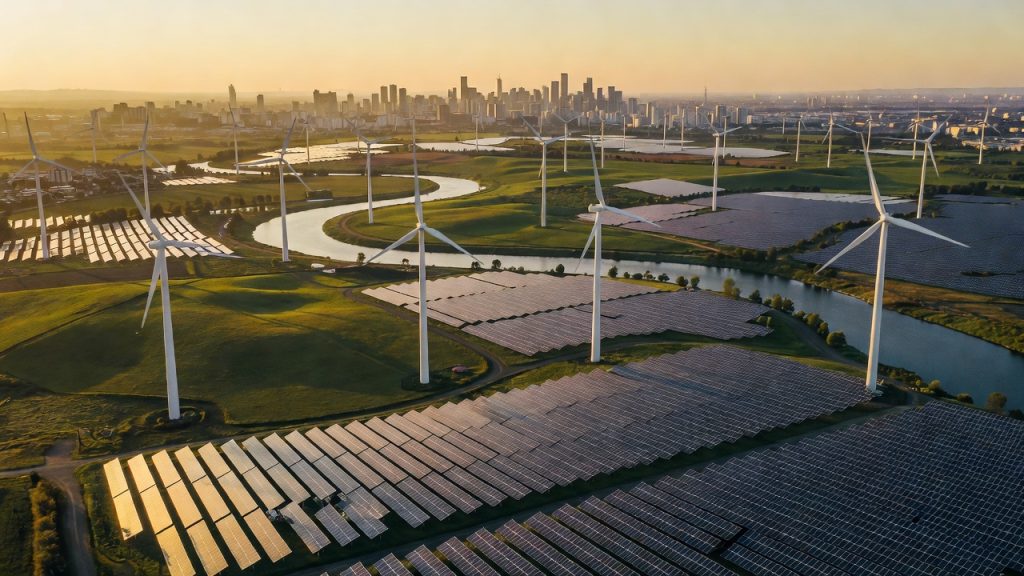
In a landmark convergence of climate ambition, the European Union and China have both formalized binding commitments to reduce greenhouse gas emissions — a development that carries profound implications for sustainability, ESG strategy, and the global green economy. The EU has set a 90% reduction in greenhouse gas emissions by 2040, while China has announced a 17% drop in carbon intensity by 2027 as part of its accelerated five-year plan to shift away from coal. Together, these moves signal that the era of voluntary climate pledges is giving way to enforceable, legislated action.
Binding Legislation: A New Standard for Climate Accountability
What distinguishes these announcements from previous rounds of climate diplomacy is the word that matters most: binding. The EU’s 2040 climate target, embedded in its broader legislative framework, builds on the European Climate Law and represents the next milestone after the 55% emissions reduction goal for 2030 under the Fit for 55 package. Reaching 90% by 2040 will require a wholesale transformation of energy systems, industrial processes, and land use across all 27 member states.
China’s commitment, meanwhile, focuses on carbon intensity — the amount of CO₂ emitted per unit of GDP — rather than absolute emissions. Critics note this distinction matters: a growing economy can still increase total emissions even while improving intensity. However, the 17% target, embedded in China’s 15th Five-Year Plan framework, is paired with concrete coal phase-down measures and a rapid acceleration of renewable energy deployment. For context, China is already the world’s largest installer of solar and wind capacity.
For businesses operating under ESG frameworks, these legislative anchors are not just political signals — they are regulatory realities that will reshape compliance requirements, investment risk assessments, and supply chain due diligence obligations across sectors.
Circular Economy and Supply Chain Rules Tighten the ESG Landscape
Alongside the headline climate targets, the EU has approved new circular economy rules for the automotive sector, mandating stricter environmental and human rights standards across supply chains. This move is part of a broader regulatory push that includes the Corporate Sustainability Due Diligence Directive (CSDDD) and the Ecodesign for Sustainable Products Regulation — all of which place corporate responsibility at the center of EU industrial policy.
For green business leaders, this means that sustainability is no longer a reputational add-on but a legal prerequisite. Companies sourcing materials for electric vehicle batteries, for example, will need to demonstrate compliance with both environmental and social criteria — from cobalt mining practices in the Democratic Republic of Congo to recycling rates at end-of-life. The circular economy framework demands traceability, transparency, and accountability at every link in the chain.
- Automakers must align product design with recyclability and reduced material footprints.
- Suppliers face mandatory human rights and environmental due diligence audits.
- Investors will need to factor regulatory compliance into ESG risk models more rigorously than ever.
Sustainable Finance Under Pressure: Grid Funding Cuts and Renewable Bottlenecks
Not all the news points in one direction. The EU has also cut grid funding targets amid rising power demand and persistent bottlenecks in renewable energy infrastructure. This tension — between accelerating clean energy ambition and the practical constraints of grid capacity, permitting delays, and financing gaps — is one of the defining challenges of the current transition period.
Sustainable finance mechanisms, including the EU Taxonomy and green bond standards, are being stress-tested by these infrastructure realities. The shift in funding priorities signals that policymakers are recalibrating, focusing resources where deployment gaps are most acute. For institutional investors and sustainable finance professionals, this underscores the importance of infrastructure investment as a critical ESG theme — not just renewables generation, but the transmission networks that make clean power usable at scale.
Implications for Citizens, Professionals, and Decision-Makers
The convergence of EU and Chinese climate policy creates a powerful gravitational pull on global markets. Companies that align early with binding sustainability standards — whether through ESG reporting, circular economy practices, or clean energy procurement — will be better positioned to compete in a regulatory environment that is only becoming more demanding. Citizens, too, will feel the effects: in energy bills, product standards, and the quality of the air and environment around them.
Key takeaway: The shift from voluntary pledges to binding climate legislation — on both sides of the Eurasian continent — marks a structural turning point for sustainability and ESG. For businesses, investors, and policymakers, the question is no longer whether to act, but how fast and how comprehensively to embed green principles into every decision.