EU’s 90% Emissions Target by 2040: What It Means for Business, Policy, and the Planet
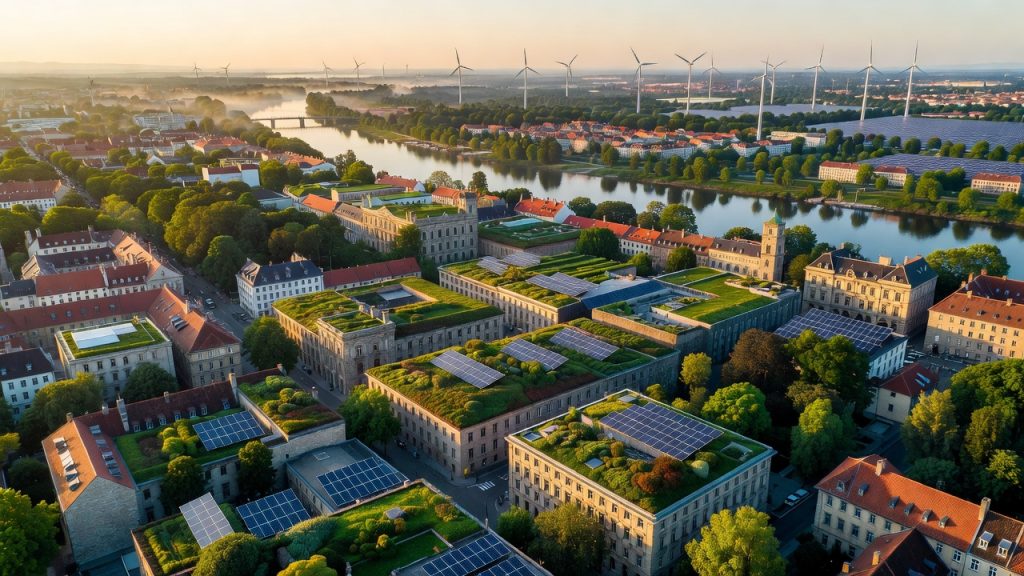
In a landmark week for global climate action, the European Union gave final approval to one of its most ambitious targets yet: a 90% reduction in greenhouse gas emissions by 2040, compared to 1990 levels. The decision, confirmed on Thursday, cements the EU’s position as a global leader in climate policy — even as political headwinds and business lobbying continue to reshape the regulatory landscape around it.
At the same time, China announced an acceleration of its carbon intensity reduction plan to 17% over its current five-year period, a significant step up from the 2020–2025 cycle. Together, these moves signal that the world’s two largest emitting blocs are, at least on paper, picking up the pace on decarbonisation — with major consequences for sustainability, ESG strategy, and corporate responsibility across industries.
Europe’s 2040 Climate Law: Ambition Meets Political Reality
The EU’s newly approved 2040 climate target is a critical stepping stone between the current 2030 goal — a 55% net emissions reduction under the Fit for 55 package — and full climate neutrality by 2050. The 90% figure was recommended by the European Scientific Advisory Board on Climate Change and aligns with the bloc’s obligations under the Paris Agreement.
However, the road to approval was far from smooth. Political resistance from member states with coal-heavy economies, combined with concerns from energy-intensive industries, forced extended negotiations. The final text reflects a delicate balance between scientific necessity and political feasibility — a tension that will continue to define European climate governance in the years ahead.
For businesses operating in Europe, the implications are clear: long-term decarbonisation is no longer optional. Companies will need to align their ESG frameworks, capital expenditure plans, and supply chain strategies with a trajectory that leaves little room for delay. Sustainable finance instruments — from green bonds to sustainability-linked loans — are expected to play an increasingly central role in funding this transition.
Supply Chain Rules Walk Back: A Setback for Corporate Responsibility?
Overshadowing the climate target announcement, the EU also confirmed a significant scaling back of its mandatory supply chain due diligence rules — the Corporate Sustainability Due Diligence Directive (CSDDD). Originally designed to hold large companies accountable for environmental and human rights risks throughout their value chains, the revised rules narrow the scope and ease compliance requirements following intense lobbying from businesses and pressure from governments including the United States and Qatar.
Critics argue this represents a step backward for corporate responsibility and the circular economy agenda. Transparency advocates warn that weakening supply chain oversight risks undermining the credibility of Europe’s broader sustainability framework. Supporters of the revision, however, contend that a more targeted approach will reduce administrative burdens on SMEs and improve implementation rates.
The episode highlights a recurring tension in EU green policy: the gap between regulatory ambition and business readiness. For ESG professionals and sustainable finance practitioners, it raises important questions about the reliability of EU-level standards as a baseline for responsible investment and green business practices.
Corporate Milestones and the Rise of Distributed Clean Energy
Beyond policy, this week also brought notable corporate sustainability developments. Microsoft announced it has achieved its 2025 water replenishment milestone ahead of schedule, becoming water positive in its operations — five years before its 2030 commitment. The announcement underscores the growing importance of water stewardship as a core pillar of ESG strategy, particularly as data centre expansion accelerates globally.
Meanwhile, a consortium of Tesla, Sunrun, and Renew Home jointly offered 16.8 GW of distributed energy resources to utilities and hyperscalers — a figure that rivals the output of several large conventional power plants. This move highlights the transformative potential of virtual power plant programmes and distributed energy in reshaping how electricity is generated, stored, and traded. Similar models are already being piloted in Europe, with regulatory frameworks slowly catching up to the technology.
Implications for Investors, Businesses, and Policymakers
Taken together, this week’s developments paint a complex picture for anyone navigating the sustainability and ESG landscape:
- Investors should note that the EU’s 2040 target will drive further expansion of sustainable finance taxonomies and green bond markets, while the CSDDD rollback may require closer scrutiny of supply chain disclosures.
- Businesses must prepare for a tightening regulatory environment on emissions, even as some compliance burdens are temporarily eased in other areas.
- Policymakers face the challenge of maintaining credibility on climate commitments while managing economic and political pressures — a balancing act that will define European governance through the end of the decade.
Key takeaway: The EU’s 90% emissions target by 2040 is a genuine milestone for global climate action — but its success will depend on consistent implementation, robust corporate accountability, and a financial system fully aligned with the demands of a net-zero economy. The week’s mixed signals on supply chain rules serve as a reminder that ambition and execution are not always the same thing.