Green Tech Investment Hits a Tipping Point: What 2026’s Cleantech Breakthroughs Mean for Europe
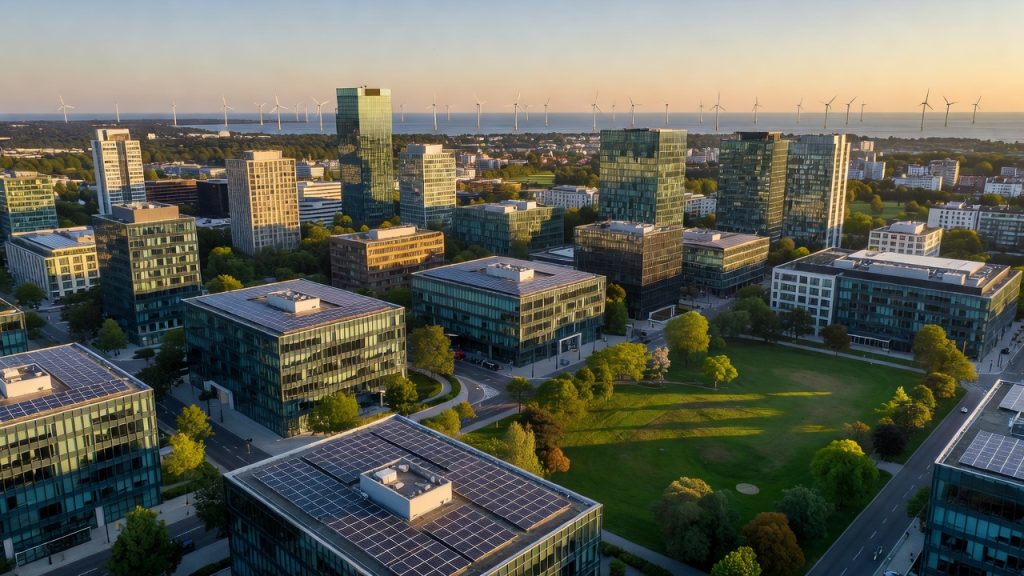
Something significant is happening in the world of green technology — and the numbers make it hard to ignore. According to a 2026 report by MAG (Madappgang), more than 70% of medium-sized businesses in Europe and North America plan to invest in renewable or eco-friendly technologies before the year is out. From solar glass windows to hydrogen-powered logistics, a new generation of cleantech innovations is moving from pilot projects to mainstream adoption at a pace that would have seemed ambitious just three years ago.
For Europe — already leading on climate regulation through the Green Deal framework and carbon pricing mechanisms — this moment represents both a validation of long-term policy bets and a call to accelerate further. The energy transition is no longer a distant horizon. It is the present competitive landscape.
Breakthrough Technologies Driving the Energy Transition
Several innovations stand out as genuine game-changers in 2026’s cleantech landscape. Long-duration energy storage (LDES) systems can now deliver electricity for more than 10 consecutive hours — a critical threshold for grid reliability. Installations are expected to double in 2026 compared to 2025, addressing one of the core weaknesses of intermittent renewables like solar and wind.
Floating offshore wind farms are expanding Europe’s renewable capacity into deeper waters previously considered inaccessible, while solar glass windows are quietly transforming urban buildings into distributed power generators — a key enabler for smart cities aiming to reduce dependence on centralised grids.
Meanwhile, AI-driven climate prediction systems are giving grid operators and city planners unprecedented tools to anticipate demand spikes, optimise energy flows, and reduce waste. When integrated with smart microgrids, these systems allow communities and industrial districts to manage local energy with a level of precision that was unthinkable a decade ago.
Low-Carbon Construction and the Circular Economy Come of Age
The built environment — responsible for nearly 40% of global CO₂ emissions — is finally seeing scalable green innovation. Modular construction techniques combined with carbonated aggregates and CO₂-injected concrete are cutting emissions in major infrastructure projects by up to 60%. This is not marginal improvement; it is structural transformation.
Tightening regulations on both sides of the Atlantic are pushing businesses to find productive uses for captured carbon. CO₂ is increasingly being converted into synthetic fuels, construction materials, and even fabrics — turning a waste product into an industrial input. This shift embodies the circular economy logic that European policy has championed for years, and it is now finding genuine commercial traction.
Hydrogen-powered transport and logistics are also reshaping supply chains. Early adopters report operating cost reductions of up to 60% and utility savings of between 10% and 30% — figures that are beginning to silence the sceptics who argued green transitions were economically prohibitive.
Policy Momentum and the Corporate Decarbonisation Race
Europe’s regulatory environment is a key accelerant. Carbon pricing mechanisms and the broader Green New Deal framework are creating clear financial incentives — and penalties — that are pushing corporate decarbonisation from voluntary commitment to strategic necessity. Biodegradable electronics, once a niche curiosity, are entering procurement conversations as companies face growing pressure over electronic waste and material circularity.
The implications for decision-makers are direct:
- Businesses that delay green tech investment risk both regulatory exposure and competitive disadvantage as early adopters lock in cost efficiencies.
- Cities and municipalities have a narrowing window to integrate smart grid infrastructure and green mobility solutions before costs of retrofitting rise.
- Policymakers must ensure that the regulatory framework keeps pace with innovation — particularly around hydrogen infrastructure, LDES grid integration, and carbon market integrity.
The Key Takeaway
The 2026 cleantech landscape is defined by convergence: renewable energy, green innovation in construction, hydrogen-powered logistics, and AI-enabled grid management are no longer isolated trends — they are reinforcing each other into a coherent new industrial model. Europe, with its regulatory ambition and growing cleantech ecosystem, is well-positioned to lead. But leadership requires continued investment, policy consistency, and the courage to move at the speed the climate demands.
The energy transition is not arriving. It has arrived. The question now is who shapes it.