EU Locks In 90% Emissions Cut by 2040: What It Means for Business, Finance, and the Green Transition
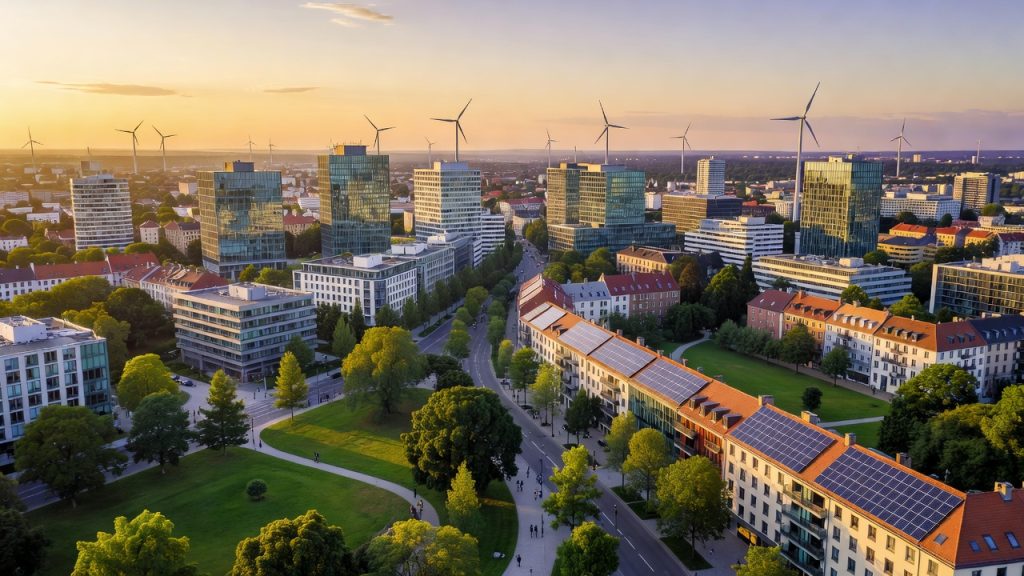
The European Union has crossed a significant threshold. On Thursday, EU member states gave final approval to a binding climate target requiring a 90% reduction in greenhouse gas emissions by 2040 compared to 1990 levels. The decision, reported by Reuters Impact, cements Europe’s position as the world’s most ambitious climate policy bloc — and sends a clear signal to businesses, investors, and governments globally: the green transition is no longer a distant goal, it is a legal obligation.
A New Benchmark for Corporate Responsibility and Sustainable Finance
For companies operating in or trading with the EU, this target is not merely symbolic. It directly shapes the regulatory environment around ESG reporting, sustainable finance, and corporate responsibility. The 2040 milestone sits between the existing 55% net reduction target for 2030 (under the European Climate Law) and full climate neutrality by 2050, creating a structured, legally enforceable pathway that businesses must now plan around.
The implications for sustainable finance are immediate. Capital allocation decisions — from green bonds to ESG-linked loans — will increasingly be benchmarked against this trajectory. Financial institutions will face growing pressure to align portfolios with a 90% decarbonisation curve, accelerating the shift away from fossil-fuel-heavy assets. For sectors like energy, heavy manufacturing, and logistics, the message is unambiguous: transformation is not optional, and the timeline is fixed.
Reinforcing this shift, a new ISO international net-zero standard has been opened for public consultation, with implementation expected from 2027. This framework will allow companies to set verified, science-aligned emissions reduction targets — closing the door on vague or unsubstantiated net-zero claims and raising the bar for what credible green business practice actually looks like.
Global Momentum: China, AI, and the Race to Standardise Climate Action
The EU’s decision does not exist in a vacuum. Globally, the pace of climate policy is accelerating in ways that reinforce — and complicate — Europe’s ambitions.
China has announced plans to reduce its carbon intensity by 17% within its current five-year plan, a significant policy shift that will ripple through global supply chains and corporate emissions strategies. For European companies sourcing from or competing with Chinese manufacturers, this changes the competitive landscape around decarbonisation.
Meanwhile, the UN Secretary-General has called on major AI companies to disclose their environmental impacts and commit to energy independence goals by 2030, linking the explosive growth of artificial intelligence with net-zero targets by 2050. This is a critical intervention: data centres powering AI systems are among the fastest-growing sources of energy demand globally, and their carbon footprint is largely invisible in current ESG frameworks. Transparency here is not just an ethical issue — it is becoming a regulatory one.
Adding urgency to the picture, a World Business Council for Sustainable Development survey found that 80% of business leaders fear a disorderly climate transition — one characterised by abrupt policy shifts rather than gradual, predictable change. Their call for steady, incremental policy frameworks over last-minute regulatory shocks is a reminder that ambition must be paired with implementation clarity if the private sector is to invest with confidence.
Implications for the Circular Economy and Supply Chain Strategy
A 90% emissions target by 2040 cannot be achieved through energy efficiency alone. It demands a fundamental rethinking of production, consumption, and waste — the core logic of the circular economy. Companies that have treated circularity as a branding exercise will need to embed it structurally: in product design, material sourcing, end-of-life recovery, and supply chain transparency.
- Energy sector: Accelerated phase-out of fossil fuels; massive scaling of renewables and storage.
- Manufacturing: Pressure to decarbonise industrial processes and adopt low-carbon materials.
- Supply chains: Scope 3 emissions reporting will become non-negotiable under tightening ESG disclosure rules.
- Finance: Green taxonomies and verified net-zero standards will redefine what qualifies as a sustainable investment.
The key takeaway is this: the EU’s 2040 climate target is not a distant policy aspiration — it is the new operating environment for European and globally connected businesses. Combined with emerging ISO standards, China’s carbon intensity commitments, and growing pressure on the tech sector to account for its environmental footprint, the architecture of a stricter, more standardised global climate economy is taking shape. For leaders in sustainability and ESG, the window for proactive adaptation is open — but it will not stay open indefinitely.