Gene Editing, Regenerative Farming, and the Race to Build Climate-Resilient Food Systems
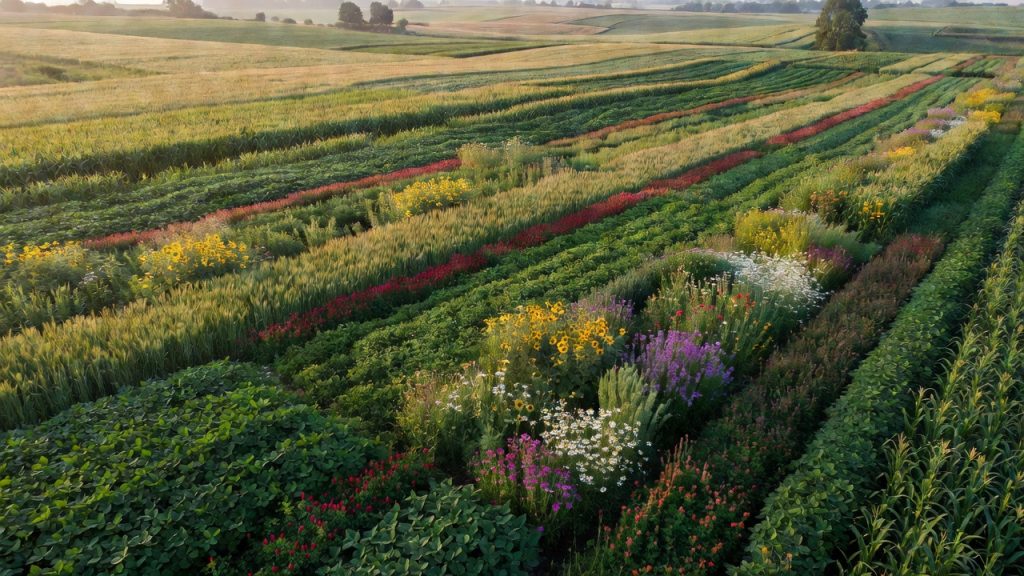
The global food system is at a crossroads. Climate stress, supply chain fragility, and growing demand for nutritious, sustainable diets are forcing governments, scientists, and farmers to rethink how we grow food. This week, a wave of announcements — from Washington to Santiago, from Taipei to Buenos Aires — signals that the transformation of sustainable agriculture is accelerating faster than many expected.
A Policy Turning Point: The U.S. Bets Big on Regenerative Agriculture
The White House has officially announced a major federal push to increase investment in regenerative agriculture practices, research, and education. The initiative pairs public funding with deregulation aimed at spurring private-sector innovation in precision farming technologies. The goal: stronger farm resilience, reduced environmental impact, and modernised food systems built on public-private partnerships.
For European observers, the move carries significant weight. The EU’s own Farm to Fork Strategy has long championed agroecology and regenerative principles, but has faced criticism for lacking the financial muscle to match its ambitions. A U.S. federal commitment of this scale could reshape global benchmarks for what sustainable agriculture policy looks like — and put pressure on Brussels to accelerate its own investment frameworks ahead of the next Common Agricultural Policy revision.
Precision agriculture technologies — including satellite monitoring, AI-driven soil analysis, and data-informed irrigation — are central to the U.S. plan. These tools, when paired with regenerative principles like cover cropping and reduced tillage, represent a promising convergence of high-tech efficiency and ecological restoration.
The Gene Editing Frontier: Breakthroughs That Could Redefine Food Security
Alongside policy shifts, a series of scientific breakthroughs are rewriting the possibilities for climate-resilient food systems. The developments are striking:
- Heat-tolerant rice: UK-based ocean agriculture company Alora reports that gene-edited rice variants achieved yield increases of up to 273% under extreme temperatures above 40°C — a critical advance as heatwaves become more frequent across South and Southeast Asia.
- Enhanced CO₂ capture: Taiwanese scientists have engineered thale cress plants to absorb 50% more CO₂ and produce twice as many seeds, opening a potential dual pathway for climate mitigation and staple crop improvement.
- High-fibre CRISPR wheat: Chilean start-up Neocrop Technologies has developed CRISPR-edited wheat with 5 to 10 times more dietary fibre than conventional flour, without compromising taste or texture — a breakthrough for plant-based nutrition and public health.
These innovations sit at the intersection of biotechnology and agroecology, challenging the traditional divide between “natural” farming and laboratory science. Europe’s regulatory stance on gene editing — currently under revision following a 2023 European Commission proposal to ease rules on New Genomic Techniques (NGTs) — will determine whether EU farmers and consumers can access these tools competitively.
GM Crop Expansion and Supply Chain Sustainability: The Argentina Signal
Not all developments fit neatly into a regenerative narrative. Argentina is set to approve 11 new genetically modified crops in 2025, including insect-resistant corn and soybean varieties developed by Chinese-owned companies. This marks a significant shift in the architecture of global agricultural supply chains — and raises important questions about supply chain sustainability, geopolitical dependencies, and biodiversity risk.
For Europe, which imports substantial volumes of South American soy for animal feed, Argentina’s GM expansion has direct implications. It intensifies the debate around deforestation-linked imports, the EU’s new Corporate Sustainability Due Diligence Directive, and whether European food systems can genuinely decouple from high-impact commodity chains.
Implications for Europe: Opportunity and Responsibility
Taken together, these developments present Europe with both an opportunity and a responsibility. The continent has positioned itself as a global leader in sustainable food policy, but leadership requires more than regulation — it demands investment, scientific openness, and honest engagement with trade-offs.
Gene editing is not a silver bullet, and regenerative agriculture cannot scale without adequate farmer support. But dismissing either risks leaving Europe behind in a global race to build food systems that are resilient, nutritious, and genuinely sustainable.
Key takeaway: The future of food is being written now — in federal budgets, CRISPR laboratories, and trade agreements. Europe must engage actively with all of these fronts, or risk watching others define the rules of sustainable agriculture for decades to come.