EU’s €25 Billion MENA Renewable Push: What It Means for Europe’s Energy Future
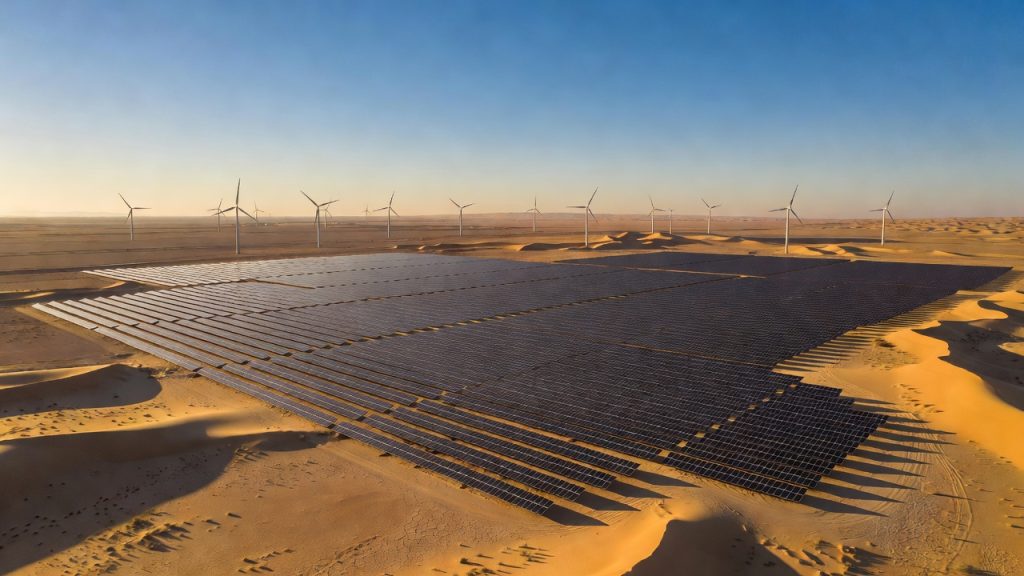
The European Union is making one of its boldest energy moves yet: mobilising €25 billion to fund renewable energy projects across the Middle East and North Africa (MENA). Announced as part of a broader strategic initiative, the plan aims to accelerate decarbonisation, strengthen global energy security, and open new frontiers for European businesses in solar, wind, and green hydrogen development. At a time when energy independence remains a top priority for Brussels, this cross-border investment signals a fundamental shift in how Europe thinks about resource management and long-term supply chains.
Why MENA? The Strategic Logic Behind Europe’s Investment
The MENA region holds some of the world’s most abundant solar and wind resources — assets that remain largely underdeveloped relative to their potential. Countries like Egypt, Morocco, and Jordan have already demonstrated strong appetite for renewable energy investment. Egypt, for instance, recently awarded a Red Sea wind farm contract to Alcazar Energy, a move that attracted significant international attention and underscored the region’s growing credibility as a clean energy hub.
For Europe, the appeal is straightforward. Importing green hydrogen and renewable electricity from sun-drenched MENA neighbours could dramatically reduce dependence on fossil fuel imports — a vulnerability exposed sharply by the 2022 energy crisis. The EU’s Global Gateway strategy, which frames infrastructure investment as a geopolitical tool, provides the institutional backbone for this €25 billion mobilisation. European energy businesses stand to gain access to new markets, while partner nations receive the financing and technical expertise needed to build out clean energy infrastructure at scale.
Crucially, this is not just about electrons and pipelines. Water and resource management are deeply intertwined with energy transitions in arid regions. Large-scale solar and wind projects must be planned with water scarcity in mind, and European expertise in energy efficiency and sustainable infrastructure design will be essential to making these investments genuinely resilient.
A Global Momentum — But Not Without Obstacles
The EU’s MENA initiative arrives amid a broader surge in global renewable energy investment, though the landscape is far from uniformly optimistic. In the United States, corporate power purchase agreements (PPAs) are driving significant solar expansion: Zelestra recently partnered with Meta to deliver 180 MW of Texas solar power, a deal that reflects growing corporate demand for clean electricity and the maturation of PPA markets as a financing tool.
In Asia, NTPC Renewable Energy is developing a 250 MW solar project with battery energy storage (BESS) in Uttar Pradesh, India — a project that highlights the critical role of grid integration and storage in making variable renewable energy reliable at scale.
Yet policy uncertainty continues to cast shadows over some of the sector’s most ambitious projects. In Europe itself, Equinor and EDF’s floating wind plans in the North Sea face delays following a Norwegian parliamentary vote against key subsidies. Floating offshore wind — a technology that could unlock vast deep-water resources — requires sustained public support to reach commercial viability. The Norwegian setback is a reminder that even in pro-climate jurisdictions, subsidy frameworks remain politically contested and financially fragile.
Implications for European Citizens and Decision-Makers
For European citizens, the MENA investment strategy offers a potential path to more stable and affordable energy over the long term. Diversifying supply through renewable imports — particularly green hydrogen produced in North Africa — could buffer against the price volatility that has characterised fossil fuel markets. However, the benefits will only materialise if the projects are delivered on time, governed transparently, and structured to benefit local communities as well as European consumers.
For policymakers and industry leaders, several priorities emerge:
- Maintain subsidy frameworks for offshore wind and other emerging technologies to avoid the kind of uncertainty seen in Norway.
- Integrate water and resource management planning into all large-scale renewable projects in water-stressed regions.
- Scale up corporate PPA models to accelerate solar deployment without relying solely on public funding.
- Ensure energy efficiency standards are embedded in cross-border infrastructure to maximise the value of every euro invested.
Key takeaway: The EU’s €25 billion MENA renewable energy initiative is more than a funding announcement — it is a strategic bet on a cleaner, more secure energy future built through international partnership. Whether it delivers on that promise will depend on political will, sound governance, and the ability to navigate the real-world complexities of deploying solar, wind, and hydrogen infrastructure across two continents.