Historic Iran Nuclear Accord Reached: A New Era in Diplomacy – June 23, 2026
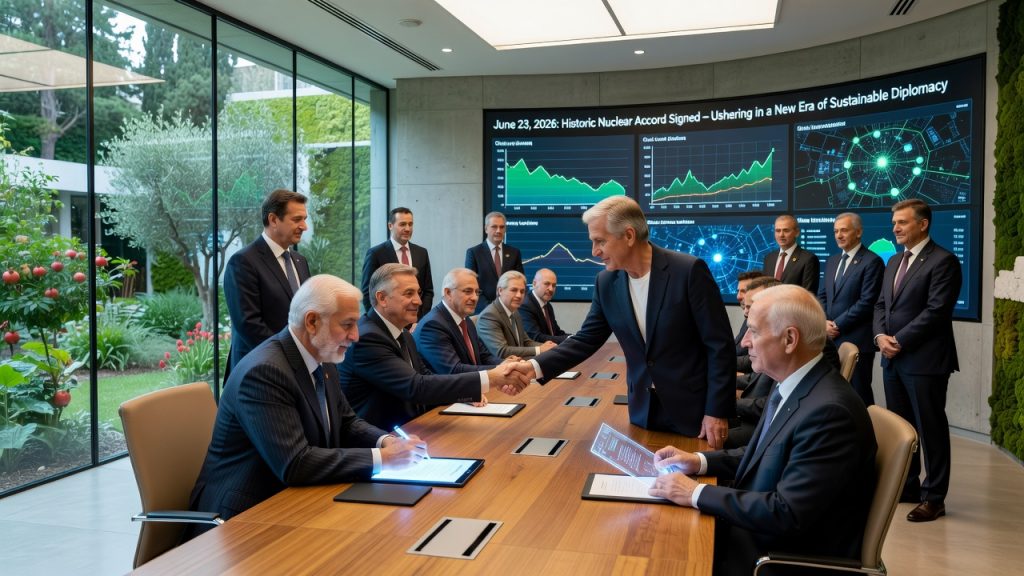
International diplomacy is at a turning point with the finalization of a landmark agreement promising to reshape the Middle East and impact the global geopolitical landscape. This historic accord prevents Iran from developing nuclear weapons, marking a significant shift in efforts to curb nuclear proliferation in the region.
Understanding the Context
To appreciate the magnitude of this development, we need to understand its origins. For decades, the prospect of a nuclear-armed Iran has been a central concern in international security. This issue has fueled debates, prompted economic sanctions, and led to military posturing. The complexity of reaching a consensus among global powers has often been overshadowed by conflicts and divisions. Yet, the current agreement has broken this mold, uniting nations in a commitment to nuclear disarmament in Iran.
Broader Implications of the Agreement
The agreement’s implications extend beyond nuclear threats by promoting regional de-escalation. An important aspect is the cessation of hostilities in conflict zones like Lebanon, where Israeli military operations have been a source of tension. This reflects a diplomatic achievement, highlighting the power of negotiation over conflict.
Reopening the Strait of Hormuz
The inclusion of the Strait of Hormuz in the agreement is crucial. This strategic waterway is vital for global energy commerce, and its security is essential for maintaining stable energy markets worldwide. By securing its access and safety, the accord mitigates one of the most critical choke points in the global supply chain.
Economic Reconstruction and Development
Central to this deal is a $300 billion fund dedicated to economic reconstruction and development in affected regions. This financial commitment represents a shift from conflict resolution to proactive investment in post-conflict recovery. It signals a dedication not just to ending hostilities but to fostering long-term peace and prosperity.
Global Ramifications
The potential outcomes of this agreement are extensive. It eliminates the immediate risk of nuclear escalation, opening the door for renewed economic engagement. This invites regional and global powers to invest in a future defined by collaboration rather than conflict. The stabilization of the energy market could have ripple effects, contributing to global economic stability and growth.
A Shift in Approach
The path to this accord was fraught with challenges, requiring a paradigm shift from military intervention to negotiated settlement. This shift was driven by a shared understanding among world leaders that sustainable peace is achievable through diplomacy and mutual understanding, not force.
In conclusion, this landmark agreement signifies a turning point for Iran, the Middle East, and the world. It exemplifies the power of diplomacy in addressing pressing security challenges. As we move forward, this accord may serve as a model for resolving other international disputes, demonstrating that with collective will and shared financial responsibility, long-term peace and stability are attainable. Share your thoughts in the comments below.