From Lab to Grid: How Green Tech Is Powering Europe’s 2040 Climate Ambition
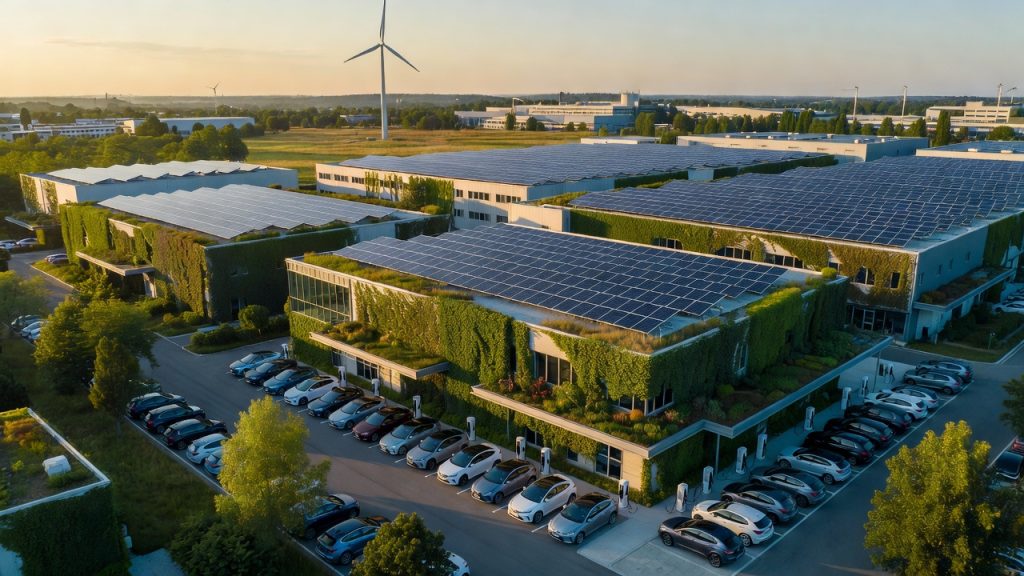
Europe just made its most ambitious climate commitment to date. EU member states have formally approved a binding 2040 climate target requiring a 90% reduction in greenhouse gas emissions compared to 1990 levels — a decision that sends a powerful signal to industries, investors, and innovators across the continent. But targets alone don’t decarbonize economies. The real story lies in the green technologies racing to meet that ambition, and the infrastructure being built to support them.
A Policy Anchor for Cleantech Investment
The approval of the EU’s 2040 climate target is more than a political milestone — it’s a long-term planning signal for the entire clean technology ecosystem. By locking in a trajectory toward near-zero emissions, the EU is creating the regulatory certainty that businesses, utilities, and municipalities need to commit capital to energy transition projects over multi-decade horizons.
Sectors most directly affected include power generation, heavy industry, transport, and construction — all of which will need to accelerate electrification, efficiency upgrades, and the adoption of low-carbon solutions. For smart cities planners and electric mobility developers, this is a clear green light: the policy environment is aligning with the technological momentum already underway.
It is worth noting that the EU simultaneously approved changes scaling back some supply-chain due diligence requirements, reflecting ongoing tension between climate ambition and business competitiveness. Balancing regulatory rigor with industrial practicality will remain a defining challenge as the 2040 framework translates into sector-specific legislation.
Hydrogen and Storage: The Infrastructure Gap Starts Closing
Two developments this week illustrate how critical green innovation is moving from research promise toward real-world deployment. Scientists highlighted by ScienceDaily have identified a perovskite-based catalyst that could significantly lower the cost and complexity of clean hydrogen production — a potential breakthrough for industries that cannot easily electrify, such as steelmaking, chemicals, and long-haul freight.
Clean hydrogen has long been described as essential to deep decarbonization, yet high production costs have kept it on the margins of commercial viability. Advances in catalyst chemistry could change that equation, making green hydrogen a genuinely competitive option within the decade — precisely the timeframe the EU’s 2040 target demands.
On the storage side, Bulgarian company IPS has been granted strategic project status under the EU’s Net-Zero Industry Act for its fully integrated battery energy storage system. This designation, reported by Renewables Now, unlocks faster permitting and potential public support — underscoring Europe’s commitment to building a domestic cleantech manufacturing base rather than relying on imports for critical grid-flexibility technologies.
Solar’s Quiet Revolution and What It Means for Europe
A striking data point arrived from across the Atlantic this week: the United States generated more electricity from solar than from coal for the entire month of May 2026, according to Renewable Energy World. For the first time in the history of the American grid, a renewable source outpaced the fossil fuel that defined industrial power generation for over a century.
While this is a US milestone, its implications are global. It confirms that the economics of solar have decisively shifted — and Europe, which has been expanding solar capacity aggressively under the REPowerEU framework, is on a parallel trajectory. As solar generation scales up, the demand for grid-flexibility solutions — including battery storage, smart grid management, and demand-response systems — grows in parallel. This is exactly where innovations like IPS’s storage systems and advances in green technology infrastructure become strategically vital.
Implications for Business and Society
Taken together, this week’s developments paint a coherent picture of an energy transition that is accelerating on multiple fronts simultaneously:
- Policy is providing long-horizon certainty through binding targets
- Science is delivering cost-reduction breakthroughs in hydrogen and materials
- Markets are demonstrating that renewables can dominate generation at scale
- Manufacturing is being incentivized to build the storage and grid tools needed to manage variable power
For citizens, this means cleaner air, lower long-term energy costs, and more resilient infrastructure. For professionals in energy, industry, and urban planning, it means the transition is no longer a distant scenario — it is the operating environment.
Key takeaway: The EU’s 2040 climate target doesn’t just raise the bar for emissions reduction — it crystallizes the commercial case for every layer of the clean technology stack, from hydrogen catalysts to grid-scale batteries to solar generation. Europe is betting that green innovation and industrial competitiveness can reinforce each other. The technologies emerging this week suggest that bet is increasingly well-placed.