EU’s 90% Emissions Cut by 2040: What It Means for Green Tech and the Clean Energy Race
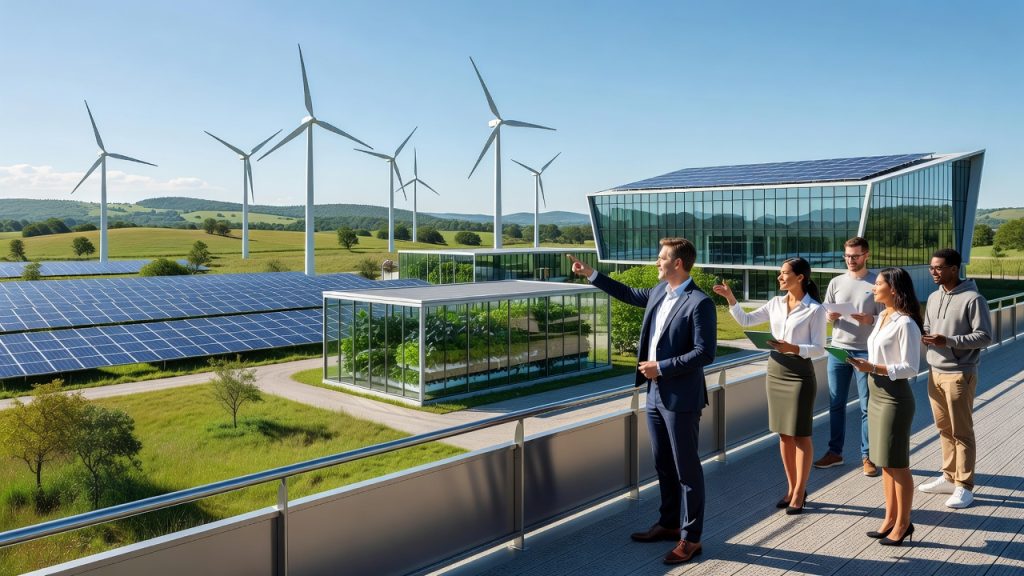
The European Union has taken a legally binding step that will reshape its industrial and energy landscape for the next fifteen years. EU member states have given final approval to a 2040 climate target of cutting greenhouse gas emissions by 90% compared to 1990 levels, cementing one of the most ambitious decarbonization pathways of any major economy. For the green technology sector, this is not just a political signal — it is a structural mandate.
A Policy Anchor for Cleantech Investment
Legally enshrined climate targets do something that market forces alone cannot: they reduce uncertainty. When businesses and investors know that a 90% emissions cut is not a proposal but a legal obligation, the calculus around long-term cleantech investment changes fundamentally. Clean power generation, industrial electrification, energy efficiency retrofits, and low-carbon manufacturing technologies all move from “strategic options” to “competitive necessities.”
The timing is significant. According to Reuters, the approval comes as EU policymakers are simultaneously exploring lower taxes on clean energy to reduce power bills for households and businesses — a dual signal that Europe intends to make the energy transition both mandatory and affordable. Bloomberg has reported that these tax adjustments are part of a broader effort to improve the economics of electrification and accelerate renewable adoption across the bloc.
For smart cities and electric mobility, this policy anchor matters enormously. Urban planners and municipal governments now have a clearer long-term framework for investing in EV charging infrastructure, district heating networks, and demand-response energy systems — all technologies that require decade-long planning horizons.
Global Context: China, India, and the Supply Chain Dimension
Europe’s 2040 target does not exist in a vacuum. Globally, the energy transition is accelerating on multiple fronts, with direct consequences for green innovation and supply chains.
China has announced a 17% reduction in carbon intensity during its current five-year plan, according to Reuters. While intensity-based targets differ from absolute emissions cuts, the scale of Chinese industrial policy means this commitment will drive significant investment in clean manufacturing — from solar panels to battery storage — with downstream effects on European supply chains and component pricing.
Meanwhile, India has extended stricter energy-efficiency standards for counter-top induction hobs to January 1, 2027, a quiet but telling development. Induction cooking is one of the most direct pathways to household electrification and reduced fossil fuel dependence. As India’s appliance market scales up efficiency requirements, it creates both a model and a manufacturing opportunity that European cleantech firms are well-positioned to engage with.
Together, these developments paint a picture of a world where green innovation is becoming the industrial default, not the exception — driven by regulation, economics, and competitive pressure simultaneously.
The Tension: Ambition Meets Compliance Reality
Not every headline from Brussels this week pointed in the same direction. The EU also approved changes that scale back corporate supply-chain due diligence rules on environmental and human-rights risks, reflecting ongoing political pressure to reduce compliance burdens on businesses. This rollback of the Corporate Sustainability Due Diligence Directive (CS3D) is a reminder that the path to net zero is rarely linear.
For the cleantech sector, this tension is worth watching. Weaker supply-chain rules could reduce transparency around the environmental credentials of green technology components — a concern for both investors applying ESG criteria and consumers seeking genuinely sustainable products. Green innovation thrives on trust, and trust requires accountability across the entire value chain.
Implications for Businesses, Citizens, and Decision-Makers
- Businesses in energy-intensive sectors should treat the 2040 target as a firm planning constraint, not a distant aspiration. Investment in electrification and efficiency is no longer optional.
- Citizens may benefit from policy measures aimed at lowering clean energy costs, but should also push for strong supply-chain standards to ensure the green transition is genuinely clean.
- Decision-makers at city and national level have a clearer mandate to accelerate smart city infrastructure, from EV charging networks to grid modernisation.
- Investors in cleantech and green innovation now have a stronger policy foundation — but should monitor how the rollback of due diligence rules affects ESG risk assessments.
Key takeaway: The EU’s legally approved 90% emissions target by 2040 is the most important structural signal for green technology investment in years. Combined with global momentum from China and India, and potential clean energy tax reductions in Europe, the conditions for scaling net-zero technologies are strengthening. The challenge ahead is ensuring that ambition at the top is matched by accountability all the way down the supply chain.