EU Carbon Market Overhaul: What the 2027 Expansion Means for Households, Industry, and the Climate
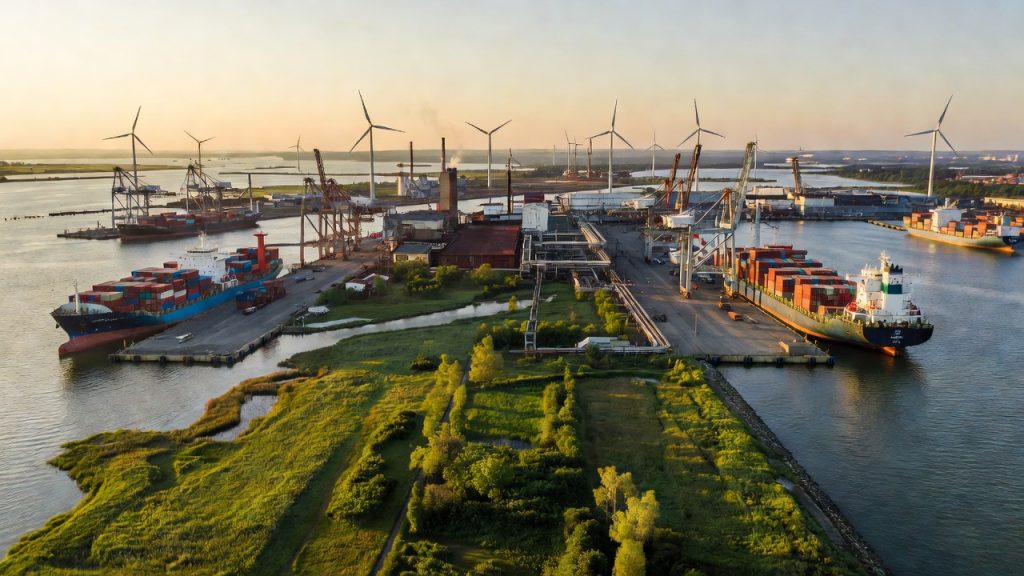
The European Union has crossed a major legislative threshold. After years of negotiation, EU institutions have formally agreed on a sweeping overhaul of the bloc’s carbon pricing architecture — tightening rules for heavy industry, extending carbon costs to road transport and buildings, and creating a dedicated fund to shield the most vulnerable from higher energy bills. It is one of the most significant climate policy moves in Europe’s history, and its ripple effects will be felt from factory floors to kitchen tables.
A Tighter Cap, a Broader Net: What the Reform Actually Does
At the heart of the package is a reformed EU Emissions Trading System (ETS), the world’s largest carbon market. The revised rules set a target of a 62% reduction in covered emissions from 2005 levels by 2030 — a significant step up from the previous 43% goal. Sectors including cement, aviation, and shipping now face a faster phase-out of free pollution allowances, meaning companies will have to pay for a growing share of the carbon they emit.
Alongside this, a brand-new carbon pricing mechanism — often called ETS2 — is scheduled to launch in 2027, covering the fuels used to heat homes and power cars. This is politically sensitive territory. Unlike industrial emitters, households cannot easily relocate or pass costs upstream. The reform acknowledges this directly: a Social Climate Fund worth up to €86.7 billion will be available from 2026 to help low-income households, small businesses, and transport users manage the transition. Member states will be required to dedicate a share of their carbon revenues to similar national support measures.
Carbon Border Adjustment: Protecting Competitiveness in a Global Market
One of the most globally consequential elements of the package is the Carbon Border Adjustment Mechanism (CBAM). Phasing in from 2026, CBAM will require importers of steel, cement, aluminium, fertilizers, electricity, and hydrogen to pay a carbon price equivalent to what EU producers face under the ETS. The goal is twofold: prevent carbon leakage — where production simply shifts to countries with weaker climate rules — and level the competitive playing field for European manufacturers investing in decarbonisation.
For trading partners, CBAM is already reshaping conversations. Countries exporting to the EU now have a direct financial incentive to price their own carbon emissions. In that sense, the EU’s domestic climate policy is quietly becoming a tool of international environmental diplomacy. Critics, particularly from emerging economies, argue it risks functioning as a green trade barrier. The European Commission maintains that CBAM is fully compatible with World Trade Organization rules — a debate that will likely intensify as the mechanism matures.
Beyond Carbon: A Widening Sustainability Regulatory Landscape
The carbon market reform does not stand alone. The EU Green Deal continues to generate a steady stream of additional regulation touching virtually every sector of the economy. The European Commission is advancing rules on food waste reduction, textile producer responsibility, soil health monitoring, and biodiversity protection. Taken together with existing frameworks like the Corporate Sustainability Reporting Directive (CSRD) and the EU Taxonomy, businesses across supply chains face a fundamentally different environmental regulation environment than they did even five years ago.
For companies, this creates both compliance pressure and strategic opportunity. Firms that move early on sustainability reporting, decarbonisation investment, and circular economy practices are better positioned to access green finance, meet procurement requirements, and retain talent. Those that wait risk being caught off-guard by accelerating regulatory timelines.
Implications: Who Gains, Who Pays, and What Comes Next
The reformed carbon markets framework sends a clear long-term price signal: polluting will become progressively more expensive across more sectors of the European economy. Key implications include:
- Households in fuel-poor regions face higher heating and transport costs from 2027, partially offset by the Social Climate Fund — but national implementation will vary widely.
- Heavy industry must accelerate decarbonisation investment or face rising compliance costs as free allowances shrink.
- Non-EU exporters to Europe, particularly in steel and cement, need to prepare for CBAM compliance requirements starting in 2026.
- Green technology and services sectors stand to benefit as demand for clean energy, efficiency solutions, and sustainability advisory grows.
The key takeaway: Europe’s carbon pricing revolution is no longer a future scenario — it is arriving in stages, on a fixed timetable. For citizens, businesses, and policymakers alike, understanding the mechanics and the support structures built around it is no longer optional. The EU has placed a large and consequential bet that making pollution expensive, while protecting the vulnerable, is the fastest credible path to a net-zero economy. The world is watching closely to see if it pays off.