Regenerative Agriculture Goes Corporate: What PepsiCo’s European Bet Means for Farmers and Food Systems
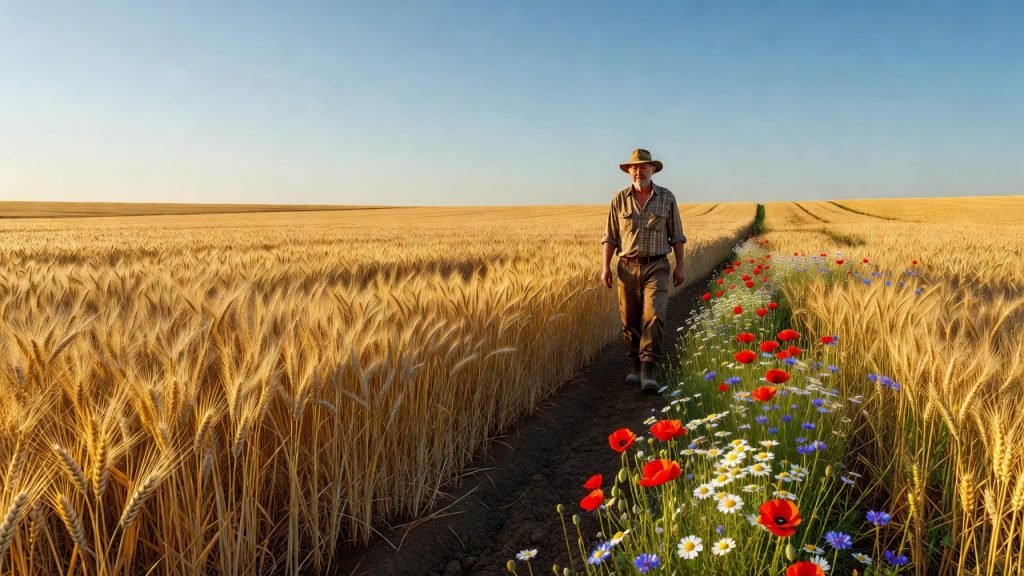
Something is shifting in the fields of the UK, France, and Belgium. PepsiCo — one of the world’s largest food and beverage corporations — has announced a formal partnership with Soil Capital, a Brussels-based platform that rewards farmers financially for reducing inputs and improving soil health. The deal is one of the clearest signals yet that regenerative agriculture is moving from niche philosophy to mainstream supply chain strategy. But what does it actually mean for farmers, ecosystems, and the future of European food systems?
From Buzzword to Business Model: Regenerative Agriculture Enters the Supply Chain
For years, agroecology and regenerative farming have been championed by environmental NGOs, small-scale producers, and forward-thinking agronomists. The core idea is straightforward: farm in ways that restore soil biodiversity, reduce synthetic inputs, sequester carbon, and build long-term resilience — rather than extracting maximum short-term yield at ecological cost.
What is new is the corporate scale of adoption. PepsiCo’s partnership with Soil Capital aims to enrol hundreds of farms across three European countries into a data-driven programme that measures and incentivises lower-input farming practices. Soil Capital’s model uses farm-level data to calculate environmental performance and translate it into financial rewards — essentially creating a market signal where none existed before.
This matters for supply chain sustainability because agriculture accounts for roughly 10–12% of EU greenhouse gas emissions, with a significant share coming from synthetic fertilisers, tillage, and land-use change. Embedding regenerative standards directly into procurement contracts — rather than relying on voluntary certification — could create durable, measurable change at scale.
Climate Finance Flows Into the Field — But Equity Questions Remain
The PepsiCo-Soil Capital deal is not an isolated event. Across the Atlantic, Grow Indigo recently secured $10 million from British International Investment to expand carbon farming programmes in India, accelerating farmer enrolment in schemes that pay for verified carbon sequestration. Meanwhile, gene-editing breakthroughs — including heat-tolerant rice varieties and CO₂-capturing thale cress developed through CRISPR technology — are attracting research investment as tools for building climate-resilient crop systems.
Together, these developments sketch a picture of sustainable agriculture increasingly financed by a combination of corporate procurement commitments, development finance institutions, and private capital seeking carbon credits. From a European perspective, this trend aligns with the ambitions of the EU Farm to Fork Strategy, which targets a 20% reduction in fertiliser use and a 50% cut in pesticide use by 2030.
However, critical questions persist. Who captures the value? In many corporate-led regenerative programmes, the financial upside flows primarily to large, commercially sophisticated farms capable of generating and verifying data. Smallholders and family farms — which still represent the backbone of European agricultural landscapes — risk being left behind if programme design does not explicitly address accessibility, technical support, and fair payment structures.
Innovation, Regulation, and the Road Ahead for European Food Policy
On the innovation front, CRISPR-based crop advances are generating genuine excitement among plant scientists. Higher-fibre wheat, heat-tolerant rice, and plants engineered to capture more atmospheric CO₂ all point toward a future where plant-based food systems could be both more nutritious and more climate-resilient. The EU is currently revising its legislation on new genomic techniques (NGTs), and the outcome will determine whether European farmers can access these tools competitively.
Regulatory pressure is also intensifying on inputs and water. In the United States, recent EPA actions on well permitting, agricultural compliance in Pennsylvania, and tighter dicamba restrictions signal a broader global trend: governments are tightening the environmental conditions under which farming operates. European regulators are moving in the same direction, with the Nature Restoration Law and revised pesticide regulations reshaping the compliance landscape for farmers and agri-food companies alike.
Implications: A Pivotal Moment for European Agriculture
The convergence of corporate investment, climate finance, genomic innovation, and tightening regulation creates a pivotal — and complex — moment for European food and agriculture. The opportunity is real: scaling regenerative practices through supply chain commitments could deliver measurable environmental gains while keeping farmers economically viable. The risks are equally real: greenwashing, inequitable value distribution, and the sidelining of genuinely ecological approaches in favour of data-optimised, input-light monocultures that wear the regenerative label without the substance.
- For farmers: Engage early with data platforms and understand contract terms before committing to corporate regenerative programmes.
- For policymakers: Ensure public support mechanisms complement — rather than compete with — private climate finance, and set minimum standards for what counts as regenerative.
- For consumers: Supply chain sustainability claims require scrutiny; look for third-party verification and transparent reporting.
Key takeaway: Corporate investment in regenerative agriculture is accelerating across European supply chains, and the financial and technological tools to support the transition are maturing rapidly. Whether this momentum translates into genuine ecological and social progress depends on the governance frameworks — public and private — that shape it. The seeds are being planted; the harvest is still an open question.