EU Green Deal Under Pressure: How Simplification Is Reshaping Europe’s Climate Ambitions
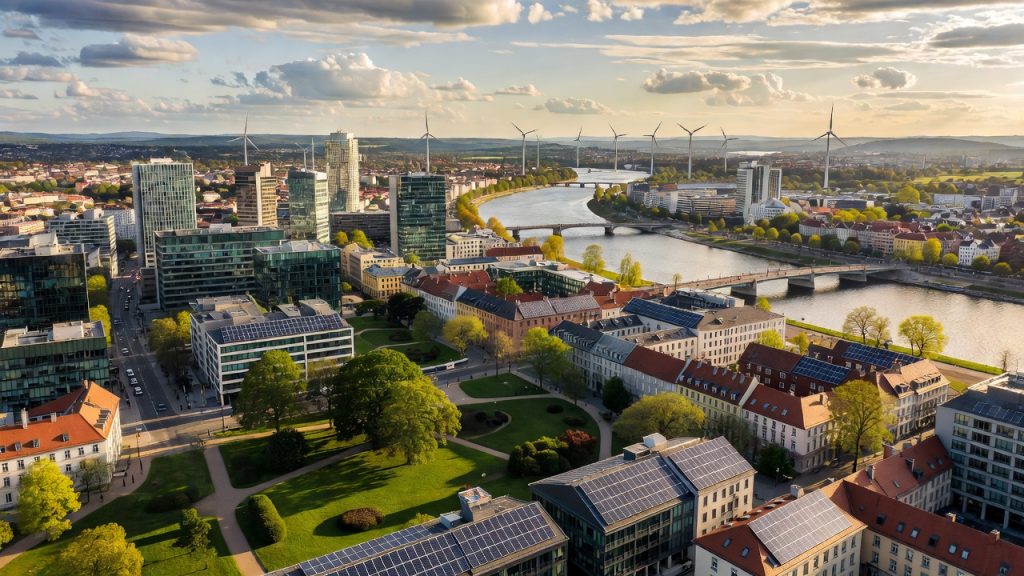
Europe’s landmark EU Green Deal — the continent’s most ambitious blueprint for reaching climate neutrality by 2050 — is entering a new and turbulent phase. While the core architecture of the policy remains intact, a growing push inside the European Commission and Council to simplify and narrow compliance-heavy rules is raising a fundamental question: can Europe cut red tape without cutting corners on the environment?
What Is Being Simplified — and What Is Being Lost
The current legislative cycle has brought significant rollbacks to two of the Green Deal’s most far-reaching instruments: sustainability reporting requirements and supply-chain due diligence obligations. Under pressure from business lobbies and several member states arguing that compliance costs are stifling competitiveness, the Commission has narrowed the scope of both frameworks, exempting a larger share of companies from detailed disclosure and accountability rules.
For businesses, particularly small and medium-sized enterprises, this is welcome relief. Fewer firms will now be required to produce exhaustive reports on their environmental impact or audit their suppliers for human rights and climate risks. But environmental groups and independent analysts warn that the trade-off is steep: weaker coverage means less transparency, less accountability, and ultimately less pressure on the private sector to genuinely decarbonize. Environmental regulation that does not apply broadly tends to create uneven playing fields and leaves significant emissions sources unmonitored.
The binding targets, however, remain untouched. The EU’s commitment to cutting emissions by at least 55% by 2030 compared to 1990 levels — enshrined in the European Climate Law — and the 90% net reduction target proposed for 2040 are still the structural backbone of European climate policy. The question is whether weakened implementation tools are sufficient to actually get there.
Carbon Markets Expand While Social Stakes Rise
One area where ambition is clearly advancing rather than retreating is carbon markets. From 2027, the EU Emissions Trading System (ETS) is set to expand into two new and politically sensitive sectors: buildings and road transport fuels. This means that the cost of heating homes and filling petrol tanks will increasingly reflect their carbon footprint — a shift that could accelerate the transition to heat pumps and electric vehicles, but also risks placing a heavier burden on lower-income households.
To address this, the EU has designed the Social Climate Fund, which will channel ETS revenues toward vulnerable citizens and support measures such as energy efficiency upgrades and cleaner mobility options. This social dimension is a deliberate attempt to make carbon pricing politically sustainable — a lesson drawn from the Yellow Vest protests in France, where fuel tax hikes triggered widespread unrest. Whether the fund will be adequately resourced and well-targeted remains a live debate among policymakers and civil society alike.
Industrial Decarbonization and the Innovation Bet
Beyond regulation, the EU is doubling down on clean-tech investment as a driver of the green transition. Instruments including NextGenerationEU, REPowerEU, the Innovation Fund, and the Modernisation Fund are channelling billions into renewable energy, energy efficiency, and emerging technologies such as carbon capture and storage. Sectoral rules are also tightening: new measures on methane emissions tracking in the energy sector, stricter limits on fluorinated gases, and stronger renewable energy targets are all moving through the policy pipeline.
This industrial policy turn reflects a broader global dynamic. As the United States and China compete aggressively for dominance in clean technology, Europe is positioning itself as a rule-setter and innovation hub — using public finance to de-risk private investment and accelerate decarbonization across heavy industry and households alike.
What This Means for Citizens, Businesses, and the Planet
The tension at the heart of today’s EU Green Deal is not between climate action and economic growth — it is between short-term compliance relief and long-term systemic change. Simplifying reporting rules may ease the burden on companies today, but it risks reducing the data and accountability infrastructure that investors, regulators, and citizens need to track real progress.
- For businesses: reduced near-term regulatory burden, but also less clarity on long-term expectations as enforcement gaps emerge.
- For citizens: carbon pricing expansion will affect energy and transport costs — social support mechanisms will be critical.
- For policymakers: binding 2030 and 2050 targets remain, but the tools to meet them are being narrowed.
The key takeaway is this: the EU Green Deal is not being dismantled, but it is being reshaped under competing pressures. Europe’s climate neutrality goals remain legally binding — but the path to achieving them is becoming narrower, more dependent on innovation and carbon pricing, and less reliant on the broad regulatory coverage that once defined the Green Deal’s ambition. Whether that recalibration proves wise or costly will become clear well before 2050.