EU 2040 Climate Target Approved: What a 90% Emissions Cut Means for Business and Citizens
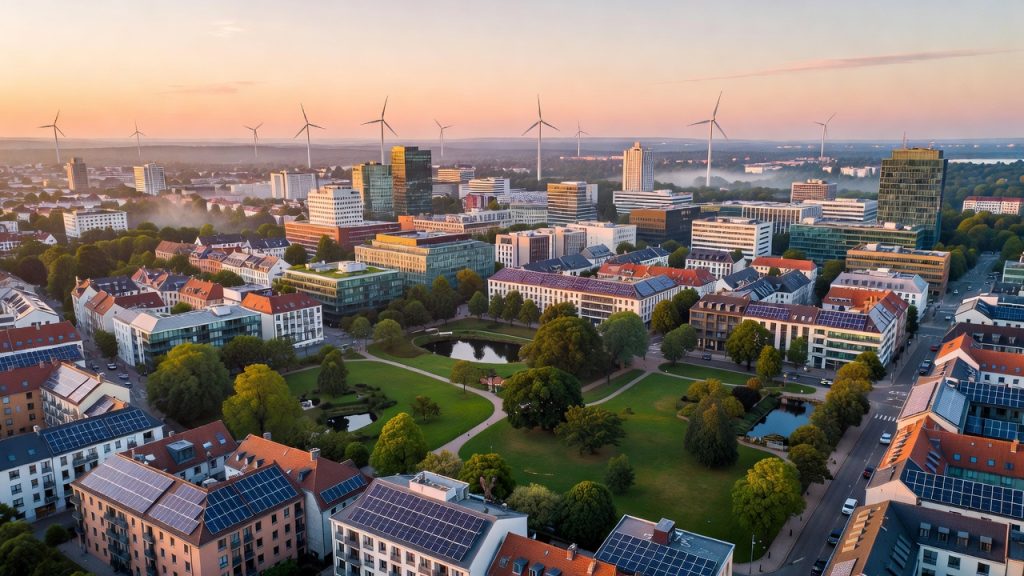
The European Union has taken one of its most consequential climate decisions in years. EU member states have given final approval to a 90% greenhouse-gas emissions reduction target by 2040, cementing the bloc’s trajectory toward climate neutrality by 2050. The move, reported by Reuters, sends a clear signal to businesses, investors, and citizens: the pace of decarbonization is accelerating, and the regulatory landscape is about to get significantly more demanding.
But the same week brought a contradictory headline. EU countries also approved a rollback of corporate due-diligence rules — rules that had required companies to address environmental and human-rights risks across their supply chains. Together, these two decisions paint a nuanced picture of where European sustainability policy actually stands.
A Landmark Target — and Its Real-World Consequences
A 90% cut in emissions by 2040 is not an abstract ambition. It is a binding policy direction that will reshape regulation across energy, industry, transport, and supply chains over the next fifteen years. For businesses, this means tighter compliance requirements, accelerating investment pressure in clean technologies, and a shrinking window to align operations with net-zero pathways.
For citizens, the implications are equally tangible. Faster policy shifts will affect energy prices, job markets, and public infrastructure — from the heating systems in homes to the vehicles on roads to the factories in industrial regions. The transition will create opportunities, particularly in renewable energy and green construction, but it will also demand careful management of social costs to avoid leaving vulnerable communities behind.
From an ESG and sustainable finance perspective, the 2040 target strengthens the investment case for low-carbon assets. Companies with credible decarbonization strategies are increasingly better positioned to access capital, attract talent, and maintain social licence to operate. Those without one face growing exposure to stranded-asset risk and regulatory friction.
The Supply-Chain Accountability Paradox
The decision to scale back the EU’s Corporate Sustainability Due Diligence Directive (CS3D) requirements complicates the sustainability narrative. Originally designed to hold large companies accountable for environmental and human-rights impacts throughout their global supply chains, the watered-down version reduces compliance pressure — particularly for mid-sized firms.
Critics argue this creates a credibility gap in European corporate responsibility: the EU sets ambitious long-term climate targets while simultaneously loosening near-term accountability mechanisms. For ESG-focused investors and civil society, this raises legitimate questions about whether voluntary commitments will fill the regulatory void — or whether a race to the bottom in global sourcing standards will quietly continue.
That said, many large multinationals have already embedded supply-chain sustainability into their procurement and reporting frameworks, driven by investor expectations, consumer pressure, and frameworks like the Corporate Sustainability Reporting Directive (CSRD). The rollback may slow progress at the margins, but it is unlikely to reverse the broader direction of travel for leading companies.
A Global Shift: China, Clean Energy, and the Race to Decarbonize
Europe is not acting in isolation. China has released plans to cut carbon intensity by 17% under its current five-year plan — an acceleration that signals continued state support for clean-energy investment in the world’s second-largest economy. Combined with the EU’s 2040 target, this reflects a broader global trend: major economies are tightening climate frameworks even as they navigate the political tensions between industrial competitiveness and consumer costs.
On the market side, momentum is visible in concrete deals. EU-backed renewable investment in Italy and large-scale sustainable aviation fuel (SAF) agreements are among the recent moves highlighting how corporate adaptation is already underway. The circular economy and green business models are no longer niche strategies — they are becoming baseline expectations in sectors from aviation to manufacturing.
Implications: What to Watch Next
- Regulatory pipeline: The 2040 target will trigger a wave of sector-specific legislation — expect new rules on industrial emissions, clean transport mandates, and building renovation standards in the coming years.
- ESG reporting pressure: Despite the CS3D rollback, the CSRD remains in force for large companies, keeping sustainability disclosure requirements substantial.
- Investment flows: Sustainable finance instruments — green bonds, transition finance, blended public-private vehicles — will play a growing role in funding the gap between current infrastructure and 2040 goals.
- Just transition: Social equity in the green transition will become a defining political issue, particularly in carbon-intensive regions and lower-income households.
Key Takeaway
The EU’s approval of a 90% emissions-cut target by 2040 is a milestone for European and global climate policy — one that sets the direction of travel clearly and irreversibly. The simultaneous rollback of supply-chain due-diligence rules is a reminder that the path will not be linear. For businesses, investors, and engaged citizens, the message is the same: sustainability is no longer optional, but how we get there still requires hard choices. Staying informed, holding institutions accountable, and supporting credible green business models has never been more important.