EU Locks In 90% Emissions Target for 2040: What It Means for Business, ESG, and the Green Economy
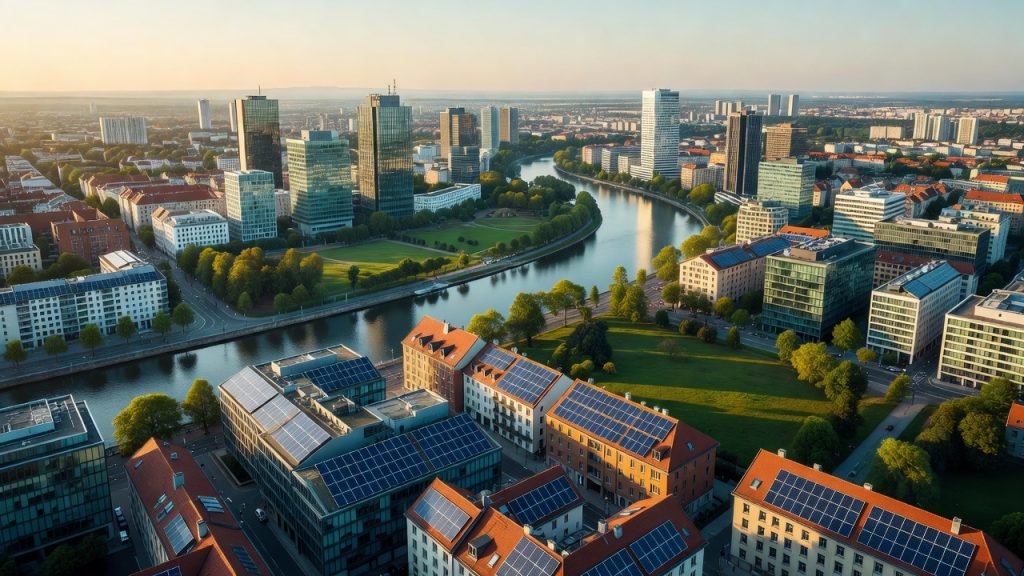
In the span of 48 hours, the European Union sent two powerful — and seemingly contradictory — signals to the business world. On one hand, EU governments gave final approval to a 90% greenhouse-gas emissions reduction target by 2040, one of the most ambitious climate commitments any major economy has ever codified into law. On the other, they approved a rollback of supply-chain due-diligence rules that would have forced large companies to audit environmental and human-rights risks across their global operations. Together, these decisions define a new phase of European sustainability policy: higher long-term ambition, lighter short-term compliance burden.
A 90% Climate Target: Ambition With Real Consequences
The 2040 target, which bridges the EU’s existing 2030 goal of at least 55% net emissions reduction and the 2050 climate-neutrality objective, is not symbolic. It becomes the legal backbone of European climate policy, shaping energy investment, industrial planning, and sustainable finance frameworks for the next two decades.
For businesses operating in Europe, the message is unambiguous: decarbonization is not optional, and the timeline is accelerating. Companies that have been slow to integrate climate risk into their ESG strategies now face a policy environment where 90% cuts are the baseline expectation, not the ceiling. Sectors including steel, cement, chemicals, and aviation — all hard-to-abate industries — will face the sharpest pressure to innovate or restructure.
The target also reinforces the EU’s position as a global standard-setter. With China signaling a 17% cut in carbon intensity under its current five-year plan, and the EU cementing its 2040 trajectory, the two largest industrial economies are — at least directionally — moving toward deeper decarbonization. For investors and sustainability professionals, this convergence matters: it reduces the risk that green business strategies become stranded by policy reversals, and strengthens the case for long-term capital allocation toward low-carbon assets.
Scaling Back Supply-Chain Rules: Relief or Retreat?
The decision to water down the Corporate Sustainability Due Diligence Directive (CSDDD) is more contested. Originally designed to require large companies to identify and address environmental and human-rights risks throughout their supply chains, the revised rules narrow the scope of obligations — fewer companies covered, lighter audit requirements, longer phase-in periods.
Proponents argue the change was necessary to protect European corporate responsibility frameworks from becoming a competitive disadvantage, particularly as geopolitical pressure and economic headwinds mount. Critics, including NGOs and parts of the sustainable finance community, warn it weakens the credibility of EU ESG commitments and leaves supply-chain abuses — from deforestation to forced labour — less scrutinised.
The tension here reflects a broader debate across the circular economy and sustainability space: how much compliance cost is acceptable in pursuit of systemic change? The EU’s answer, for now, appears to be a pragmatic compromise — preserve the direction of travel on climate, but reduce friction for businesses still adjusting to new reporting and risk-management realities.
Green Hydrogen and the Viability Gap: A Warning Sign
Beyond EU policy, another development this week deserves attention. Exxon Mobil halted plans for one of the world’s largest green hydrogen projects, citing weak customer demand. This is not an isolated case. Across Europe and globally, clean-hydrogen projects are struggling to bridge the gap between production costs and what buyers are willing to pay — even as governments pour subsidies into the sector.
The hydrogen stumble is a reminder that strong climate targets and ambitious ESG frameworks do not automatically create viable markets. Green infrastructure still requires committed offtake agreements, patient capital, and policy certainty to become commercially self-sustaining. For sustainability professionals and investors, it is a signal to scrutinise green business models carefully — distinguishing between technologies that are scaling and those that remain dependent on support structures that could shift.
Implications for ESG Strategy and Investment
- Long-term investors can treat the 2040 target as a durable policy anchor for European decarbonization — reducing uncertainty in climate-aligned portfolios.
- Corporate sustainability teams should reassess supply-chain risk programmes: the CSDDD rollback reduces legal obligations but does not eliminate reputational and investor scrutiny of ESG performance.
- Clean-tech developers — especially in hydrogen and other emerging sectors — must prioritise demand-side partnerships alongside technology development to avoid the commercial viability trap.
- Policymakers and regulators face growing pressure to align ambition with implementation, ensuring that lighter compliance rules do not undermine the credibility of the EU’s green business agenda.
Key takeaway: The EU is doubling down on climate ambition while recalibrating the pace of corporate compliance. For anyone operating at the intersection of sustainability, ESG, and business strategy, this week’s decisions are a clear signal: the destination has not changed, but the road there just got slightly wider — and the pressure to arrive on time has never been greater.