From Hydrogen Breakthroughs to EU Climate Targets: How Green Tech Is Reshaping the Energy Transition
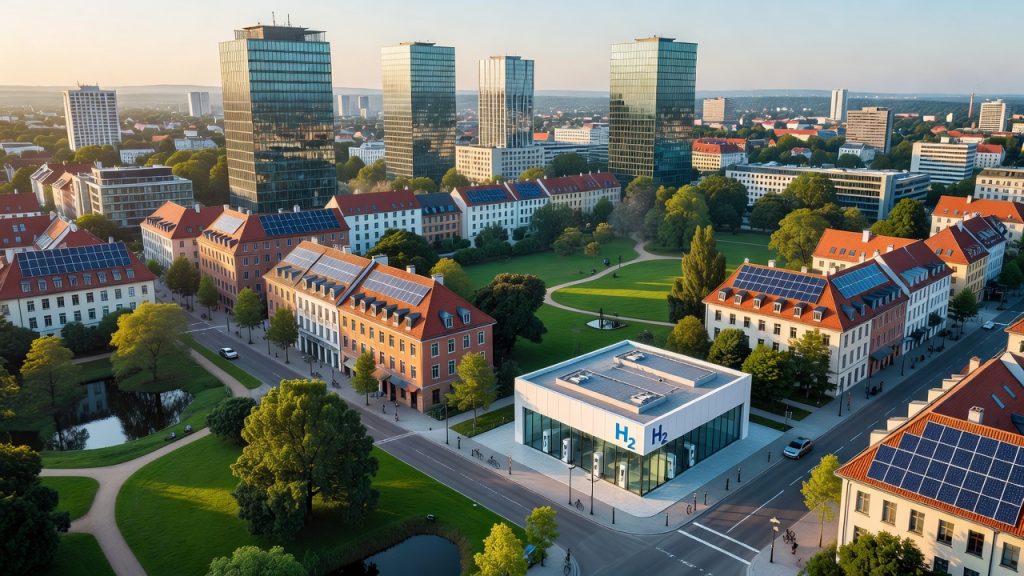
A landmark week for green innovation: the European Union formally approved its 2040 climate target, researchers unveiled a cheaper way to produce clean hydrogen, and a new wave of multi-benefit technologies — from solar desalination to plastic-to-fuel conversion — moved closer to commercial reality. Taken together, these developments paint a picture of an energy transition that is accelerating on multiple fronts, even as political headwinds persist.
The EU’s 90% Target: A Policy Anchor for Clean Investment
EU member states gave final approval to a binding target of cutting greenhouse gas emissions by 90% by 2040 compared to 1990 levels, according to Reuters. The decision is more than a political statement — it is a long-term investment signal that reshapes the business case for clean power, electrification, and energy efficiency across the continent.
For companies planning capital expenditure over five- to ten-year horizons, policy certainty matters enormously. The confirmed target reinforces demand for smart-city infrastructure, electric mobility networks, and low-carbon industrial processes. For citizens, it translates into faster deployment of cleaner buildings, public transport, and energy systems. Europe’s clean-energy transition now has a clearer legislative backbone — and the private sector is expected to respond with accelerated investment in green technology.
The target also sets a reference point for the rest of the world. As the EU tightens its regulatory framework, trading partners and multinationals operating in European markets will face growing pressure to align their own supply chains and strategies with stricter decarbonization timelines.
A Hydrogen Breakthrough That Could Change Industrial Decarbonization
One of the most significant cleantech developments this week came from the research lab: scientists reported a new hydrogen-production method using a perovskite-based catalyst that splits water at much lower temperatures than conventional electrolysis. The implications are substantial. Lower operating temperatures mean lower energy input, which directly reduces the cost and complexity of producing green hydrogen at scale.
Green hydrogen is widely seen as essential for decarbonizing sectors that electricity alone cannot easily reach — steel manufacturing, shipping, aviation, and heavy road freight. Today, high production costs remain the primary barrier to adoption. A scalable perovskite-based process could help close that cost gap, making power-to-fuel pathways more competitive and accelerating uptake across hard-to-abate industries.
This breakthrough fits within a broader surge of hydrogen-focused green innovation. Separately, researchers are also advancing materials that enable cleaner hydrogen production directly from seawater — a development that could be transformative for coastal regions and island communities with limited access to freshwater resources.
Multi-Benefit Technologies: When One Solution Solves Several Problems
Perhaps the most telling trend of the moment is the rise of multi-use clean technologies — innovations designed to address energy, water, waste, and digital challenges simultaneously. Three examples stand out:
- Solar desalination without harmful brine: New systems can produce drinking water from seawater using solar energy, while eliminating the toxic brine discharge that has long been an environmental drawback of conventional desalination. This links renewable energy directly to water security.
- Plastic waste converted into clean fuels: Emerging conversion technologies are transforming plastic waste — one of the most persistent pollution problems globally — into usable fuels, creating a circular-economy link between waste management and energy production.
- AI computing capacity and energy efficiency: The UK’s £1.1 billion plan to build domestic AI infrastructure, including a new national supercomputer, highlights a growing intersection between digital capacity and the energy transition. As compute demand rises, smart-city systems and grid management tools powered by AI will become critical enablers of efficient, low-carbon urban infrastructure.
Implications for Businesses, Policymakers, and Citizens
The convergence of binding policy targets, scientific breakthroughs, and multi-sector innovation creates both urgency and opportunity. For businesses, the EU’s 2040 target removes ambiguity: investment in green technology, electrification, and efficiency is no longer optional — it is strategically necessary. For policymakers, the challenge is ensuring that regulatory frameworks keep pace with innovation, particularly in areas like hydrogen certification, digital infrastructure, and circular-economy standards. For citizens, the practical benefits — cleaner air, lower energy bills, more resilient water supplies — are becoming increasingly tangible.
Key takeaway: The energy transition is no longer a single-track story about solar panels and wind turbines. It is becoming a systems-level transformation, where green innovation in hydrogen, water, waste, and digital infrastructure reinforces and accelerates progress across every sector. Europe’s confirmed 2040 climate target provides the policy foundation; the technologies to meet it are arriving faster than many expected.